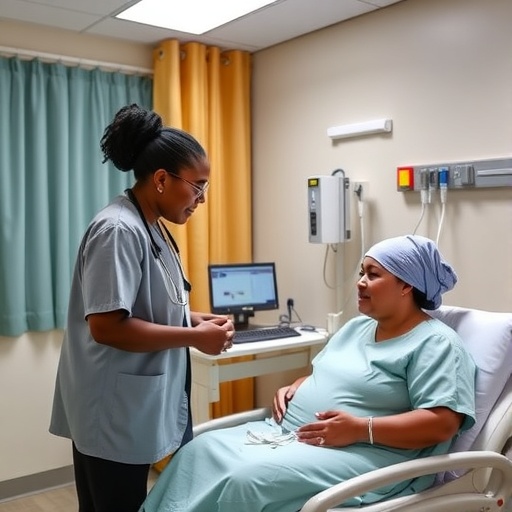
In a groundbreaking study that promises to influence the landscape of maternal healthcare, researchers AlKhunaizi and Al-Otaibi set out to explore the insights of healthcare providers involved in the design of new birthing rooms. This research is particularly significant as it moves beyond traditional quantitative methodologies, engaging in an interpretative phenomenological analysis that seeks to understand the nuanced experiences and perceptions of healthcare professionals who play pivotal roles in childbirth environments.
The design of birthing rooms has far-reaching implications for both the comfort of expectant mothers and the effectiveness of care provided by healthcare teams. AlKhunaizi and Al-Otaibi acknowledge that healthcare providers are often at the frontline, facing the day-to-day realities of birthing environments. The voices of these professionals are crucial in creating spaces that not only meet clinical requirements but also promote emotional well-being for both mothers and newborns.
With an ever-growing body of literature underscoring the importance of patient-centered care, this study distinctly highlights the necessity to include healthcare providers’ perspectives in the design process. Their insights can lead to a more holistic understanding of the factors that contribute to successful birthing experiences, thereby fostering an atmosphere where both patient and provider feel valued and supported.
The interpretative phenomenological analysis employed in this research allows for a deep exploration of subjective experiences, offering a rich tapestry of narratives that illuminate how healthcare providers perceive the challenges and opportunities presented by the birthing room design process. Through intimate interviews, the researchers collect personal stories that reflect the unique interplay between physical space and emotional experience during childbirth.
One of the key findings of this study revolves around the need for flexibility in birthing room design. Healthcare providers emphasized that every labor and delivery is uniquely different, and a one-size-fits-all approach can often lead to discontent among both practitioners and patients. The study reveals a strong, consistent demand for customizable elements in birthing rooms that allow for adaptation to a variety of medical and emotional needs.
Moreover, the interviews surface recurring themes related to safety and aesthetics. Providers express that while functionality is the utmost priority, the incorporation of soothing colors, natural light, and welcoming furniture can alleviate anxiety for mothers. The emotional state of the mother during labor can significantly impact her experience and, in turn, the outcomes of the delivery itself. The intersection of emotional well-being and design must not be overlooked in contemporary healthcare design.
Another prominent theme identified by AlKhunaizi and Al-Otaibi is the importance of collaboration in the design process. The results reflect a strong sentiment among healthcare professionals about the benefits of interdisciplinary teamwork when it comes to creating effective birthing spaces. By engaging nurses, obstetricians, midwives, lactation consultants, and even mental health professionals, the design process can benefit from multiple perspectives, ultimately resulting in a more comprehensive and effective birthing room environment.
This multidisciplinary approach aligns with the shift towards integrated care models in healthcare. The complexities of childbirth underscore the necessity for a collaborative approach that takes various fields of expertise into account. The researchers advocate for structured feedback loops where healthcare providers can continuously refine and influence the design process based on real-time experiences.
In addition, another aspect explored in this study is the incorporation of technology in birthing room designs. Providers mentioned the potential benefits of smart technology integrated into these spaces, enabling real-time monitoring of both the mother and the infant. This is not merely a technical upgrade, but rather a transformative shift that could facilitate more informed decision-making, enhance safety protocols, and improve overall maternity care.
Despite the promise of technology, the researchers emphasize a balanced approach that recognizes the importance of human interaction. Technology should serve to enhance, not replace, the personal connections that are fundamental in the birthing process. This integration of human-centered design with advanced technological actualization is a territory still ripe for exploration in healthcare settings.
The implications of this research extend beyond the immediate stakeholders; they can influence institutional policies, resulting in improved healthcare standards and protocols. Facilities that commit to incorporating the insights of their healthcare providers into the birthing room design can optimize not only patient satisfaction but also employee engagement and retention. Happy and fulfilled healthcare professionals often lead to better patient outcomes — a cyclic benefit.
As the study continues to circulate within professional and academic circles, it has the potential to ignite discourse centered on re-thinking how we approach the design of birthing rooms. This research presents evidence that deeply listening to healthcare professionals can yield better-designed environments, which ultimately enhance the birthing experience for mothers and infants alike.
The age-old notion of listening and valuing the input of those on the front lines of care presents a clear call to action: healthcare administrators and policymakers must prioritize the perspectives of healthcare providers in every facet of healthcare design. With continued advocacy, the shift towards user-centered care environments becomes not just a possibility, but an attainable goal.
In conclusion, AlKhunaizi and Al-Otaibi’s comprehensive exploration of the voices of healthcare providers represents a vital step forward in healthcare design. Their focus on interpretative phenomenological analysis guarantees that the subjectivity of individual experiences is respected and capitalized upon for the common good. The future of birthing room design may indeed hinge upon this vital exchange of ideas that enshrines care, understanding, and collaboration in its very foundation.
As healthcare continues to evolve into a more patient-centric model, it is essential that all voices in the system are acknowledged and integrated into policy and design considerations. The study not only articulates pressing concerns but also carries the promise of shaping more effective, compassionate, and responsive birthing environments worldwide.
Subject of Research: Insights from Healthcare Providers on Birthing Room Design
Article Title: Listening to the Voices of Healthcare Providers Involved in the Design of a New Birthing Room: An Interpretative Phenomenological Analysis
Article References:
AlKhunaizi, A.N., Al-Otaibi, A.G. Listening to the voices of healthcare providers involved in the design of a new birthing room: an interpretative phenomenological analysis.
BMC Health Serv Res (2025). https://doi.org/10.1186/s12913-025-13950-9
Image Credits: AI Generated
DOI: Not available
Keywords: birthing room design, interpretative phenomenological analysis, healthcare providers, patient-centered care, multidisciplinary approach, technology in healthcare
Tags: birthing room designdesign implications for expectant mothersemotional well-being in maternity carehealthcare professionals’ experienceshealthcare provider insightsholistic approach to maternity careimproving childbirth environmentsinterpretative phenomenological analysismaternal healthcare designpatient-centered care in childbirthsuccessful birthing experiencesvoices of healthcare providers in design