In a groundbreaking development set to revolutionize the field of pharmacology, researchers have unveiled a novel approach to drug synergy prediction that leverages the power of knowledge graphs and attention networks. Their study, titled “KGLGANSynergy,” introduces a sophisticated framework that utilizes local and global attention mechanisms to improve the accuracy of predicting synergistic effects between drug combinations. This approach represents a significant shift away from traditional models, which often rely heavily on linear estimations and limited data sets. Instead, KGLGANSynergy employs a more advanced computational strategy that integrates vast amounts of relational data from existing pharmacological databases, allowing researchers to uncover hidden patterns and interactions.
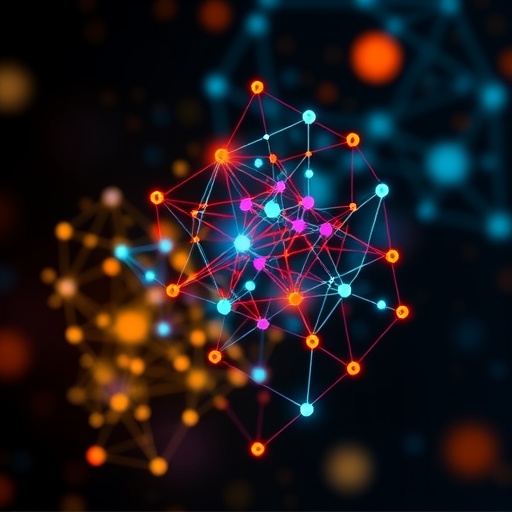
At the core of KGLGANSynergy lies the innovative use of knowledge graphs, which function as powerful tools for modeling complex biochemical interactions and relationships. These graphs create a structured representation of information, encompassing various entities such as drugs, biological targets, and disease pathways, along with their interconnections. By facilitating an in-depth analysis of these relationships, knowledge graphs enable researchers to identify potential synergies that might otherwise go unnoticed when examined in isolation. This shift in data utilization signifies a monumental leap towards more comprehensive drug discovery methodologies.
Moreover, the integration of local and global attention mechanisms amplifies the predictive capabilities of the model. Local attention focuses on specific interactions within a localized context, ensuring that the model captures nuanced details of particular drug pairings. Meanwhile, global attention expands the analytical lens to encompass broader patterns across varied contexts and datasets. This dual focus allows for a more robust prediction mechanism that can adapt to the intricacies of real-world pharmacological scenarios, where numerous variables must be considered.
The results from the KGLGANSynergy framework have demonstrated marked improvements in predicting drug synergies compared to traditional predictive models. Through rigorous testing against established benchmarks, the researchers observed that their approach yielded higher accuracy rates, enabling clinicians and researchers to make better-informed decisions regarding drug combinations. As drug synergy prediction is pivotal in optimizing therapeutic strategies for cancer treatment and other complex diseases, the implications of this research are profound.
Furthermore, the researchers showcase the model’s practical applications, emphasizing its potential in clinical settings. By utilizing KGLGANSynergy, healthcare professionals can refine their strategies for combination therapies, ultimately enhancing patient outcomes and minimizing adverse effects. The ability to predict synergistic interactions effectively could lead to significant advancements in personalized medicine, where treatments can be tailored to individual patient profiles based on the predicted efficacy of drug pairings.
As part of the study, the team also addressed the challenge of data scarcity in drug synergy research. They emphasized that traditional methods often rely on a limited number of pharmacological interactions, which can lead to skewed results. KGLGANSynergy mitigates this issue by harnessing the richness of knowledge graphs, integrating diverse and expansive datasets from multiple sources. This approach ensures that the model is trained on a comprehensive understanding of drug relationships, significantly enhancing its predictive power.
The researchers also explored the implications of their findings on future drug development pipelines. By employing an AI-driven framework like KGLGANSynergy, pharmaceutical companies can expedite the process of identifying promising drug combinations, thereby reducing time and costs associated with clinical trials. This not only accelerates the pace of drug development but also increases the likelihood of discovering effective treatments for conditions that currently lack viable therapeutic options.
The overarching significance of this research extends beyond technological advancements; it emphasizes the necessity for an interdisciplinary approach to drug discovery. Collaboration among data scientists, pharmacologists, and clinicians is paramount in harnessing the full potential of innovative frameworks like KGLGANSynergy. As stakeholders from various fields contribute their expertise, the collective effort will be instrumental in driving forward the next era of drug synergy research.
Despite the promising results, the study also acknowledges potential limitations. The performance of KGLGANSynergy may depend on the quality and breadth of the input data, prompting researchers to continually refine the knowledge graphs employed. Furthermore, while the current model represents a substantial enhancement, further iterations will aim to incorporate real-time data from ongoing clinical trials, vastly improving adaptive learning capabilities.
To ensure the model’s ongoing relevance, the researchers propose a future direction focused on the integration of genomic and proteomic data alongside pharmacological information. This holistic approach is poised to unravel even more complex interactions, elevating the predictive accuracy of drug synergy models to unprecedented levels. By combining genetic markers and drug responses, clinicians could more effectively tailor treatments to individual patients.
Finally, as the promise of KGLGANSynergy becomes more evident, the researchers advocate for broader accessibility to the model. Open-source initiatives could democratize the use of this innovative technology, allowing institutions around the globe to leverage it in research efforts. Making KGLGANSynergy widely available will foster collaboration and innovation in drug synergy prediction while ensuring that the benefits of such advancements reach underserved populations who are most in need of effective treatments.
In conclusion, KGLGANSynergy represents a significant entry in the complex field of drug synergy prediction. By merging cutting-edge knowledge graph technology with robust attention mechanisms, researchers have paved the way for advancements that could transform therapeutic approaches to complex diseases. The implications of this research extend from improved patient outcomes to more efficient drug development, showcasing the vital role that innovative computational frameworks will play in the future of medicine.
As the landscape of pharmacology continues to evolve with technological advancements, frameworks like KGLGANSynergy illuminate the path toward more effective and personalized treatment options. It is an exciting time for drug discovery, and the potential for improvement in patient care has never been more promising.
Subject of Research: Drug synergy prediction using knowledge graphs and attention networks.
Article Title: KGLGANSynergy: knowledge graph-based local and global attention network for drug synergy prediction.
Article References:
Yan, C., Chu, M., Zhang, G. et al. KGLGANSynergy: knowledge graph-based local and global attention network for drug synergy prediction.
J Transl Med (2025). https://doi.org/10.1186/s12967-025-07545-5
Image Credits: AI Generated
DOI: 10.1186/s12967-025-07545-5
Keywords: Drug synergy, knowledge graph, attention networks, personalized medicine, pharmacology.
Tags: advanced computational strategies in drug discoveryattention networks for drug interactionscomprehensive drug discovery methodologiesdrug synergy predictioninnovative drug combination analysisKGLGANSynergy frameworkknowledge graphs in pharmacologymodeling biochemical interactionspredicting synergistic drug effectsrelational data in pharmacological researchrevolutionizing pharmacological researchuncovering hidden drug patterns