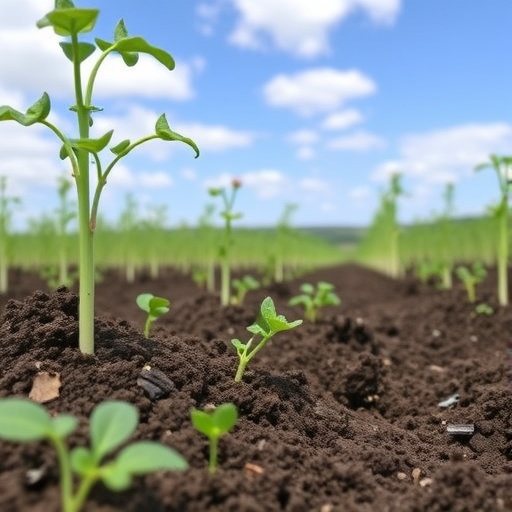
In the dynamic world of agricultural practices, scientists have recently unveiled the intricate relationships between soil organisms through the use of green manure. A groundbreaking study led by a team of researchers, including A. Sudo, D. Yoshimura, and H. Daimon, investigates how the introduction of green manure can significantly alter the nematode communities residing within the soil. These microscopic roundworms, while often overlooked, play a crucial role in maintaining the health of soil ecosystems and contributing to sustainable agriculture.
The study delves into the concept of green manure, which involves planting certain types of crops to enrich the soil with nutrients. This practice not only benefits crop production but also enhances soil health by fostering a diverse community of organisms. The researchers explored how these shifts in the microbial landscape—particularly in bacterial and fungal populations—correspond to changes in nematode communities. By understanding these relationships, farmers can optimize their practices for better yields and healthier ecosystems.
Nematodes are essential components of soil life. They serve various functions, including controlling pest populations, recycling nutrients, and promoting soil structure. The study’s authors highlight that these organisms interact closely with bacteria and fungi, forming complex networks that are essential for nutrient cycling. Researchers utilized advanced sequencing technologies to characterize the shifts within these communities, offering unprecedented insights into the soil’s ecological dynamics.
The data showed that the application of green manure not only boosted biomass productivity but also promoted a more diverse array of beneficial nematodes. The findings indicate that the addition of organic matter through green manure creates an environment conducive to the proliferation of microbial life, which in turn supports healthier nematode populations. This cascading effect highlights the interconnectedness of soil organisms and the importance of maintaining biodiversity for sustainable agricultural practices.
The implications of this research extend beyond scientific curiosity; they pose significant advantages for modern-day farming. As the global population continues to grow, the need for sustainable agricultural practices intensifies. By employing green manure as a natural method to enhance soil fertility, farmers can reduce their dependency on chemical fertilizers, which often harm the environment. This study provides compelling evidence that such practices can lead to healthier soil ecosystems, resulting in more robust crop yields.
Moreover, the research underscores the importance of understanding soil microbiomes. The interactions between nematodes, bacteria, and fungi are pivotal in modulating soil health, nutrient cycling, and plant health. The increased diversity of nematodes correlated with a boost in the variety of bacteria and fungi found in the soil. This suggests that fostering a rich microbiome through practices like green manure can enhance not only soil structure but also plant resilience against diseases and pests.
One notable finding of the study was the specific types of nematodes that flourished in response to green manure. Free-living nematodes and predatory types showed significant increases, pointing toward a beneficial shift in the soil food web. This change is vital for pest management, as the presence of predatory nematodes helps to keep harmful pest populations in check while simultaneously enriching the soil ecosystem.
As the researchers point out, the relationship between soil health and plant productivity is a delicate balance. This study illuminates how conventional farming practices—often heavily reliant on synthetic inputs—can disrupt these natural relationships. By adopting more ecological approaches such as green manure, farmers can reestablish these connections, leading to healthier crops and a more sustainable farming system.
Ultimately, the research indicates a future where agriculture is harmoniously integrated with the environment, relying on natural processes instead of chemical interventions. The authors advocate for widespread adoption of green manure cultivation among farmers as a strategy to enhance soil health. The understanding gained from this study could empower agricultural policymakers to promote sustainable practices that align with ecological principles.
Looking ahead, the implications of these findings warrant further exploration. The researchers note that understanding the specific mechanisms through which green manure alters soil communities can provide more targeted strategies for different agricultural contexts. Additionally, field trials across various climates and soil types will be essential to validate and expand upon the laboratory findings.
In conclusion, the groundbreaking insights presented in this study underscore the critical role of green manure in shifting nematode communities and enhancing soil microbiomes. As we move toward a more sustainable agricultural paradigm, it becomes imperative to recognize and harness the relationships among soil organisms. By embracing practices that cultivate biodiversity, we can pave the way for healthier crops and a resilient agricultural landscape.
This research not only adds to the existing body of knowledge surrounding soil health but also serves as a clarion call for the agricultural community. As we face the challenges of food security and environmental degradation, fostering sustainable practices that honor the complex web of life within the soil becomes increasingly essential.
Subject of Research: Shifts in nematode communities due to green manure application and its association with soil microbial biomes.
Article Title: Green manure-induced shifts in nematode communities associated with soil bacterial and fungal biomes.
Article References:
Sudo, A., Yoshimura, D., Daimon, H. et al. Green manure-induced shifts in nematode communities associated with soil bacterial and fungal biomes.
Sci Rep (2025). https://doi.org/10.1038/s41598-025-31442-y
Image Credits: AI Generated
DOI: 10.1038/s41598-025-31442-y
Keywords: Green manure, nematodes, soil health, microbiome, sustainable agriculture, biodiversity, organic matter, microbial communities.
Tags: enhancing nutrient cycling in soilgreen manure benefits for soil healthimpact of green manure on microbial populationsinteractions between bacteria fungi and nematodesnematode community dynamicsoptimizing farming practices through soil healthrelationship between soil organismsrole of nematodes in agriculturesoil biodiversity and agriculturesoil ecosystem healthsustainable agriculture practicessustainable crop production strategies