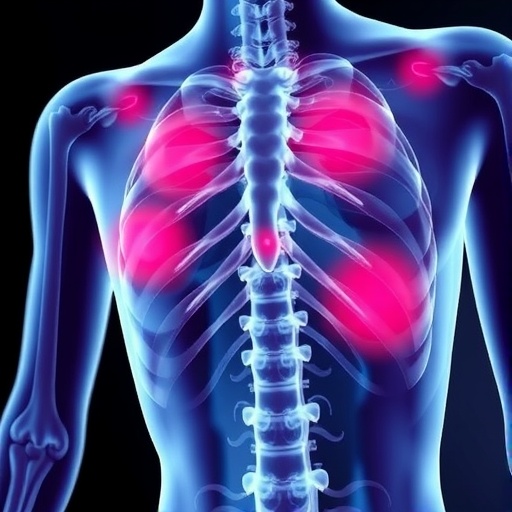
Recent research has significantly advanced our understanding of the complex relationship between estrogen and rheumatoid arthritis (RA), a chronic autoimmune condition that affects millions worldwide. A compelling study conducted by Dai, Li, and Pan, published in Biology of Sex Differences, methodically explores the increasing body of literature on this critical intersection, employing a systematic bibliometric approach. As the prevalence of RA continues to rise, particularly among women, understanding hormonal influences, particularly estrogen’s role, has never been more crucial.
The systematic bibliometric approach utilized by the researchers involved a comprehensive evaluation of existing studies that delve into the effects of estrogen on rheumatoid arthritis. This method allows for a rigorous quantitative analysis of trends in research output, citation patterns, and thematic focuses over time. The authors meticulously sift through a multitude of publications, extracting valuable insights into how the interplay between these two subjects has evolved and what this means for future research directions.
Estrogen is known to exert a significant influence on the immune system, and its fluctuations have been implicated in various autoimmune diseases, including rheumatoid arthritis. As the working hypothesis suggests, estrogen may modulate the inflammatory responses, potentially exacerbating or alleviating symptoms associated with RA. The systematic review offers a window into how scientific understanding of these mechanisms has progressed, highlighting key findings that serve as the backbone for ongoing studies in this arena.
This study’s bibliometric analysis indicates a notable surge in published research on estrogen and rheumatoid arthritis over the past decade, reflecting growing interest in this area among scientists and medical professionals. Several factors contribute to this increasing focus, including significant advances in medical technologies and therapeutic strategies aimed at mitigating the impacts of RA, especially in women. The authors make note of interdisciplinary efforts that combine insights from endocrinology, immunology, and rheumatology, providing a holistic view of the disease and its treatment.
Furthermore, the findings reveal distinct research trends, with certain subtopics gaining more traction among researchers. For instance, the interaction between estrogen receptors and immune system pathways appears to be a pivotal area of exploration. These receptors, when activated by estrogen, can influence the behavior of immune cells, particularly T cells, which are key players in the pathology of rheumatoid arthritis. This nuanced interplay highlights the need for targeted studies that investigate how these mechanisms can be harnessed for therapeutic purposes.
In addition to identifying key research trends, Dai and colleagues also analyze citation data from prominent journals to gauge the impact of specific studies on the field. Surprisingly, their findings reveal that not all prominent publications have influenced subsequent research equally. This disparity underscores the importance of identifying landmark studies that have reshaped the scientific dialogue surrounding estrogen and RA. By shining a light on these pivotal contributions, the research encourages emerging scientists to build upon established findings rather than reinvent the wheel.
Moreover, the bibliometric approach allows for the identification of leading authors and institutions driving research in this domain. A few researchers have consistently been at the forefront, pushing boundaries in understanding the hormonal influences on RA. Their collaborative efforts often transcend geographic boundaries, indicating a global commitment to unraveling this complex relationship. The analysis highlights the importance of collaboration and networks in scientific research, especially concerning a multifaceted condition like rheumatoid arthritis, which requires input from various expertise areas.
Another significant aspect of the study is its exploration of funding sources and institutional support for research on estrogen and rheumatoid arthritis. The authors note that funding patterns can heavily influence research trajectories, as grants determine the scope and direction of studies. As the healthcare landscape evolves and funding bodies become more aware of women’s health issues, understanding the dynamics of grant distribution can paint a clearer picture of where resources are allocated and how that may shape future research outcomes.
The implications of this research have broad significance, particularly for women who disproportionately suffer from rheumatoid arthritis. With estrogen levels fluctuating due to various life stages—puberty, pregnancy, menopause—understanding how these physiological changes influence RA could lead to more personalized treatment strategies. This emphasizes the importance of integrating findings from bibliometric analyses into clinical practice, which can ultimately improve patient outcomes on a broader scale.
The study by Dai, Li, and Pan does more than just highlight research trends; it advocates for a more concerted effort to explore the nuanced interplay between hormones and autoimmune diseases. Their findings serve as a call to action for scientists to delve deeper into the biological underpinnings of rheumatoid arthritis as influenced by estrogen levels. They encourage the development of innovative, hormone-centered therapeutic approaches that could potentially revolutionize the management of RA, ultimately enhancing the quality of life for those affected by this condition.
As the research community continues to unravel the complex relationship between estrogen and rheumatoid arthritis, the call for increased interdisciplinary collaboration is louder than ever. The future of effective RA management may hinge upon the integration of hormonal research with immunological studies, harnessing the insights gained from diverse fields. Such collaboration could catalyze significant breakthroughs that not only elucidate the mechanisms of RA but also pave the way for novel treatment modalities.
In conclusion, the systematic bibliometric approach adopted by Dai, Li, and Pan establishes a strong foundation for ongoing research into the interconnected realms of estrogen and rheumatoid arthritis. Their work underscores the pivotal role of bibliometric analyses in guiding future inquiries, enabling the scientific community to strategically navigate the vast landscape of literature. As research trends continue to evolve, embracing a comprehensive understanding of hormonal influences in autoimmune diseases will be key to developing innovative treatment strategies that address the needs of individuals across their lifespan.
As we move forward in this exciting area of study, the importance of disseminating knowledge gained from these findings cannot be overstated. Amplifying awareness about the link between estrogen and rheumatoid arthritis will not only educate the public but also encourage further exploration and funding for research initiatives focused on women’s health. This will, in turn, foster a more informed healthcare approach that prioritizes effective treatment and prevention strategies for those affected by rheumatoid arthritis.
Subject of Research: The relationship between estrogen and rheumatoid arthritis.
Article Title: Research trends in estrogen and rheumatoid arthritis: a systematic bibliometric approach.
Article References:
Dai, X., Li, P. & Pan, D. Research trends in estrogen and rheumatoid arthritis: a systematic bibliometric approach.
Biol Sex Differ (2025). https://doi.org/10.1186/s13293-025-00806-4
Image Credits: AI Generated
DOI:
Keywords: Estrogen, Rheumatoid Arthritis, Bibliometric Analysis, Autoimmune Disease, Women’s Health.
Tags: chronic autoimmune conditions in womencomprehensive evaluation of estrogen studieseffects of hormones on rheumatoid arthritisestrogen and rheumatoid arthritis relationshipestrogen’s impact on inflammatory responsesfuture research directions in RAhormonal influences on autoimmune diseasesimmune system modulation by estrogenrheumatoid arthritis prevalence among womensystematic bibliometric analysis of RA researchtrends in estrogen and RA studiesunderstanding autoimmune disease mechanisms