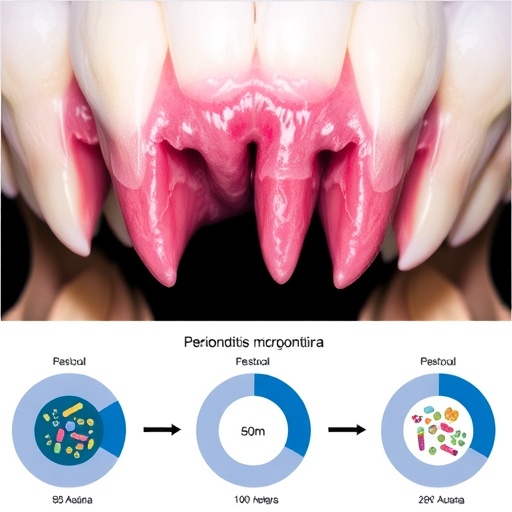
Research in the realms of oral health has significantly advanced in recent years, with an increasing focus on the microbiota inhabiting the oral cavity and its implications for systemic health. One of the most exciting recent contributions to this field comes from a study conducted by Ma, Kageyama, and Asakawa, which aims to characterize the subgingival plaque microbiota of patients suffering from severe periodontitis. Periodontitis, a chronic inflammatory disease that affects the supporting structures of the teeth, is not merely a localized oral health issue; it has been associated with a multitude of systemic health concerns, including cardiovascular diseases and diabetes.
The methodology employed in this research hinges on the full-length 16S rRNA gene sequencing technique. This advanced molecular approach enables a detailed investigation of bacterial communities within the subgingival plaque. 16S rRNA gene sequencing has revolutionized microbial ecology studies by providing comprehensive insights into microbial diversity, composition, and ecological interactions. It allows researchers to analyze bacteria that may be difficult to culture in laboratory settings, resulting in a fuller understanding of the oral microbiome.
In examining the subgingival plaque of patients with severe periodontitis, the researchers aimed to identify the specific bacterial taxa present and their respective abundances. The study gathered samples from patients diagnosed with severe periodontitis, ensuring that the findings are relevant and applicable to those most affected by this condition. By focusing on individuals with advanced stages of the disease, the researchers hoped to elucidate the potential microbial contributors that may exacerbate inflammation and tissue destruction characteristic of periodontitis.
The researchers found a diverse array of bacterial species present in the subgingival microbiota of the study participants. Notably, pathogenic bacteria such as Porphyromonas gingivalis, Tannerella forsythia, and Treponema denticola were identified in significant quantities. These species have been traditionally associated with periodontitis and are known to play pivotal roles in the disease’s progression. Their identification reinforces the concept that microbial dysbiosis – an imbalance in microbial communities – is a key factor in the pathogenesis of periodontitis.
In addition to identifying known pathogens, the research also revealed the presence of less characterized bacterial populations. These organisms, while not traditionally linked to periodontitis, might contribute to disease pathology in ways that remain poorly understood. By expanding the known microbial landscape of severe periodontitis, this research lays the groundwork for future studies aimed at elucidating the complex interactions within the oral microbiome and their implications for health and disease.
Furthermore, the findings suggest that the microbial composition of subgingival plaque in patients with severe periodontitis is markedly distinct from that of healthy individuals. The researchers observed that the richness and diversity of bacterial taxa were significantly altered in patients suffering from periodontitis, highlighting the potential for microbial profiling as a tool for diagnosis and treatment stratification in periodontal diseases. This emphasizes the opportunistic nature of certain bacteria in the context of compromised immune responses and dysregulated inflammatory pathways.
The clinical implications of these findings are profound, as they could guide personalized treatment strategies for patients with severe periodontitis. By understanding the specific bacterial communities present in individuals, healthcare providers may be able to tailor interventions that are not only focused on managing the symptoms of periodontitis but also on targeting the underlying microbial causes. This could lead to more effective therapeutic approaches, ultimately improving patient outcomes.
Moreover, the study underscores the necessity for interdisciplinary collaboration in oral health research. The intricate relationship between oral bacteria and systemic diseases necessitates cooperation among microbiologists, dentists, and medical professionals. By bringing together expertise from various fields, researchers can better understand how oral health directly impacts overall health and work towards comprehensive care models that consider both oral and systemic factors.
Another critical aspect of this research is the potential for developing novel microbiome-targeted therapies. As our understanding of the oral microbiome expands, there is a growing interest in manipulating microbial communities to shift the balance toward health. This could involve the use of probiotics, prebiotics, or even targeted antimicrobial therapies designed to inhibit specific pathogenic species while promoting the growth of beneficial bacteria.
The landscape of periodontics is continuously evolving, and studies like those conducted by Ma and colleagues represent a significant step forward. Their findings highlight that comprehensive microbial analysis can offer novel insights into the intricate web of interactions within the oral cavity, ultimately leading to improved management of periodontitis and its systemic connections.
In conclusion, the work of Ma, Kageyama, and Asakawa significantly enhances our understanding of the subgingival plaque microbiota associated with severe periodontitis. By implementing full-length 16S rRNA gene sequencing, the researchers have provided a detailed characterization of the microbial players in this disease, revealing both known pathogens and potential novel contributors. Their findings have far-reaching implications, paving the way for future research and opening exciting avenues for targeted therapies aimed at manipulating oral microbiota for better health outcomes.
The study not only enriches the existing knowledge regarding periodontal diseases but also emphasizes the importance of microbial ecology in human health. As the field continues to evolve, it is imperative to keep these discussions at the forefront of dental and medical practice to harness the full potential of microbiome research in clinical applications.
This breakthrough underscores the necessity of continued exploration into the dynamic interplay between microbial communities and human health, driving the call for more expansive studies that consider longitudinal changes and the effects of various interventions on microbial diversity.
Emerging research in this area will likely reveal novel mechanisms through which oral microbiota may impact not just periodontal health but also systemic conditions, further underscoring the mouth-body connection.
By reinforcing the understanding of periodontal disease mechanisms and its microbial underpinnings, we can aspire towards a future where periodontal health is seamlessly integrated into overall health strategies, improving the quality of care and patient wellness on a global scale.
Subject of Research: Subgingival plaque microbiota in severe periodontitis
Article Title: Characterization of subgingival plaque microbiota in patients with severe periodontitis using full-length 16S rRNA gene sequencing
Article References:
Ma, J., Kageyama, S., Asakawa, M. et al. Characterization of subgingival plaque microbiota in patients with severe periodontitis using full-length 16S rRNA gene sequencing.
Sci Rep (2025). https://doi.org/10.1038/s41598-025-30064-8
Image Credits: AI Generated
DOI: 10.1038/s41598-025-30064-8
Keywords: Periodontitis, subgingival plaque, microbiota, 16S rRNA gene sequencing, oral health, microbial ecology.
Tags: 16S rRNA gene sequencingadvanced molecular techniques in microbiologybacterial taxa in periodontal diseasecharacterizing subgingival plaque compositionchronic inflammatory diseases and oral healthmicrobial ecology in dentistryoral health and cardiovascular diseasesoral microbiome diversityrelationship between diabetes and periodontitissevere periodontitis researchsubgingival microbiota analysissystemic health implications of periodontitis