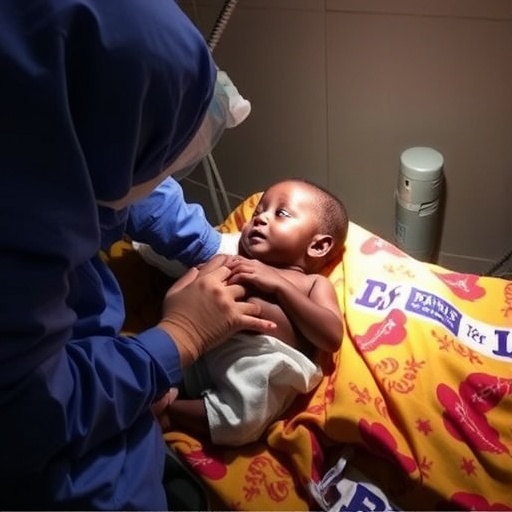
In recent years, pediatric intussusception has emerged as a significant concern in children’s health, particularly in Sub-Saharan Africa. This condition, which involves the telescoping of a segment of the intestine into an adjacent segment, can lead to serious complications if not properly managed. A groundbreaking study conducted by Molla, Setargew, and Alemu addresses the efficacy and safety of nonoperative management for this critical condition, shedding light on treatment options that could revolutionize pediatric care in the region.
Intussusception historically necessitated surgical intervention, which poses inherent risks, especially in resource-limited settings such as Sub-Saharan Africa. The systematic review and meta-analysis conducted by the authors dives deep into the potential for nonoperative approaches to manage this condition effectively. Their findings could provide invaluable insights into improving pediatric care in an area where healthcare resources and facilities are often stretched thin.
The researchers compiled data from various studies that examined the outcomes of nonoperative management techniques. Their systematic approach entailed rigorous selection criteria, ensuring that only high-quality studies were included. By synthesizing this information, they sought to paint a clearer picture of how non-surgical options perform compared to the traditional surgical approach.
One of the key themes that emerged from the analysis was the potential for nonoperative management to reduce complications associated with surgery. Surgical procedures, while sometimes necessary, can introduce risks such as infection, prolonged recovery time, and financial burdens on families already facing economic challenges. By focusing on nonoperative methods, the study opens the door for innovative treatment paradigms that align better with the realities of healthcare in Sub-Saharan Africa.
The efficacy of nonoperative management relies heavily on timely diagnosis and intervention. In pediatric cases, symptoms such as abdominal pain, vomiting, and the presence of an abdominal mass are crucial indicators. The authors emphasize the importance of training healthcare providers in recognizing these symptoms promptly to initiate nonoperative interventions before complications arise. Training could enhance the ability of health workers to provide immediate care in rural and underserved areas.
As the study reviews a spectrum of nonoperative techniques, one prominent method highlighted is the use of air contrast enema. This minimally invasive technique serves as both a diagnostic tool and a therapeutic intervention. By introducing air into the colon, the procedure can sometimes reduce the intussusception on its own, thus avoiding the need for surgery. Understanding the mechanics of such methods is essential for healthcare stakeholders aiming to implement these techniques effectively.
Understanding the barriers to effective healthcare delivery in Sub-Saharan Africa is crucial. The study uncovers challenges such as lack of access to imaging technologies and restrictions in referral pathways that can hinder timely intervention. By addressing these barriers, healthcare systems can optimize the chances for successful nonoperative management, ultimately enhancing patient outcomes.
A significant takeaway from this research is the emphasis on community education and awareness. Families often lack knowledge about the symptoms of intussusception and the potential for nonoperative management. By investing in outreach programs, healthcare providers can empower communities to seek help sooner, drastically improving their children’s chances of avoiding severe complications.
Additionally, the role of telemedicine has emerged as a promising avenue for addressing healthcare delivery issues in the region. By leveraging technology, healthcare workers in remote areas can consult specialists, share imaging results, and make informed decisions about the best course of action for young patients suffering from intussusception. This innovation may bridge the existing gaps in healthcare delivery.
While the study presents a compelling case for nonoperative management, it also acknowledges that some cases may still necessitate surgical intervention. Understanding which patients are best suited for each approach will require robust clinical guidelines based on hospital protocols and patient demographics. Ongoing research will be crucial to refine these guidelines and ensure that pediatric patients receive the appropriate level of care.
In conclusion, the findings of Molla, Setargew, and Alemu’s research serve as a clarion call for a paradigm shift in how we approach pediatric intussusception management in Sub-Saharan Africa. By embracing nonoperative methods, healthcare systems can not only improve patient safety but also reduce the economic burden on families and health services alike. The advancement of nonoperative techniques, coupled with community education and technological integration, holds the potential to transform pediatric care in the region for the better.
As we await the publication of the study, anticipation grows for how this research will impact clinical practices and policies aimed at managing intussusception in children. Emphasizing nonoperative techniques could lead to significant improvements in patient outcomes, transforming a traditionally surgical dilemma into a noninvasive opportunity for recovery.
Subject of Research: Efficacy and safety of nonoperative management for pediatric intussusception in Sub-Saharan Africa
Article Title: Efficacy and safety of nonoperative management for pediatric intussusception in Sub-Saharan Africa: a systematic review and meta-analysis
Article References:
Molla, Y.D., Setargew, K.H. & Alemu, H.T. Efficacy and safety of nonoperative management for pediatric intussusception in Sub-Saharan Africa: a systematic review and meta-analysis.
Pediatr Radiol (2025). https://doi.org/10.1007/s00247-025-06474-1
Image Credits: AI Generated
DOI: 10.1007/s00247-025-06474-1
Keywords: Pediatric intussusception, nonoperative management, Sub-Saharan Africa, air contrast enema, healthcare access, community education, telemedicine, surgical intervention.
Tags: efficacy of pediatric intussusception managementhealthcare challenges in sub-Saharan Africainnovative treatment options for intussusceptionintussusception complications in childrenmedical research in developing countriesnon-surgical management of intussusceptionnonoperative intussusception treatmentpediatric health in Sub-Saharan Africapediatric surgical interventionsresource-limited healthcare solutionssafety of nonoperative interventionssystematic review of intussusception treatments