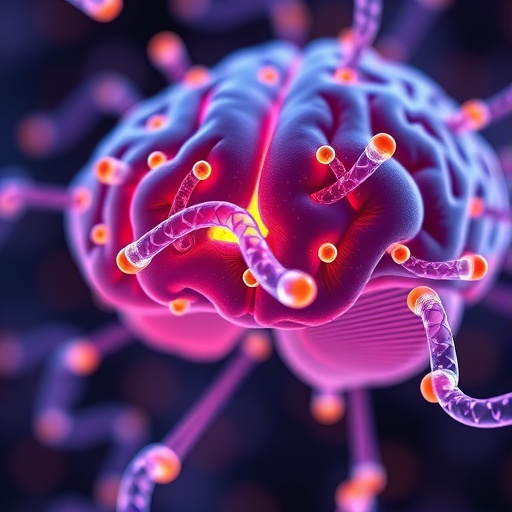
In recent years, the intersection of nanotechnology and pharmacology has emerged as a beacon of hope in the battle against central nervous system (CNS) disorders such as Parkinson’s and Alzheimer’s diseases. These debilitating conditions impose a heavy toll on patients and healthcare infrastructures worldwide, largely because of the formidable obstacle posed by the blood–brain barrier (BBB). This barrier, while essential for maintaining the brain’s protective environment, complicates the delivery of therapeutics directly to the brain tissue, limiting treatment efficacy.
Addressing this challenge, contemporary research has delved deeply into the development of innovative drug delivery vehicles capable of traversing the BBB. Among the most promising advances are nanocarriers — minuscule, engineered particles designed to ferry drugs safely and effectively across this biological blockade. By leveraging the unique physicochemical properties of nanoparticles, these delivery systems enhance bioavailability within the CNS, allowing for more targeted and sustained therapeutic effects.
Various nanomaterial platforms have been engineered to fulfill this role, each with distinct characteristics. Polymeric nanoparticles capitalize on their biocompatibility and controlled-release capabilities, making them versatile candidates for drug encapsulation. Liposomes, lipid-based vesicles, mimic cellular membranes to facilitate fusion and drug transport into the brain, improving uptake and stability. Solid-lipid nanoparticles offer another approach, combining lipid biocompatibility with structural rigidity to protect therapeutic molecules during circulation.
Quantum dots, semiconductor nanocrystals with fluorescent properties, present an exciting avenue for not only delivering drugs but also monitoring their distribution and interaction within neural tissues in real time. Their unique optical features afford researchers unprecedented insight into CNS pharmacokinetics, paving the way for precision nanomedicine.
Despite promising preclinical results and initial clinical explorations, the translation of these nanocarriers into widespread therapeutic use faces considerable hurdles. Safety concerns remain paramount; the long-term biocompatibility and potential immunogenicity of nanoparticles must be rigorously evaluated. Moreover, large-scale manufacturing and reproducibility of these complex nanostructures challenge current pharmaceutical production paradigms.
Scalability presents a twofold problem: first, ensuring that nanoparticle synthesis maintains the precise physical and chemical properties critical for functionality; second, establishing cost-effective methodologies that can be adopted globally. These challenges underscore the crucial need for interdisciplinary collaboration between nanotechnologists, pharmacologists, toxicologists, and regulatory bodies.
The therapeutic potential unlocked by combining traditional pharmacological approaches with nanotechnology could revolutionize how CNS disorders are treated. By overcoming the BBB’s limitations, these novel drug carriers promise enhanced delivery efficiency, reduced systemic side effects, and improved patient compliance through targeted and controlled-release mechanisms.
Emerging research also highlights the importance of surface modifications on nanoparticles, such as the attachment of ligands and antibodies, which facilitate receptor-mediated transport across the BBB. This targeting strategy exploits natural cellular pathways, enabling more precise drug localization and minimizing off-target interactions.
In addition to drug delivery, nanocarriers are being explored for their ability to carry gene therapy vectors and neuroprotective agents, broadening their therapeutic applicability. Such versatility could herald new treatment paradigms for complex neurodegenerative diseases, autoimmune CNS disorders, and brain tumors.
While these advancements are indeed encouraging, it is clear that the promise of nanocarriers in CNS therapeutics requires further validation through extensive clinical trials. Translational research must address safety profiles, dosing regimens, pharmacodynamics, and long-term outcomes to ensure these innovations can be effectively adopted in clinical settings.
Therefore, the ongoing convergence of nanotechnology and pharmacology stands as a pivotal frontier in neuroscience. Continued investment in this domain holds profound implications for alleviating the burden of neurological diseases, potentially transforming the landscape of CNS drug delivery and patient care.
As the scientific community advances in decoding the intricacies of BBB penetration and nanocarrier design, the vision of precise, effective, and safe treatments for CNS disorders moves closer to realization. This synthesis of disciplines exemplifies the future trajectory of biomedical innovation—a future where technology and medicine coalesce to overcome previously insurmountable challenges.
Subject of Research: Advances in drug nanocarriers for delivery to the central nervous system (CNS) overcoming the blood-brain barrier (BBB).
Article Title: Recent advances in potential drug nanocarriers for CNS disorders: a review
Article References:
Saraswathi, T.S., Mothilal, M., Bukke, S.P.N. et al. Recent advances in potential drug nanocarriers for CNS disorders: a review.
BioMed Eng OnLine 24, 137 (2025). https://doi.org/10.1186/s12938-025-01474-6
Image Credits: AI Generated
DOI: 21 November 2025
Tags: advanced pharmacology for CNS disordersbiocompatible drug carriersCNS drug delivery innovationsliposomes in CNS treatmentnanocarriers for brain therapeuticsnanotechnology in drug deliveryneurodegenerative disease treatmentsovercoming blood-brain barrier challengespersonalized medicine for Alzheimer’s and Parkinson’spolymeric nanoparticles applicationssolid-lipid nanoparticles technologytargeted drug delivery systems