• HOME
  • NEWS
  • EXPLORE
    • CAREER
      • Companies
      • Jobs
    • EVENTS
    • iGEM
      • News
      • Team
    • PHOTOS
    • VIDEO
    • WIKI
  • BLOG
  • COMMUNITY
    • FACEBOOK
    • INSTAGRAM
    • TWITTER
Thursday, April 9, 2026
BIOENGINEER.ORG
No Result
View All Result
  • Login
  • HOME
  • NEWS
  • EXPLORE
    • CAREER
      • Companies
      • Jobs
        • Lecturer
        • PhD Studentship
        • Postdoc
        • Research Assistant
    • EVENTS
    • iGEM
      • News
      • Team
    • PHOTOS
    • VIDEO
    • WIKI
  • BLOG
  • COMMUNITY
    • FACEBOOK
    • INSTAGRAM
    • TWITTER
  • HOME
  • NEWS
  • EXPLORE
    • CAREER
      • Companies
      • Jobs
        • Lecturer
        • PhD Studentship
        • Postdoc
        • Research Assistant
    • EVENTS
    • iGEM
      • News
      • Team
    • PHOTOS
    • VIDEO
    • WIKI
  • BLOG
  • COMMUNITY
    • FACEBOOK
    • INSTAGRAM
    • TWITTER
No Result
View All Result
Bioengineer.org
No Result
View All Result
Home NEWS Science News

Movie research results: Multitasking overloads the brain

Bioengineer by Bioengineer
April 25, 2017
in Science News
Reading Time: 2 mins read
0
Share on FacebookShare on TwitterShare on LinkedinShare on RedditShare on Telegram
IMAGE

Credit: Juha Lahnakoski

The brain works most efficiently when it can focus on a single task for a longer period of time.

Previous research shows that multitasking, which means performing several tasks at the same time, reduces productivity by as much as 40%. Now a group of researchers specialising in brain imaging has found that changing tasks too frequently interferes with brain activity. This may explain why the end result is worse than when a person focuses on one task at a time.

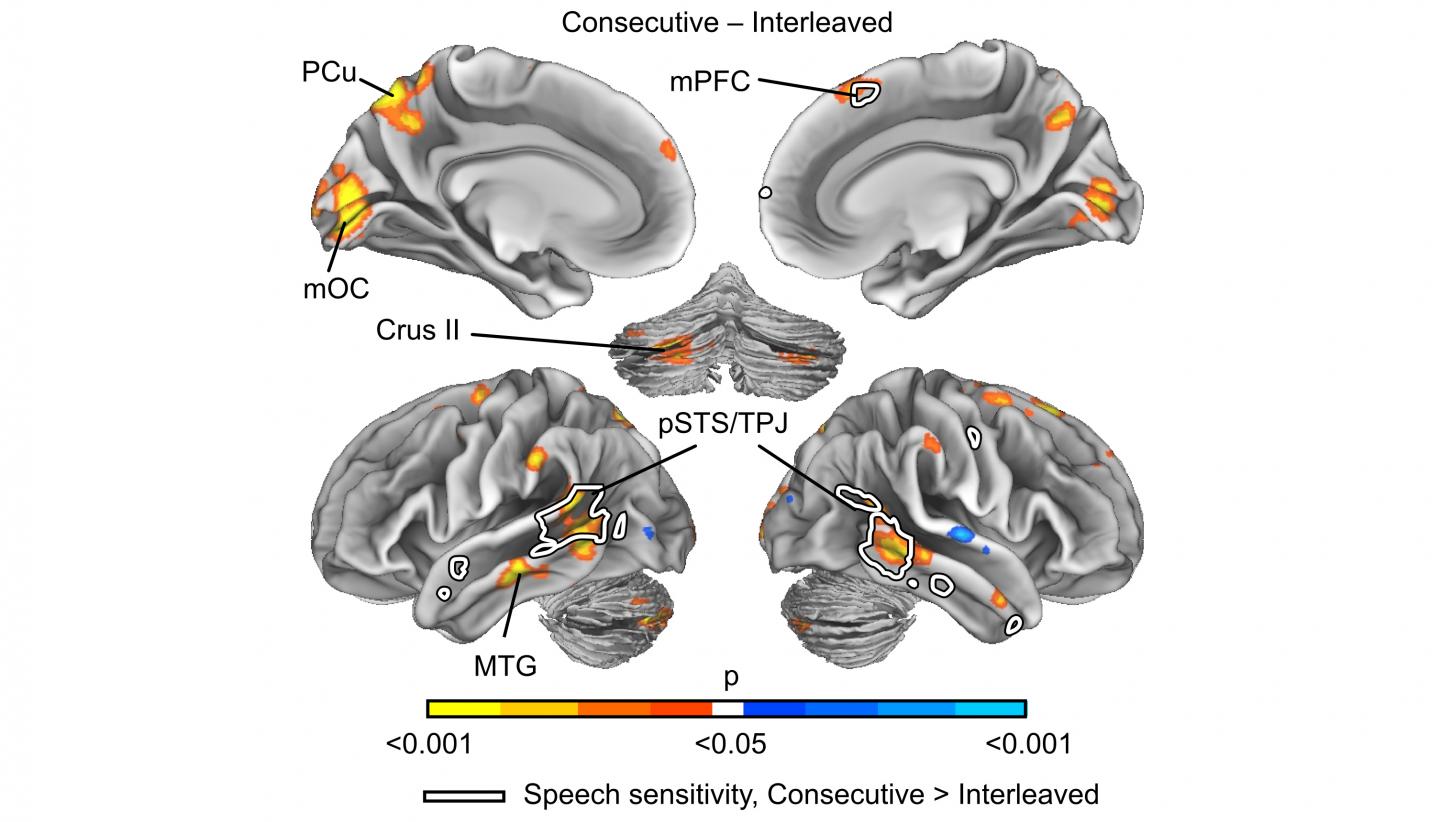
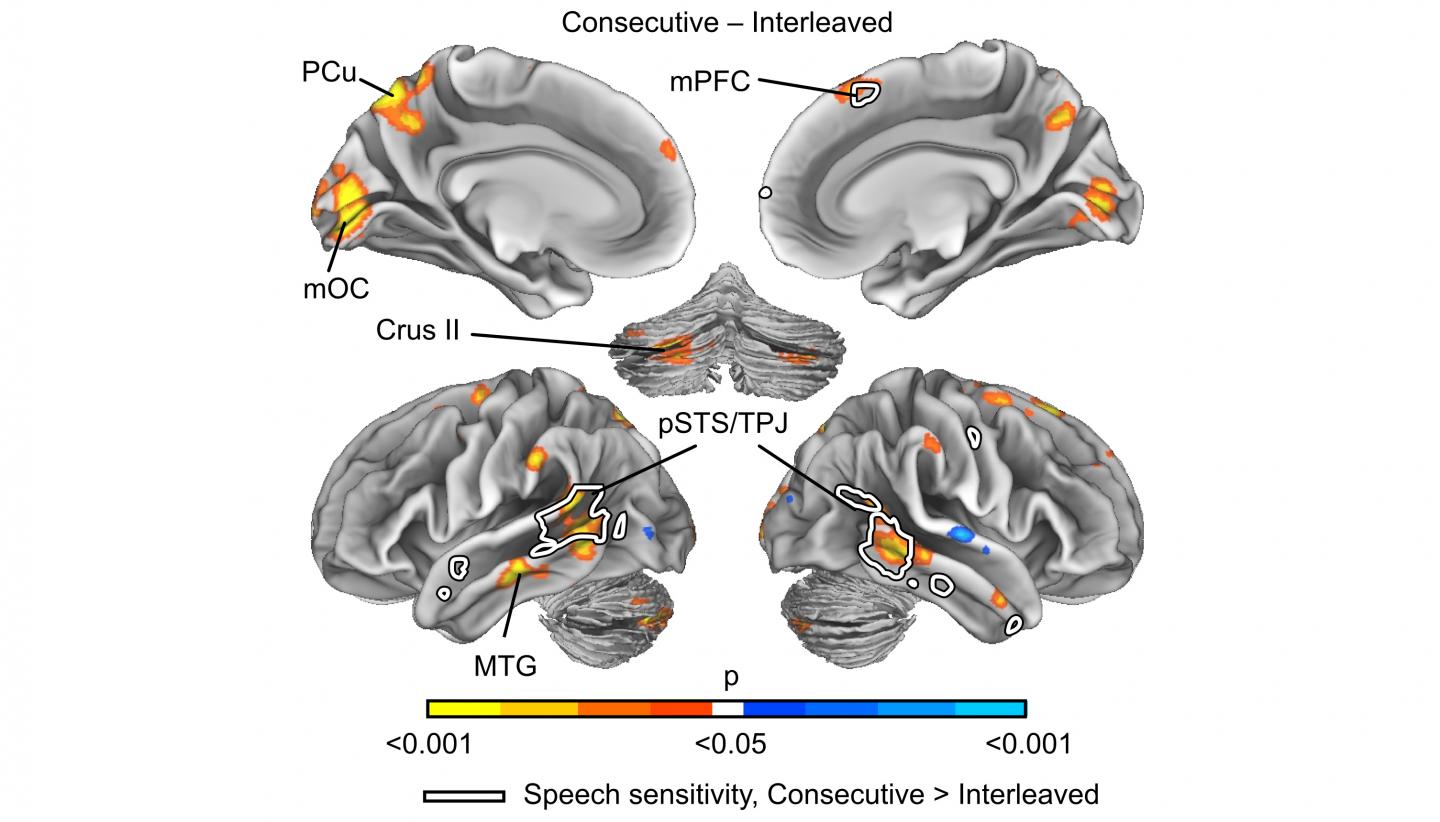
'We used functional magnetic resonance imaging to measure different brain areas of our research subjects while they watched short segments of the Star Wars, Indiana Jones and James Bond movies,' explains Aalto University Associate Professor Iiro Jääskeläinen.

Cutting the films into segments of approximately 50 seconds fragmented their continuity. In the study, the subjects' brain areas functioned more smoothly when they watched the films in segments of 6.5 minutes. The posterior temporal and dorsomedial prefrontal cortices, the cerebellum and dorsal precuneus are the most important areas of the brain in terms of combining individual events into coherent event sequences. These areas of the brain make it possible to turn fragments into complete entities. According to the study, these brain regions work more efficiently when it can deal with one task at a time.

Inadequacy and overloading

Jääskeläinen recommends completing one task each day rather than working on a dozen of different tasks simultaneously.

'It's easy to fall into the trap of multitasking. In that case, it seems like there is little real progress and this leads to a feeling of inadequacy. Concentration decreases, which causes stress. Prolonged stress hinders thinking and memory,' says Jääskeläinen.

The neuroscientist also sees social media as a challenge.

'Social media is really nothing but multitasking, with several parallel plots and issues. You might end up reading the news or playing a game recommended by a friend. From the brain's perspective, social media only increases the load.'

###

In addition to Jääskeläinen, Juha Lahnakoski from Max Planck Institute, Mikko Sams from Aalto University and Lauri Nummenmaa from the University of Turku participated in the research.

More information:

Iiro Jääskeläinen
Aalto University
[email protected]
tel. +358 50 560 9503

Article: Neural mechanisms for integrating consecutive and interleaved natural events http://onlinelibrary.wiley.com/doi/10.1002/hbm.23591/full

Video (intended for research group page only): https://drive.google.com/file/d/0B5pFkSAzmKTTOTlwN0VJXzFHSU0/view

Media Contact

Iiro Jääskeläinen
[email protected]
358-505-609-503
@aaltouniversity

http://www.aalto.fi/en/

############

Story Source: Materials provided by Scienmag

Share12Tweet8Share2ShareShareShare2

Related Posts

ARHGAP21 Boosts Liver Cancer Spread by Protecting Filamin A

April 9, 2026

Coenzyme Q10 Shields Liver from Atorvastatin Damage

April 9, 2026

TyG/AIP Indices Linked to Survival in Elderly Patients

April 9, 2026

Aging Biomarkers Linked to Spinal Disc Degeneration

April 9, 2026
Please login to join discussion

POPULAR NEWS

  • blank

    Revolutionary AI Model Enhances Precision in Detecting Food Contamination

    98 shares
    Share 39 Tweet 25
  • Imagine a Social Media Feed That Challenges Your Views Instead of Reinforcing Them

    1011 shares
    Share 399 Tweet 250
  • Popular Anti-Aging Compound Linked to Damage in Corpus Callosum, Study Finds

    44 shares
    Share 18 Tweet 11
  • Revolutionary Theory Transforms Quantum Perspective on the Big Bang

    40 shares
    Share 16 Tweet 10

About

We bring you the latest biotechnology news from best research centers and universities around the world. Check our website.

Follow us

Recent News

ARHGAP21 Boosts Liver Cancer Spread by Protecting Filamin A

Coenzyme Q10 Shields Liver from Atorvastatin Damage

TyG/AIP Indices Linked to Survival in Elderly Patients

Subscribe to Blog via Email

Enter your email address to subscribe to this blog and receive notifications of new posts by email.

Join 78 other subscribers
  • Contact Us

Bioengineer.org © Copyright 2023 All Rights Reserved.

Welcome Back!

Login to your account below

Forgotten Password?

Retrieve your password

Please enter your username or email address to reset your password.

Log In
No Result
View All Result
  • Homepages
    • Home Page 1
    • Home Page 2
  • News
  • National
  • Business
  • Health
  • Lifestyle
  • Science

Bioengineer.org © Copyright 2023 All Rights Reserved.