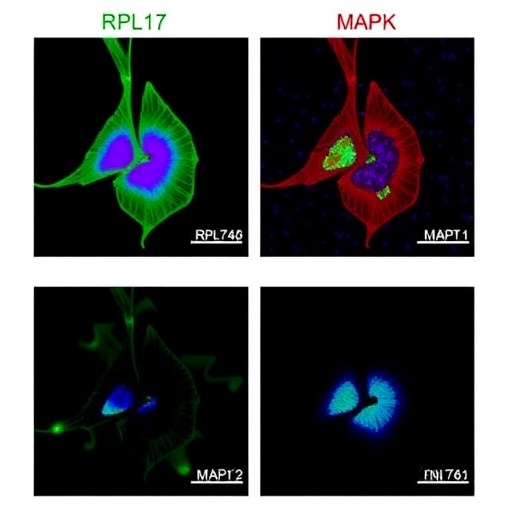
In a groundbreaking development that could redefine therapeutic strategies for breast cancer, researchers have unveiled the pivotal role of Ribosomal Protein L17 (RPL17) in orchestrating tumor progression via activation of the MAPK signaling pathway. This revelation offers an intricate glimpse into the molecular mechanisms underlying breast cancer aggressiveness and opens up avenues for targeted interventions.
Breast cancer remains one of the most prevalent malignancies affecting women globally, with complex molecular underpinnings that challenge effective treatment. The latest study, conducted by Cai, Liu, and Yin, focuses on RPL17, a ribosomal protein primarily known for its role in protein synthesis, but increasingly recognized for its extraribosomal functions in cancer biology. By illuminating RPL17’s influence on breast cancer cell behavior, this research injects fresh momentum into the quest for novel molecular targets.
The study meticulously traces the trajectory of RPL17 expression in breast cancer cells, revealing heightened levels that correlate with tumor stage and metastatic potential. Unlike traditional ribosomal proteins, RPL17 appears to extend its function beyond ribosome assembly, engaging in signaling cascades that govern cell proliferation and survival. This dual functionality underscores its potential as both a biomarker and a therapeutic target.
Central to this discovery is the elucidation of MAPK (Mitogen-Activated Protein Kinase) signaling pathway activation mediated by RPL17. The MAPK pathway, a critical conduit in transmitting extracellular growth signals to the nucleus, governs essential cellular processes such as differentiation, proliferation, and apoptosis. Dysregulation of this pathway is a hallmark of numerous cancers, including breast cancer; thus, RPL17’s role in modulating MAPK activity adds a vital layer to the pathophysiological narrative.
Through sophisticated molecular assays and in vitro experimentation, the researchers demonstrated that upregulation of RPL17 triggers MAPK cascade activation, enhancing tumorigenic properties such as invasiveness, motility, and resistance to apoptotic stimuli. These insights suggest that RPL17 is not a passive bystander but a dynamic promoter of oncogenic signaling, propelling cancer progression.
Intriguingly, the study also explored the mechanistic intricacies of this relationship, revealing that RPL17 may interact with upstream regulators or scaffold proteins facilitating MAPK pathway activation. This complex interplay hints at a finely tuned regulatory network wherein RPL17 acts as a molecular hub, integrating cellular signals to enhance malignant phenotypes.
The implications of these findings extend well into clinical realms. Targeting RPL17 could disrupt aberrant MAPK signaling, potentially restraining tumor growth and metastasis. Given the limitations of current MAPK inhibitors, which often face issues like resistance and toxicity, modulating RPL17 presents a compelling alternative or adjunct strategy.
Moreover, the identification of RPL17 as a contributor to breast cancer progression provides a dual advantage. Beyond its therapeutic targeting potential, RPL17 expression levels could serve as a prognostic indicator, aiding clinicians in stratifying patients based on tumor aggressiveness and tailoring personalized treatment protocols.
Advancing into translational prospects, the study encourages the development of small molecule inhibitors or RNA-based therapeutics aimed at RPL17 modulation. Such interventions could potentiate existing treatment regimens, enhancing efficacy while minimizing adverse effects—a significant stride in precision oncology.
This research also resonates with broader oncological paradigms where ribosomal proteins are emerging as multifunctional entities influencing cancer biology. The integration of ribosomal protein dynamics within signal transduction frameworks like MAPK underscores the intricate connectivity of cellular machinery exploited by tumors.
Future investigations inspired by this work might explore the crosstalk between RPL17 and other signaling pathways, uncovering synergistic interactions that sustain tumorigenesis. Additionally, in vivo studies and clinical trials evaluating RPL17-targeted therapies will be essential to translate these promising findings into tangible patient benefits.
Importantly, the study prompts a reevaluation of ribosomal proteins beyond their canonical roles, positioning them as critical modulators in cancer’s molecular landscape. This paradigm shift could catalyze innovative approaches that harness these proteins for diagnostic and therapeutic advancements.
Ultimately, this research by Cai and colleagues not only enriches our understanding of breast cancer biology but also kindles hope for more effective interventions. By spotlighting RPL17 and its regulatory impact on MAPK signaling, the study paves the way for breakthroughs that could transform patient outcomes and usher in a new era of cancer treatment.
As the scientific community continues to unravel the complexities of cancer signaling networks, the insights gained from this investigation underscore the importance of integrating molecular biology with clinical oncology. Such interdisciplinary efforts hold the key to conquering one of medicine’s most formidable challenges.
In conclusion, the identification of RPL17 as a regulator of breast cancer progression through MAPK pathway activation marks a significant milestone. The multifaceted role of RPL17 accentuates the intricate molecular choreography guiding malignancy and highlights promising targets for future therapeutic intervention. This advancement stands as a testament to the relentless pursuit of knowledge driving cancer research towards innovative and life-saving solutions.
Subject of Research: Regulation of breast cancer progression by RPL17 and its association with MAPK signaling activation
Article Title: RPL17 regulates the progression of breast cancer accompanied by MAPK signaling activation
Article References:
Cai, Y., Liu, H. & Yin, G. RPL17 regulates the progression of breast cancer accompanied by MAPK signaling activation. Med Oncol 42, 550 (2025). https://doi.org/10.1007/s12032-025-03117-1
Image Credits: AI Generated
DOI: https://doi.org/10.1007/s12032-025-03117-1
Tags: advancements in breast cancer researchbiomarkers for breast cancerbreast cancer aggressiveness factorsbreast cancer molecular mechanismscell proliferation and survival mechanismsMAPK signaling pathway activationnovel molecular targets in oncologyribosomal protein extraribosomal functionsRPL17 role in breast cancertargeted interventions in cancer therapytherapeutic strategies for malignanciestumor progression and metastasis