In the realm of contemporary organic synthesis, the drive toward constructing complex, three-dimensional molecules is redefining the frontiers of chemical innovation. A recent breakthrough focuses on the assembly of rigid, saturated scaffolds such as cyclobutanes, azetidines, and oxetanes—structures highly coveted in drug discovery for their unique physicochemical properties and biological relevance. This pioneering research introduces a modular, scalable, and chemoselective strategy leveraging readily available α-bromoacids and aryl halides as starting materials, charting a new course in synthetic methodology that stands to revolutionize medicinal chemistry workflows.
Traditional approaches to generating these intricate frameworks often involve polar bond disconnections that are time-consuming and inherently limiting in the scope of accessible chemical space. These classical methods, while effective, impose constraints on the diversity and complexity of molecules that can be synthesized efficiently. The innovation reported here circumvents these limitations through a sequence of nickel-electrocatalytic cross-couplings. Employing nickel as a catalytic driver under electrochemical conditions offers a remarkable enhancement in the control and efficiency of carbon-carbon bond formation, notably enabling the forging of 1,1-diaryl cyclobutanes, azetidines, and oxetanes in a convergent fashion.
The crux of this method lies in its triple convergent strategy, wherein simple, commercially available α-bromoacids are coupled sequentially with aryl halides via nickel-mediated electrocatalysis. This approach not only streamlines the synthetic steps required but also enhances chemoselectivity—favoring desired bond formations while suppressing side reactions. This innovation unlocks rapid access to architectures that were previously challenging or near-impossible to assemble with such precision, poised to expand the structural diversity available in pharmaceutical libraries significantly.
Scaling up synthetic reactions from bench to industrially relevant quantities remains a formidable challenge in organic chemistry. Demonstrating the scalability of their nickel-electrocatalytic sequence, the researchers effectively translate this methodology into larger-scale operations without sacrificing yield or selectivity. This aspect underscores the practical viability of the approach, positioning it as a powerful tool for both academic researchers and industrial practitioners engaged in synthesis-intensive fields such as drug discovery and material sciences.
One of the salient achievements of this work is the direct application of the developed reaction sequence to synthesize known patented structures. By mapping this methodology onto established molecular frameworks, the researchers validate its robustness and relevance, illustrating how it can serve as a replacement or adjunct to existing synthetic routes. This not only accelerates the generation of target molecules but also facilitates late-stage functionalization, a critical asset in medicinal chemistry where rapid analog synthesis is imperative.
The adoption of sophisticated catalytic systems often comes with technical complexities that can hinder their widespread use. Anticipating this, the authors have provided a straightforward user guide designed to lower the barrier to entry, enabling chemists to integrate this nickel-electrocatalytic cross-coupling seamlessly into their workflows. This guidance demystifies the technical nuances, enabling a broader spectrum of chemists, including those less familiar with electrosynthetic techniques, to harness the power of this transformative approach.
Electrochemistry, as an enabling technology in synthesis, has undergone a renaissance due to its inherent sustainability and fine-tuned control over redox events. This study taps into the enormous potential of nickel electrocatalysis to exploit these benefits, replacing traditional chemical reagents with electricity as a clean and tunable reagent. This pivot underscores a shift towards greener synthetic practices without compromising molecular complexity or diversity.
Focusing on cyclobutanes, azetidines, and oxetanes is a strategic choice reflecting their burgeoning importance in medicinal chemistry. These saturated, conformationally restricted motifs impart desirable three-dimensional character and metabolic stability to bioactive compounds. Their incorporation has been correlated with improved pharmacokinetic profiles, making them coveted elements in the design of next-generation drugs that demand precision in both structure and function.
The methodology’s chemoselectivity is especially noteworthy, as it permits the selective formation of carbon-carbon bonds amidst a plethora of functional groups often present in complex molecular substrates. This precision mitigates the need for protective groups, streamlining synthetic sequences and enhancing overall efficiency. Such attributes are crucial for late-stage diversification, where the unmodified regions of the molecule must remain intact to preserve biological activity.
From a mechanistic standpoint, the sequential nickel-electrocatalytic cross-couplings likely proceed through carefully orchestrated oxidative addition, transmetallation, and reductive elimination steps, all finely controlled under electrochemical potential. This controlled assembly paves the way for solid-state intermediates and transition states that facilitate convergent molecular construction. This mechanistic insight provides chemists with a detailed blueprint to further refine and customize the reaction conditions for broader substrate scopes and derivative syntheses.
By harnessing simple α-bromoacids and aryl halides, this approach democratizes access to complex molecules, given the ready availability and broad diversity of such starting materials. This democratization is anticipated to drive a paradigm shift in synthetic strategy, enabling rapid, diversified library synthesis with fewer synthetic bottlenecks and increasing throughput in medicinal chemistry campaigns.
The innovation aligns with the broader goals of sustainable chemistry and efficient resource utilization, minimizing reliance on heavy metals and excessive reagents. Electrochemical approaches reduce waste generation and often operate under mild conditions, enhancing the sustainability profile of the synthetic campaigns—a crucial consideration as the chemical industry pivots toward greener technologies.
Moreover, this study offers a strategic framework that complements existing synthetic protocols, serving not as a wholesale replacement but as a versatile component within a synthetic chemist’s toolkit. The modularity of the approach means that each cross-coupling event can be independently optimized and tailored, offering immense flexibility in the design of complex molecular entities.
In sum, this advancement is poised to reshape the landscape of organic synthesis by providing a rapid, scalable, and user-friendly route to molecular scaffolds previously difficult to access. The implications extend beyond the laboratory to influence drug design, material science, and potentially catalysis itself, heralding a new era where complex molecular architectures are no longer a limiting factor but a standard feature in chemical innovation.
As the adoption of nickel-electrocatalytic methods broadens, we anticipate a surge in the development of novel molecules with enhanced biological activities, propelling forward the frontiers of drug discovery and synthetic chemistry. This work not only exemplifies the synergy between transition metal catalysis and electrochemistry but also embodies the innovative spirit necessary for next-generation molecular synthesis.
Subject of Research:
The development of a modular and scalable nickel-electrocatalytic method for synthesizing complex saturated scaffolds such as 1,1-diaryl cyclobutanes, azetidines, and oxetanes.
Article Title:
Triply convergent Ni-electrocatalytic assembly of 1,1-diaryl cyclobutanes, azetidines and oxetanes.
Article References:
Massaro, L., Neigenfind, P., Feng, A. et al. Triply convergent Ni-electrocatalytic assembly of 1,1-diaryl cyclobutanes, azetidines and oxetanes. Nat. Chem. (2025). https://doi.org/10.1038/s41557-025-01990-x
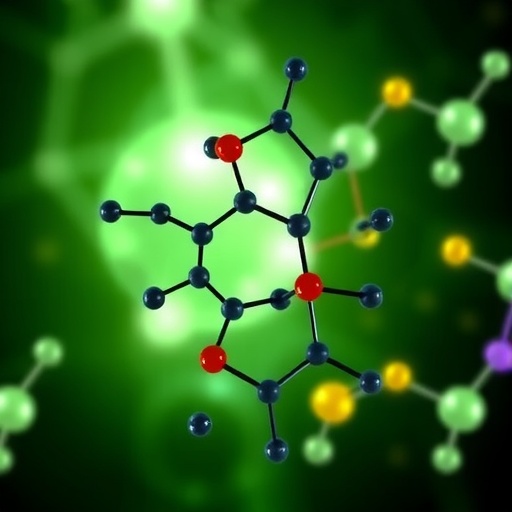
Image Credits: AI Generated
DOI: https://doi.org/10.1038/s41557-025-01990-x
Tags: 11-diaryl cyclobutanes synthesisazetidine synthesis methodscarbon-carbon bond formationchemoselective synthetic strategiescomplex molecule assembly in pharmaceuticalsdrug discovery scaffoldselectrochemical catalysis in medicineinnovative organic chemistry approachesmodular organic synthesisNi-electrocatalysisoxetane construction techniquesscalable chemical methodologies