In a groundbreaking discovery that expands our understanding of soil biodiversity, researchers from Nantong University have announced the identification of four new species within the springtail genus Lepidosira, marking the first recorded presence of this genus in China. This significant breakthrough was achieved through a combination of cutting-edge molecular techniques and classical morphological analysis, setting a new standard for taxonomic research in this group of cryptic soil arthropods. The findings have been officially published in the open-access entomology journal Deutsche Entomologische Zeitschrift, affiliated with the Museum für Naturkunde Berlin.
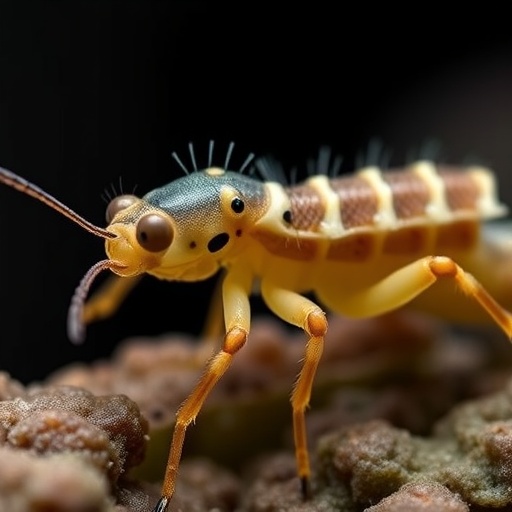
Springtails, tiny hexapods belonging to the order Collembola, are among the most abundant and ecologically vital soil-dwelling organisms worldwide. Despite their small size, they play critical roles in soil health, nutrient cycling, and ecosystem functioning by facilitating the decomposition of organic matter and enhancing microbial activity. The genus Lepidosira, until now undocumented in China, belongs to the family Entomobryidae and is characterized by scaled bodies, a feature that aids in their identification but has also led to taxonomic confusion due to color variability.
The research, led by biologists Xiaowei Qian, Meidong Jing, and Yitong Ma, was centered on extensive field expeditions at the Yintiaoling National Nature Reserve in Chongqing, a key biodiversity hotspot situated in southwestern China. This forested region, known for its complex habitats and endemic species, provided an ideal setting for the comprehensive collection and study of soil microarthropods. The team employed traditional specimen collection complemented by advanced DNA barcoding, focusing on the mitochondrial cytochrome c oxidase subunit I (COI) gene, a molecular marker widely recognized for its effectiveness in delineating cryptic species.
The integrative taxonomic approach yielded four novel species — Lepidosira apigmenta, L. similis, L. wuxiensis, and L. chongqingensis — each distinctly characterized by unique morphological traits coupled with genetic divergence. Lepidosira apigmenta, for instance, is distinguished by a lack of pigmentation absent in its congeners. These discoveries not only enrich the global catalog of Entomobryid diversity but also underscore the hidden complexity of soil fauna in regions previously underexplored for Collembola diversity.
A notable aspect of this study is the resolution of historical taxonomic ambiguities through molecular verification. The researchers re-examined two previously recorded Chinese species, which had been misclassified due to reliance on color-based identification—a method often compromised by intraspecific color polymorphism and phenotypic plasticity. Genetic barcoding helped correct their taxonomic placement within Lepidosira, improving the accuracy of species inventories and evolutionary interpretations.
The team also developed an updated identification key tailored to the scaled genera of the subfamily Entomobryinae, a valuable tool poised to streamline future biodiversity assessments and ecological monitoring. The key facilitates precise discrimination among closely related taxa, which is essential for ecological studies, conservation efforts, and understanding soil ecosystem dynamics.
Scientifically, this discovery highlights the immense biodiversity that remains undocumented in soil microarthropod communities, particularly in Asia’s temperate and subtropical biomes. It further emphasizes the necessity of integrating molecular techniques with classical taxonomy to overcome limitations imposed by morphological convergence and phenotypic variation in small cryptic species.
Moreover, the study reinforces the role of protected natural reserves in harboring unique biological diversity and underlines the urgent need for their conservation amidst escalating anthropogenic pressures. The Yintiaoling National Nature Reserve, as evidenced by this research, is not merely a sanctuary for macrofauna but also a repository of intricate soil biodiversity yet to be fully understood.
The implications of these findings extend into ecological research, soil science, and conservation biology, illustrating how molecular tools augment traditional methods to reveal new facets of biodiversity. Such integrative approaches are crucial for constructing accurate bioindicators of soil health and ecosystem integrity, particularly in the face of climate change and habitat degradation.
This pioneering research was financially supported by the National Natural Science Foundation of China and the Large Instruments Open Foundation of Nantong University. Their backing enabled the deployment of sophisticated genetic sequencing equipment and facilitated comprehensive field campaigns vital to the project’s success.
As the scientific community continues to unravel the hidden diversity of microarthropods, discoveries like those of Qian, Jing, and Ma offer promising avenues for biotechnological applications, ecosystem management, and global biodiversity conservation. These newly described Lepidosira species not only add to the taxonomic richness but also expand our understanding of evolutionary trajectories within the Entomobryidae family.
The publication of these results in a prominent journal dedicated to entomology reflects the growing recognition of soil fauna’s contribution to planetary health. It invites further research into the functional roles of springtails and their potential responses to environmental change, strengthening the foundation for sustainable management of terrestrial ecosystems.
Subject of Research: Discovery and description of four new Lepidosira species (Collembola, Entomobryidae) in China using COI barcoding.
Article Title: First report of Lepidosira (Collembola, Entomobryidae) from China, with description of four new species under the aid of COI barcoding.
News Publication Date: 5-Nov-2025
Web References:
DOI: 10.3897/dez.72.153961
References:
Qian X, Jing M, Ma Y (2025) First report of Lepidosira (Collembola, Entomobryidae) from China, with description of four new species under the aid of COI barcoding. Deutsche Entomologische Zeitschrift 72(2): 341-365.
Image Credits: Qian et al.
Keywords: Lepidosira, springtails, Collembola, Entomobryidae, soil biodiversity, COI barcoding, taxonomy, Yintiaoling National Nature Reserve, China, DNA barcoding, molecular taxonomy, new species discovery
Tags: biodiversity hotspots in ChinaCollembola arthropodscritical roles of soil organismsecological roles of springtailsEntomobryidae family characteristicsLepidosira springtails discoverymolecular techniques in taxonomymorphological analysis in entomologynew species identification in Chinasoil biodiversity researchsoil health and nutrient cyclingYintiaoling National Nature Reserve