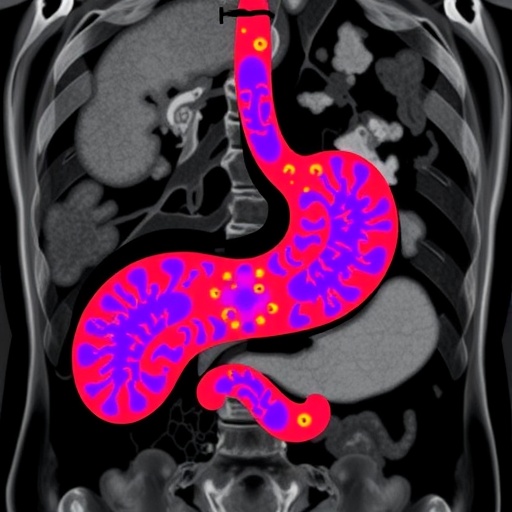
Pancreatic ductal adenocarcinoma (PDAC) remains one of the deadliest malignancies worldwide, notorious for its aggressive nature and dismal survival rates. Despite advances in oncology, the molecular landscape underpinning PDAC varies significantly across different populations, influencing disease progression and therapeutic response. A groundbreaking study by researchers from Karachi, Pakistan, has unveiled a compelling genetic mutation in the TP53 gene that may redefine biomarker strategies for PDAC patients in this region. The study, recently published in BMC Cancer, identifies the TP53 c.730G > A pathogenic variant as a frequent and potentially pivotal biomarker for tailored interventions in pancreatic cancer.
The investigative team conducted a retrospective cohort analysis involving 109 Pakistani PDAC patients, analyzing formalin-fixed paraffin-embedded (FFPE) tumor samples through state-of-the-art genetic sequencing techniques. The study meticulously targeted four critical oncogenes and tumor suppressor genes: KRAS, TP53, BRCA1, and APC. This gene panel selection was informed by preceding pilot studies emphasizing these loci as hotspots for mutations with possible clinical ramifications. Employing polymerase chain reaction (PCR) amplification followed by Sanger sequencing, the researchers achieved high-resolution mapping of mutational spectra within these genes.
In an unprecedented finding, TP53 mutations emerged as the most prevalent, detected in an astounding 75.2% of patients harboring pathogenic variants. Remarkably, all these patients shared one consistent mutation–the c.730G > A substitution in the TP53 gene. This mutation results in a nucleotide change with significant consequences for the functionality of the p53 tumor suppressor protein, a critical regulator of cell cycle arrest, DNA repair, and apoptosis. The consistency of this mutation across the cohort highlights its potential role as a driver mutation in the pathogenesis of PDAC within this population.
Beyond TP53, the study identified 59 genetic variants collectively across the four genes, of which approximately 22% were classified as pathogenic. Known for their oncogenic roles, KRAS alterations also showed a significant presence. The research demonstrated strong correlations between BRCA1 mutations and alterations in KRAS, TP53, and APC genes, emphasizing the complex interplay among these genomic aberrations in tumor biology. Notably, mutations in TP53 and KRAS were significantly associated with overall patient survival, underscoring their prognostic value.
The geographic specificity of the TP53 c.730G > A pathogenic variant holds particular importance. Previous global datasets often observe diverse TP53 mutational profiles, but the apparent predominance of this single mutation among Pakistani PDAC patients suggests distinctive genetic or environmental influences in this population. This discovery sheds light on the heterogeneity of PDAC and stresses the necessity for regional genomic studies to refine precision oncology approaches tailored to unique population genetics.
Therapeutically, the implication of TP53 c.730G > A as a biomarker could revolutionize PDAC management in Pakistan. Traditional treatment paradigms have largely neglected underlying molecular variations, contributing to poor outcomes. Identification of this mutation offers opportunities for the development of targeted therapies that modulate p53 function or exploit associated molecular vulnerabilities. Additionally, its detection can aid early diagnosis, patient stratification, and monitoring treatment response, potentially improving survival rates in this high-risk group.
The researchers underscore that this is the first extensive genetic investigation of PDAC patients from Pakistan, bridging a significant knowledge gap and providing a foundation for future oncogenomic studies in South Asia. By establishing a mutational signature distinct from global reports, this work challenges the one-size-fits-all model and advocates for the integration of population-specific molecular diagnostics in oncology.
Methodologically, the careful selection of gene regions based on prior evidence ensured the study remained focused on clinically relevant mutations. The use of FFPE samples, commonplace in pathology archives, highlights the feasibility of retrospective genetic analyses in resource-constrained settings. Moreover, the robust statistical association between specific genetic alterations and clinical outcomes reinforces the validity of these findings and their potential translational impact.
In conclusion, the identification of the TP53 c.730G > A mutation as a near-universal pathogenic variant among this patient cohort marks a historic advance in pancreatic cancer biomarker research. It illuminates a path toward precision medicine specifically attuned to the genetic milieu of Pakistani patients, which could herald improved screening, prognostication, and treatment strategies. As oncologists and researchers worldwide grapple with the complexity of PDAC, this study offers a compelling model of how regional genetic insights can drive global progress against this formidable disease.
Future research is warranted to elucidate the functional consequences of TP53 c.730G > A at the molecular and cellular levels, investigate its potential as a therapeutic target, and explore its prevalence in other South Asian populations. Such endeavors will enhance understanding of PDAC biology while promoting equitable and effective cancer care tailored to diverse genetic backgrounds.
This study propels precision oncology into a new era, highlighting the critical importance of integrating genetic research with population demographics. The novel insights into TP53 pathogenesis detailed herein could serve as a catalyst for viral dissemination of knowledge and innovation within the scientific and medical communities, ultimately transforming outcomes for pancreatic cancer patients in Pakistan and beyond.
Subject of Research: Pancreatic ductal adenocarcinoma (PDAC) genetic biomarkers in Pakistani patient population
Article Title: TP53 c.730G > A pathogenic variant as a plausible candidate biomarker in pancreatic ductal adenocarcinoma patients from Karachi, Pakistan: a retrospective cohort study
Article References:
Ali, S.A., Adnan, Y., Ali, S.M. et al. TP53 c.730G > A pathogenic variant as a plausible candidate biomarker in pancreatic ductal adenocarcinoma patients from Karachi, Pakistan: a retrospective cohort study. BMC Cancer 25, 1730 (2025). https://doi.org/10.1186/s12885-025-15057-0
Image Credits: Scienmag.com
DOI: 07 November 2025
Keywords: TP53 mutation, pancreatic ductal adenocarcinoma, biomarker, KRAS, BRCA1, APC, genetic variants, Pakistani population, precision oncology, Sanger sequencing
Tags: clinical implications of TP53 mutationsgenetic biomarkers for PDAChigh-resolution genetic sequencing techniquesKarachi pancreatic cancer studymolecular landscape of pancreatic canceroncogenes and tumor suppressor genespancreatic ductal adenocarcinoma researchpathogenic variant TP53 c.730G>Apersonalized medicine for PDACretrospective cohort analysis in oncologyTP53 gene mutationtumor mutation frequency in Pakistan