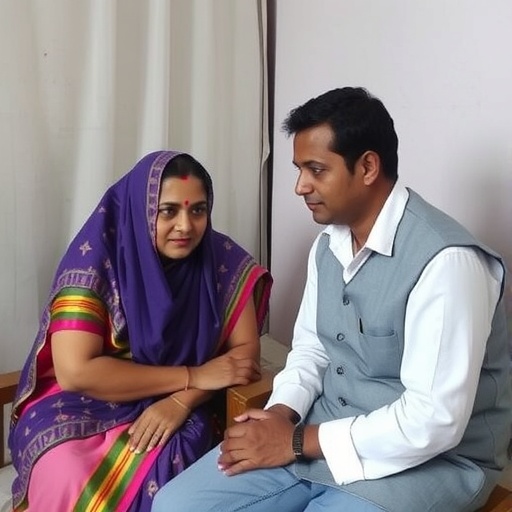
India is currently grappling with an escalating public health challenge as breast and cervical cancers account for a significant proportion of cancer cases nationwide. Together, these two malignancies represent more than one-third of all cancer diagnoses in the country, underscoring an urgent need for effective measures aimed at early detection and treatment. Recognizing the transformative potential of timely identification of cancerous changes, health professionals emphasize that early diagnosis significantly increases the chances of successful and affordable treatment, thereby reducing mortality rates. However, despite the known benefits, participation in cancer screening programs remains remarkably low across different regions of India.
This concerning trend is particularly pronounced in low- and middle-income countries (LMICs) such as India, where healthcare infrastructure often struggles to meet the demands of widespread cancer screening initiatives. Resource constraints, insufficient healthcare personnel, and logistical challenges have collectively hindered the implementation of organized early detection programs. Consequently, many women—especially in underserved regions—fail to access timely screening services, resulting in late-stage diagnoses and poorer prognoses. In light of this situation, a thorough evaluation of existing breast and cervical cancer screening programs in India was conducted to identify gaps and opportunities for improvement.
The recent comprehensive scoping review synthesized information from 59 peer-reviewed studies encompassing 57 cancer screening programs across the country. This extensive dataset was further supplemented by government reports, including those from the National Health Mission, to capture screening efforts that might not have been documented in academic literature. Notably, the geographical distribution of screening programs reveals considerable disparities: Northern and Eastern Indian states showed markedly fewer initiatives compared to Southern and Western regions. This uneven distribution correlates strongly with variations in health infrastructure and socioeconomic development, emphasizing the need for strategic expansion.
Community-driven screening models emerged as an essential strategy in several programs seeking to enhance participation rates. These models prioritize task-shifting—delegating screening tasks to trained non-physician health workers—and activate local stakeholders, including community leaders and healthcare volunteers, to foster trust and engagement. Such participatory approaches mitigate cultural and informational barriers, encouraging more women to attend screening sessions. Despite these strategies, conventional clinical screening methods currently dominate. Clinical Breast Examination (CBE) for breast cancer and Visual Inspection with Acetic Acid (VIA) for cervical cancer remain the primary modalities due to their cost-effectiveness and feasibility in low-resource settings.
Nonetheless, multiple impediments continue to limit the uptake of screening services. Among these, lower educational attainment stands out as a significant determinant, as women lacking basic health literacy are less likely to understand the importance of early detection or navigate health systems effectively. Compounding this issue, economic disadvantage further restricts access, as transportation costs and lost wages from attending screenings represent considerable burdens for many. Additionally, inconsistencies in service quality—stemming from undertrained personnel, insufficient infrastructure, and suboptimal follow-up—erode confidence in public programs and deter ongoing participation.
Another formidable obstacle to optimizing cancer screening in India is the lack of standardized data collection and reporting protocols. The reviewed programs exhibited wide heterogeneity in how screening outcomes and operational metrics were documented, making it challenging to conduct comparative analyses or monitor progress systematically. Without uniform metrics, aligning local interventions with national and global cancer control targets becomes increasingly difficult. This fragmentation threatens to undermine broader efforts aimed at scaling up efficient, evidence-based cancer screening nationwide.
The review authors underscore the imperative for integration and coordination among various agencies conducting screening programs. Currently, multiple actors work in silos, contributing to duplication of efforts and inefficient resource utilization. Harmonizing methodologies—including standardized screening protocols, training curricula, and data reporting formats—could enable a cohesive national framework responsive to regional needs. Leveraging digital health technologies and centralized databases may further facilitate real-time monitoring, quality assurance, and strategic decision-making.
Of great significance is the potential impact such improvements could have on cancer mortality in India. Early identification through accessible and agreed-upon screening methods enables prompt referrals and interventions before cancers advance to incurable stages. This not only enhances survival rates but also decreases the financial and psychological burdens on patients and healthcare systems alike. Furthermore, strengthened screening infrastructures may create an enabling environment for broader preventive health initiatives, fueling overall public health resilience.
Policymakers and public health officials are called upon to reflect on these findings and prioritize scaling up well-organized cancer screening programs that incorporate community involvement, training standardization, and equitable accessibility. Tailoring programs to address cultural nuances and logistical barriers in underserved populations will be critical to bridging existing gaps. The integration of cancer screening with other primary healthcare services could also streamline delivery and reduce stigma associated with cancer prevention.
The rising tide of breast and cervical cancer cases in India demands swift and concerted action from all stakeholders involved in cancer control. Robust national guidelines that reflect global best practices, combined with sustainable funding mechanisms, are necessary to sustain momentum. In addition, empowering women through education, awareness campaigns, and supportive policies will foster a proactive cancer screening culture, essential for long-term success.
In conclusion, while India’s breast and cervical cancer screening programs have made important strides, the journey toward comprehensive coverage and improved outcomes remains fraught with challenges. Bridging regional disparities, embracing uniform methodologies, and strengthening data systems stand as pillars for transforming the landscape. Aligning domestic efforts with international targets such as those proposed by the World Health Organization could accelerate progress toward reducing the national cancer burden.
As the nation moves forward, the lessons drawn from this scoping review provide invaluable insights into crafting more effective, inclusive, and sustainable cancer screening frameworks. The pandemic experience has shown the vital role of coordinated public health initiatives; similarly, cancer control must harness collaborative energy to defeat the silent epidemic that continues to claim countless lives in India every year.
Subject of Research: Breast and cervical cancer screening programs and participation in India
Article Title: Low participation in cancer screening in India: a scoping review of breast and cervical cancer programs
Article References:
Venghateri, J.B., Nathani, P., Goyal, S. et al. Low participation in cancer screening in India: a scoping review of breast and cervical cancer programs. BMC Cancer 25, 1724 (2025). https://doi.org/10.1186/s12885-025-14859-6
Image Credits: Scienmag.com
DOI: 10.1186/s12885-025-14859-6
Keywords: cancer screening, breast cancer, cervical cancer, early detection, India, public health, clinical breast examination, visual inspection with acetic acid, screening participation, healthcare disparities
Tags: barriers to cancer screening programsbreast cancer diagnosis challengescancer screening participation in Indiacervical cancer early detectioneffective early detection strategiesevaluation of cancer screening programshealthcare infrastructure in LMICsimproving cancer treatment outcomeslow-income country health issuesmortality rates from late-stage cancerpublic health initiatives for cancerwomen’s health access in India