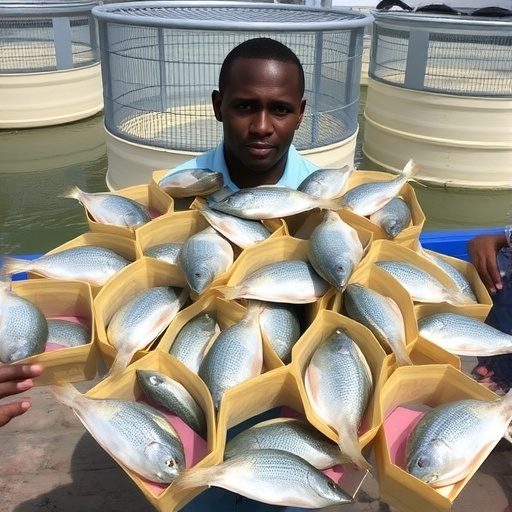
In the heart of East Africa lies the expansive Lake Victoria, a vital resource for millions of people and an essential hub for aquaculture, particularly the cage farming of tilapia. This freshwater fish is not only a staple for local diets but also a significant contributor to the economy of the region. A recent study has ventured into the dynamics of tilapia production in this area, shedding light on how collaborative strategies can enhance the overall efficiency of the value chain involved in these fish farming operations.
The research, conducted by a team led by Abwao, explores the effect of clustering on the cage tilapia value chain performance. The study delves into the concept of clustering, which revolves around geographic concentration of interconnected firms, suppliers, and associated institutions in a particular field. This approach allows for greater resource sharing, knowledge exchange, and collective problem-solving, ultimately leading to improved productivity and profitability among participants.
One of the primary findings outlines how clustering facilitates sharing of best practices among fish farmers, which is crucial in an industry where knowledge of sustainable practices can significantly impact yield. By working within a network of farmers, individuals are better positioned to learn from one another, especially in regard to pest control, feeding strategies, and market access. The study illustrates that through informal gatherings or organized groups, farmers often share information about disease prevention, thus enhancing the overall health of tilapia stocks.
Additionally, the research emphasizes the importance of economies of scale. When tilapia farmers cluster together, they can purchase feed and equipment in bulk, reducing individual costs significantly. This collective purchasing power allows these entrepreneurs to maximize profit margins and reinvest in their farms, creating a ripple effect that can uplift entire communities economically. The notion that financial barriers can be minimized through collaboration is a critical takeaway for many small-scale farmers who often struggle with high input costs.
In terms of marketing, clustering opens up new avenues for fish farmers. When producers are part of a larger collective, they can negotiate better prices and gain access to larger markets than they would as standalone entities. The ability to present a united front can also enhance their bargaining power with retailers, distributors, and even exporters. The research highlights specific case studies where clustered tilapia farmers achieved remarkable sales growth due to collaborative marketing efforts, showcasing the value of shared branding and promotional strategies.
The study further examines the operational challenges faced by tilapia farmers in Lake Victoria. Weather fluctuations, water quality issues, and resource scarcity severely impact production. However, grouped farmers can pool their resources to adopt innovative methods such as integrated farming, which combines tilapia farming with other agricultural practices. This strategy not only diversifies income streams but also addresses environmental sustainability concerns, as waste from one system can enhance the productivity of another.
Moreover, the research emphasizes the pivotal role of technology in revolutionizing how clustered farmers operate. By leveraging mobile applications and digital platforms, fish farmers can track growth rates, monitor water quality, and even manage sales more efficiently. The introduction of digital tools into traditional farming practices represents a significant leap towards modernizing the aquaculture sector in Kenya, improving transparency and reducing transaction costs.
A noteworthy aspect of the study is the socio-economic impact of clustering on local communities. As fish farming groups thrive, they can create employment opportunities and stimulate local economies. Research illustrates how successful clustered farming operations are not only increasing fish production but are also contributing to community welfare through job creation and infrastructural development. Schools, health facilities, and transportation systems see improvement as clustered farmer initiatives work on broader community engagements.
The authors of the study also pointed out the importance of supportive policies and governance structures to facilitate clustering. For successful adoption of these practices, there needs to be an enabling environment created through government support, investment in research and development, and policies that favour cooperative frameworks. Such efforts can drive progress and innovation, ensuring a sustainable future for tilapia farming at Lake Victoria.
In conclusion, the collective insights derived from this research indicate that clustering is not just a beneficial tactic for fish farmers but serves as a potential model for agricultural practices worldwide. By addressing challenges collaboratively, farmers can increase their productivity, enhance livelihoods, and contribute to food security in their regions. The study serves as a crucial reminder of the interconnectedness of economic activities and the significant benefits that can arise from cooperation.
This paradigm shift in tilapia farming practices in Lake Victoria underlines a broader movement towards cooperation in agriculture, pushing the envelope for other sectors to adopt similar frameworks. As communities embrace this approach, they pave the way for sustainable development, ensure food production resilience, and foster economic growth that can transcend generations.
The findings of this significant study have potential implications that extend far beyond the shores of Lake Victoria. With proper dissemination, the insights could inspire similar initiatives in other regions, thereby amplifying the impact of tilapia fisheries on food security and economic stability across Africa and beyond.
Subject of Research: The effect of clustering on cage tilapia value chain performance in Lake Victoria, Kenya.
Article Title: Effect of clustering on cage tilapia value chain performance in Lake Victoria, Kenya.
Article References:
Abwao, M., Bett, H., Gathungu, E. et al. Effect of clustering on cage tilapia value chain performance in Lake Victoria, Kenya.
Discov Agric 3, 235 (2025). https://doi.org/10.1007/s44279-025-00421-2
Image Credits: AI Generated
DOI: https://doi.org/10.1007/s44279-025-00421-2
Keywords: Tilapia farming, Lake Victoria, clustering, aquaculture, value chain performance, economic impact, sustainable development.
Tags: aquaculture value chain efficiencybest practices in cage farmingcage tilapia farming in Kenyaclustering in fish farmingcollaborative strategies in agricultureeconomic impact of tilapia farminggeographic concentration of fish farmingknowledge exchange among fish farmersLake Victoria tilapia productionresource sharing in aquaculturesustainable aquaculture practicestilapia value chain enhancement