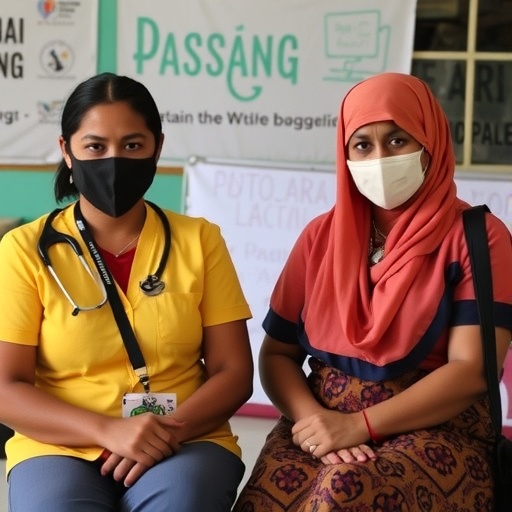
In a groundbreaking study examining the impact of healthcare workers compared to non-health workers in the delivery of health education, researchers have gathered compelling evidence that may redefine approaches to modern contraceptive uptake among women in Malawi. The study, conducted by a team led by Salamba T., reveals remarkable insights into how the source of health education influences the decisions women make regarding contraceptive options. This quasi-experimental study, published in BMC Health Services Research, raises important questions about the roles of professional credentials and community ties in health education efficacy.
According to the findings, women’s receptiveness to contraceptive methods significantly improved when health education was delivered by trained healthcare professionals. The research underscores the importance of trust and credibility that healthcare workers hold in the eyes of the community. This facet is particularly vital in regions like Malawi, where cultural perceptions of health practitioners can affect public health initiatives. The study’s results illuminate the crucial intersection of healthcare delivery, education, and contraceptive practices, suggesting that enhancing training for healthcare providers could lead to improved health outcomes for women.
The methodology employed in this study is both rigorous and innovative, utilizing a quasi-experimental design to compare two distinct groups. Participants included women of reproductive age residing in various communities, each receiving health education from either healthcare workers or non-health workers. The researchers established a comprehensive assessment framework that measured both the immediate and long-term impacts of educational outreach on contraceptive use. This methodology ensured a thorough examination of how different modalities of health education shape women’s choices regarding family planning.
One of the most striking takeaways from this research is the realization that education, while crucial, must be delivered in a context that fosters understanding and acceptance. Women who interacted with healthcare professionals reported feeling more informed and empowered in their contraceptive choices. This contrasts sharply with those who received education from non-health workers, who often found themselves grappling with mixed messages or insufficient information. The implications of this discrepancy are far-reaching, suggesting that targeted health education, particularly in less urbanized regions, can significantly enhance contraceptive uptake.
Moreover, the study emphasizes the social determinants of health that influence contraceptive decisions. In areas where healthcare access is limited, the role of community leaders and informal educators becomes pivotal. However, the research clearly delineates the superiority of professional health education in fostering a conducive environment for contraceptive uptake. This finding challenges policymakers to consider the integration of healthcare worker-led initiatives as a standard practice in family planning programs.
The relevance of these findings extends beyond Malawi, offering valuable insights for similar socioeconomic contexts worldwide. As global health initiatives increasingly focus on empowering women and improving reproductive health services, this study provides a framework for evaluating educational strategies in varying cultural environments. By recognizing the critical role that healthcare workers play, organizations can tailor their development programs to support and elevate these professionals as key agents of change.
Additionally, the results from this study could influence future training and policy development for healthcare workers. If women respond more positively to education provided by trained professionals, investing in the ongoing education and support of these workers becomes paramount. Strategies that incorporate enhanced training, mentorship, and community engagement can foster stronger relationships between healthcare workers and the communities they serve, ultimately improving health outcomes.
Challenges remain, of course. As various stakeholders in the healthcare system grapple with resource allocation and training deficits, translating these findings into widespread practice poses significant hurdles. However, through collaborative efforts among governmental bodies, non-governmental organizations, and healthcare institutions, there exists an opportunity for meaningful change. Emphasizing the role of qualified health educators can serve as a catalyst for advancing women’s reproductive health rights and access to essential services.
The ongoing conversation surrounding women’s health and education must also consider the cultural nuances that inform health behaviors. Understanding how societal beliefs and norms intersect with healthcare practices will be critical in shaping effective health education frameworks. Such cultural competency ensures that health interventions resonate with the target population, increasing their likelihood of success. As demonstrated in Malawi, acknowledging and integrating local values into educational initiatives can significantly enhance their effectiveness.
In conclusion, the compelling evidence presented by Salamba et al. underscores the profound impact that the source of health education has on modern contraceptive uptake among women. By prioritizing the role of healthcare workers in delivering this education, we can pave the way for more informed choices and better health outcomes. As research continues to unravel the complexities of health education, the insights gleaned from this study can inspire further inquiry into how best to serve the needs of women in Malawi and beyond.
In summary, this research serves as a clarion call to healthcare policymakers and practitioners alike to recognize the value of trained healthcare workers as a core component of health education strategies. It is imperative that future interventions build upon these findings, ensuring that women everywhere have access to reliable, credible information that empowers them to make informed choices regarding their reproductive health.
Subject of Research: The effect of healthcare worker vs. non-health worker delivered health education on modern contraceptive uptake among women in Malawi.
Article Title: Effect of healthcare worker vs. non-health worker delivered health education on modern contraceptive uptake among women in Malawi: a quasi-experimental study.
Article References:
Salamba, T., Izudi, J., Masegese, T. et al. Effect of healthcare worker vs. non-health worker delivered health education on modern contraceptive uptake among women in Malawi: a quasi-experimental study.
BMC Health Serv Res 25, 1420 (2025). https://doi.org/10.1186/s12913-025-13579-8
Image Credits: AI Generated
DOI: 10.1186/s12913-025-13579-8
Keywords: healthcare education, modern contraception, women’s health, Malawi, quasi-experimental study.
Tags: community health education rolescontraception education strategiescontraceptive uptake in Malawihealth education efficacyhealthcare workers vs non-workersimproving women’s health outcomesinnovative research methodologies in healthprofessional credentials influencepublic health initiatives in Malawitrained healthcare professionals impacttrust in healthcare providerswomen’s receptiveness to contraception