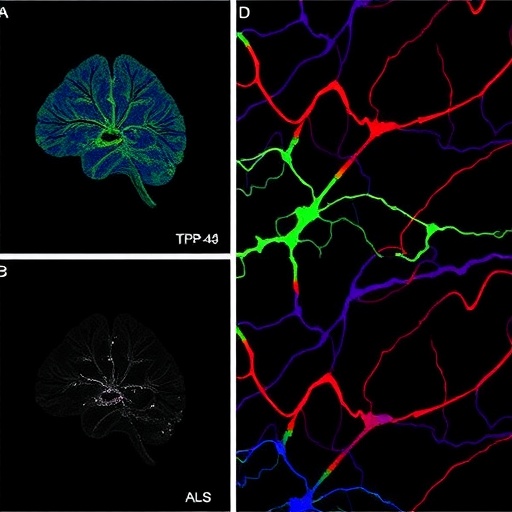
In a groundbreaking advancement in neuroscience, researchers have uncovered a pivotal mechanism underlying the neuronal hyperexcitability characteristic of amyotrophic lateral sclerosis (ALS) and frontotemporal dementia (FTD). This novel study, recently published in Nature Neuroscience, sheds light on how TDP-43—a protein notoriously implicated in neurodegenerative diseases—disrupts the splicing of the KCNQ2 gene. This aberrant mis-splicing triggers intrinsic neuronal hyperexcitability, unveiling new therapeutic targets and opening unprecedented avenues in understanding ALS and FTD pathology.
ALS and FTD are devastating neurodegenerative disorders that impact millions worldwide, manifesting through progressive motor dysfunction, cognitive decline, and behavioral impairments. While genetic and molecular factors contributing to these ailments have been extensively studied, the cellular mechanisms leading to neuronal dysfunction remained elusive. The present research pivots precisely on this knowledge gap, demonstrating how altered RNA processing of ion channel genes can escalate neural circuit excitability—a hallmark of early disease stages.
Central to this investigation is TDP-43, a DNA/RNA-binding protein with crucial roles in RNA metabolism, including splicing regulation. Mislocalization and aggregation of TDP-43 are hallmarks of ALS and FTD pathology; however, the downstream consequences of its malfunction remained largely speculative. The new findings explicitly connect TDP-43 dysfunction to mis-splicing of KCNQ2, encoding a voltage-gated potassium channel subunit integral to regulating neuronal excitability by controlling membrane repolarization during action potentials.
The study employed a combination of human postmortem brain tissue analysis, patient-derived neurons, and sophisticated genetic models to dissect the molecular cascade. The researchers identified a specific mis-splicing event within KCNQ2 transcripts in ALS/FTD cases featuring TDP-43 pathology. This aberrant splice form results in truncated or dysfunctional potassium channel proteins incapable of maintaining ionic homeostasis. Consequently, affected neurons exhibit heightened firing rates and diminished capacity to return to resting potential, precipitating hyperexcitability.
Importantly, the aberrant RNA splicing caused by TDP-43 loss of function leads to a decreased expression of the functional KCNQ2 isoform while increasing expression of an alternatively spliced form that lacks critical domains responsible for channel activity. This imbalance in splice variants alters intrinsic membrane properties, sensitizing neurons to depolarization and firing action potentials aberrantly. Such hyperexcitability not only disrupts normal neural signalling but likely triggers toxic cascades culminating in neurodegeneration.
Leveraging patient-derived induced pluripotent stem cell (iPSC) models, the research team demonstrated that correcting KCNQ2 splicing defects via antisense oligonucleotides could normalize neuronal excitability. This breakthrough indicates that precise gene-editing or RNA-targeted therapies might effectively mitigate cellular dysfunction before irreversible neuronal loss ensues—a prospect that could revolutionize treatment paradigms for ALS and FTD.
Moreover, the research elucidates a pathological feedback loop wherein TDP-43 depletion exacerbates neuronal dysfunction by impairing ion channel regulation. This insight bridges a gap between TDP-43’s established role in RNA biology and the electrophysiological abnormalities observed clinically. By delineating this mechanism, the study synthesizes molecular genetics with neurophysiology, offering a holistic view of disease progression.
The findings also underline the significance of alternative RNA splicing as a regulatory nexus in neurodegeneration. Given that KCNQ2 channels are pivotal in modulating neuronal excitability across diverse brain regions, their dysfunction may broadly affect neural networks, contributing to the multifaceted symptoms of ALS and FTD. This reinforces the concept that neurodegeneration is driven not only by protein aggregation but also by widespread transcriptomic dysregulation.
In dissecting the complex molecular interplay, the team used state-of-the-art RNA sequencing techniques to quantify splicing variations and pinpoint TDP-43-binding sites within KCNQ2 pre-mRNA. Their data highlight specific splice sites that become aberrantly included or excluded when TDP-43 is depleted, revealing a finely tuned splicing regulation that is perturbed in disease. Such granular insights provide a blueprint for designing precise molecular interventions.
Electrophysiological recordings from patient neurons confirmed that the altered splicing correlates with hyperexcitability phenotypes. This functional validation affirms the pathological relevance of mis-splicing, bridging the molecular to the electrophysiological level. The causative link between RNA processing defects and neural dysfunction represents a significant paradigm shift in ALS/FTD research.
Beyond its immediate clinical implications, the study paves the way for investigating similar splicing-related mechanisms across other neurodegenerative diseases marked by RNA-binding protein pathology, such as frontotemporal lobar degeneration and Alzheimer’s disease. It prompts a reevaluation of therapeutic strategies, advocating for targeting RNA splicing fidelity as a universal avenue to combat neurodegeneration.
In conclusion, this pioneering work unravels a direct causal relationship between TDP-43-dependent mis-splicing of KCNQ2 and intrinsic neuronal hyperexcitability in ALS and FTD. By highlighting the molecular underpinnings of this phenomenon and demonstrating the therapeutic potential of splicing correction, the research offers a beacon of hope for patients and a robust framework for future explorations into complex neurodegenerative mechanisms.
As the field advances, harnessing the power of RNA biology combined with electrophysiological insights may unlock transformative treatments. This study exemplifies how integrated, multidisciplinary approaches can elucidate the intricacies of brain disorders, moving us closer to effective interventions for ALS, FTD, and beyond.
Subject of Research: Neuronal hyperexcitability mechanism in ALS and FTD linked to TDP-43-dependent mis-splicing of the KCNQ2 gene.
Article Title: TDP-43-dependent mis-splicing of KCNQ2 triggers intrinsic neuronal hyperexcitability in ALS/FTD.
Article References:
Joseph, B.J., Marshall, K.A., Harley, P. et al. TDP-43-dependent mis-splicing of KCNQ2 triggers intrinsic neuronal hyperexcitability in ALS/FTD. Nat Neurosci (2025). https://doi.org/10.1038/s41593-025-02096-w
Image Credits: AI Generated
Tags: ALS and FTD pathophysiologyintrinsic excitability in neuronsion channel genes and disease mechanismsKCNQ2 gene splicing disruptionneurobiology of neurodegenerationneurodegenerative disorders researchneuronal hyperexcitability in frontotemporal dementiaRNA metabolism and splicing regulationRNA processing and neuronal functionTDP-43 mis-splicing in ALSTDP-43 protein mislocalization effectstherapeutic targets for ALS and FTD