

• HOME
  • NEWS
  • EXPLORE
    • CAREER
      • Companies
      • Jobs
    • EVENTS
    • iGEM
      • News
      • Team
    • PHOTOS
    • VIDEO
    • WIKI
  • BLOG
  • COMMUNITY
    • FACEBOOK
    • INSTAGRAM
    • TWITTER
Thursday, March 26, 2026
BIOENGINEER.ORG
No Result
View All Result
  • Login
  • HOME
  • NEWS
  • EXPLORE
    • CAREER
      • Companies
      • Jobs
        • Lecturer
        • PhD Studentship
        • Postdoc
        • Research Assistant
    • EVENTS
    • iGEM
      • News
      • Team
    • PHOTOS
    • VIDEO
    • WIKI
  • BLOG
  • COMMUNITY
    • FACEBOOK
    • INSTAGRAM
    • TWITTER
  • HOME
  • NEWS
  • EXPLORE
    • CAREER
      • Companies
      • Jobs
        • Lecturer
        • PhD Studentship
        • Postdoc
        • Research Assistant
    • EVENTS
    • iGEM
      • News
      • Team
    • PHOTOS
    • VIDEO
    • WIKI
  • BLOG
  • COMMUNITY
    • FACEBOOK
    • INSTAGRAM
    • TWITTER
No Result
View All Result
Bioengineer.org
No Result
View All Result
Home NEWS Science News Technology

Eco-Friendly Silver Nanoparticles from Argan Pulp Extract

Bioengineer by Bioengineer
October 30, 2025
in Technology
Reading Time: 2 mins read
0
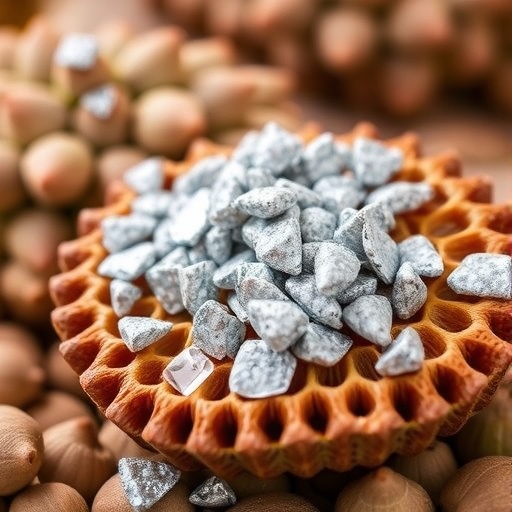
Eco-Friendly Silver Nanoparticles from Argan Pulp Extract
Share on FacebookShare on TwitterShare on LinkedinShare on RedditShare on Telegram

In recent years, the field of nanotechnology has made strides that promise significant advancements across various sectors, particularly in medicine and environmental science. Among these innovations, the synthesis of silver nanoparticles (AgNPs) has garnered attention due to their unique properties, such as high surface area, catalytic ability, and antimicrobial efficacy. Researchers have been exploring environmentally friendly methods for silver nanoparticle synthesis, as traditional methods often involve toxic chemicals that pose a risk to health and the environment. In a groundbreaking study by Drissi, Ghazi, and Daoudi, published in Waste Biomass Valor, an innovative green synthesis method employing argan pulp extract as a bioreductant is proposed.

Silver nanoparticles are notorious for their powerful antibacterial properties, which make them suitable for a host of applications, including infection prevention in medical devices and the formulation of antimicrobial coatings. The destructive ability of AgNPs against a wide range of pathogens can be attributed to several factors, including their high reactivity with microbial cell membranes and the release of silver ions, which interfere with cellular processes. However, conventional synthesis approaches often limit the widespread use of AgNPs due to environmental and health hazards. The researchers tackled this issue head-on by leveraging a bioresource that is abundant and underutilized—the pulp of the argan fruit.

The argan tree, native to Morocco, is known not only for yielding argan oil, a highly prized cosmetic and culinary product, but also for generating significant amounts of organic waste in the form of argan pulp during oil extraction. This byproduct is often discarded, leading to environmental concerns regarding waste management. The study creatively repurposes argan pulp as a natural bioreductor for the synthesis of silver nanoparticles. Through this innovative method, the authors successfully synthesized AgNPs that exhibited exceptional enzyme inhibition, antioxidant, and antibacterial activities.

In their experimental process, the researchers first prepared an extract from the argan pulp, which was rich in phytochemicals such as polyphenols, flavonoids, and vitamins. These compounds play a crucial role in

Tags: antimicrobial properties of silver nanoparticlesapplications of silver nanoparticlesargan pulp extract as bioreductantbiowaste valorization in nanotechnologyeco-friendly silver nanoparticlesenvironmentally friendly nanotechnologygreen synthesis of nanoparticlesinnovative materials in environmental sciencenon-toxic methods for nanoparticle synthesissilver nanoparticles and infection preventionsilver nanoparticles in medicinesustainable nanoparticle production


Tags: antimicrobial nanoparticle applicationsargan pulp bioreductantbiowaste valorizationeco-friendly silver nanoparticlesGreen synthesis of nanoparticles
Share12Tweet8Share2ShareShareShare2

Related Posts

In-Sensor Cryptography Links Physical Process to Digital Identity

In-Sensor Cryptography Links Physical Process to Digital Identity

March 25, 2026
Pareto-Optimized Stacking Boosts Scalable Electricity Theft Detection

Pareto-Optimized Stacking Boosts Scalable Electricity Theft Detection

March 23, 2026

Adolescent Metabolic Liver Disease Survey in Hainan

March 23, 2026

Religious Belief, Altruism Shape Organ Donation Views

March 22, 2026

POPULAR NEWS

  • blank

    Revolutionary AI Model Enhances Precision in Detecting Food Contamination

    96 shares
    Share 38 Tweet 24
  • Imagine a Social Media Feed That Challenges Your Views Instead of Reinforcing Them

    1003 shares
    Share 397 Tweet 248
  • Uncovering Functions of Cavernous Malformation Proteins in Organoids

    54 shares
    Share 22 Tweet 14
  • Promising Outcomes from First Clinical Trials of Gene Regulation in Epilepsy

    51 shares
    Share 20 Tweet 13

About

We bring you the latest biotechnology news from best research centers and universities around the world. Check our website.

Follow us

Recent News

In-Sensor Cryptography Links Physical Process to Digital Identity

Can Psychosocial Factors Influence Cancer Risk?

Depression Factors in Elderly: Pre vs. Post-COVID Analysis

Subscribe to Blog via Email

Success! An email was just sent to confirm your subscription. Please find the email now and click 'Confirm' to start subscribing.

Join 78 other subscribers
  • Contact Us

Bioengineer.org © Copyright 2023 All Rights Reserved.

Welcome Back!

Login to your account below

Forgotten Password?

Retrieve your password

Please enter your username or email address to reset your password.

Log In
No Result
View All Result
  • Homepages
    • Home Page 1
    • Home Page 2
  • News
  • National
  • Business
  • Health
  • Lifestyle
  • Science

Bioengineer.org © Copyright 2023 All Rights Reserved.