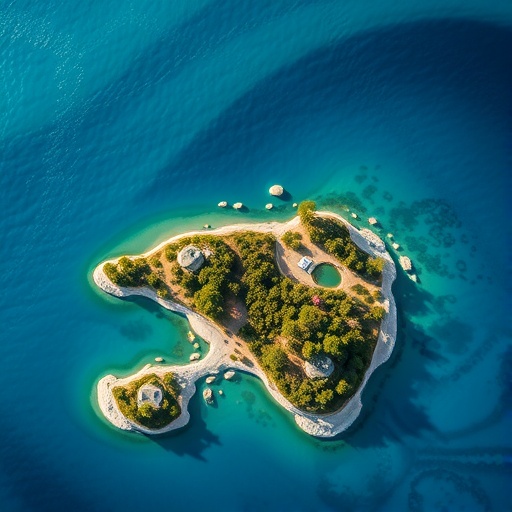
When the volcanic island of Surtsey emerged dramatically from the North Atlantic Ocean in 1963, it presented a pristine, barren landscape devoid of life. This unique event provided ecologists with an unparalleled natural laboratory to investigate one of the fundamental processes in ecology: how life colonizes completely new land. For decades, prevailing ecological theories have suggested that plants capable of conquering such isolated and remote locations bear specialized traits for long-distance dispersal. These traits often include fleshy fruits, which attract birds that subsequently ingest the seeds and disperse them elsewhere. This conventional wisdom held that these dispersal adaptations gave certain plant species a distinct advantage in pioneering newly formed ecosystems.
However, a groundbreaking study published in Ecology Letters by an international team of researchers from Iceland, Hungary, and Spain offers compelling evidence that the story is far more nuanced. The research examined the vascular plant species that have colonized Surtsey since 1965, identifying 78 different species. Intriguingly, the majority of these plants lack any of the classical adaptations traditionally thought necessary for long-distance dispersal. Instead, the study found that various bird species such as gulls, geese, and shorebirds have played a critical role in transporting seeds to the island, often carrying them internally within their digestive systems or externally via droppings. This discovery challenges the long-held belief that certain plant traits alone determine successful colonization.
Dr. Pawel Wasowicz from the Natural Science Institute of Iceland, a principal author of the study, emphasized the transformative implications of these findings. According to Wasowicz, birds emerged as the real pioneers of Surtsey’s evolving ecosystem by shuttling seeds from diverse plant species that traditional theory would predict should not have been able to reach the island. This paradigm shift underscores a fundamental truth often overlooked in ecology: that life does not expand in isolation but rather through intricate biological interactions and mutual dependencies. The notion of seed dispersal must therefore be reconsidered to incorporate the vital roles played by animal vectors.
The team used detailed observational data collected over decades, enabling them to trace the changes in vegetation and the corresponding presence of various bird populations on the island. By analyzing seed samples and bird droppings alongside vegetation surveys, they demonstrated how the birds’ foraging and migratory behavior drove the establishment of plant life in ways that pure seed morphology could not explain. Such endozoochory — seed dispersal via ingestion by animals — and ectozoochory — seed movement on the exterior of animals — have been recognized in other ecosystems but were surprisingly underestimated in shaping Surtsey’s flora.
Dr. Andy Green of the Estación Biológica de Doñana, co-leader of the research, highlighted the broader ecological and conservation implications this evidence carries. As global warming alters migration patterns and habitats, birds will be instrumental in enabling plant species to shift their ranges, adapt to new environments, and maintain ecosystem resilience. This interdependence between avian vectors and vegetation introduces a dynamic component to biodiversity patterns that cannot be ignored in conservation strategies and predictive ecological models addressing the challenges of climate change.
Importantly, this research illustrates the limitations of traditional ecological paradigms that rely heavily on static plant traits or taxonomic classifications to predict colonization success. Instead, the emergent ecosystems like Surtsey require frameworks that integrate biotic interactions and evolutionary processes, recognizing animals as pivotal dispersal agents. Such an approach better reflects the complexity of natural systems and enhances our ability to forecast ecological responses in shifting landscapes and under anthropogenic pressures.
Surtsey’s role as a natural experiment continues to be invaluable, offering a rare opportunity to monitor ecological succession from its earliest stages in a controlled, well-documented setting. The island’s isolation from prior biotic influences ensures that each colonizing species and interaction can be studied in detail, revealing the mechanisms by which primary succession unfolds and ecosystems self-organize. Long-term studies like this underscore the critical importance of sustained scientific investment in natural laboratories for future biological insights.
Moreover, the study’s insights extend to the evolutionary context, where mutualistic relationships between plants and birds could drive adaptive changes on both sides. Seed traits may evolve in response to the dispersal mechanisms available, but equally, animal behaviors adapt to optimize resource acquisition and habitat use. This bi-directional influence suggests a feedback loop in ecosystem development that conventional dispersal trait models might miss.
The findings also indicate that conservation planning should incorporate the preservation of bird populations and their migrational corridors, as these animals are crucial facilitators of plant dispersal at a landscape and even global scale. A decline in bird diversity or disruption of migratory routes could have untold consequences for vegetation dynamics and ecosystem health, emphasizing the interconnectedness of species and environments.
In conclusion, this study calls for a reassessment of dispersal ecology, urging scientists and conservationists alike to move beyond simplistic trait-based assumptions and embrace a holistic view that situates species interactions at the core of ecological processes. As Dr. Wasowicz eloquently states, observing life as it colonizes and adapts unfolds vital clues to the resilience and future trajectories of ecosystems in the face of accelerating environmental change. In the unique volcanic crucible of Surtsey, science witnesses this unfolding story of life, migration, and survival.
Subject of Research: Vascular plant colonization and seed dispersal mechanisms on a newly formed volcanic island.
Article Title: Putative ‘Dispersal Adaptations’ Do Not Explain the Colonisation of a Volcanic Island by Vascular Plants, but Birds Can
News Publication Date: 16-Oct-2025
Web References: DOI 10.1111/ele.70234
Image Credits: Pawel Wasowicz
Keywords: Surtsey, volcanic island colonization, seed dispersal, bird-mediated dispersal, ecological succession, primary succession, vascular plants, endozoochory, ectozoochory, ecological interactions, ecosystem development, climate change adaptation
Tags: bird-mediated seed transportecological colonization processesEcological research breakthroughsecological theories evolutioninvasive species managementisland biogeography studieslong-distance seed dispersalplant dispersal mechanismsplant-animal interactions in ecosystemsSurtsey island ecologyunconventional plant dispersal strategiesvascular plant species adaptation