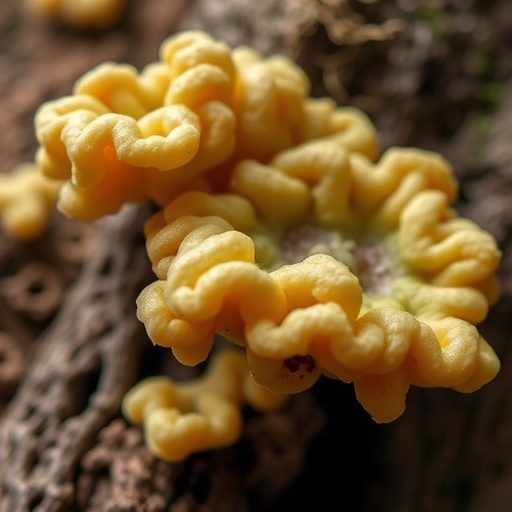
A recent study has brought to light the intricate interplay between the fungus Botryosphaeria dothidea and the resin-producing tree Aquilaria sinensis, a vital connection for agarwood production. This research highlights how the genomic and chemical profiles of B. dothidea could lead to novel insights into both natural and artificial strategies for enhancing agarwood formation, a highly sought-after product in perfumery and traditional medicine. Whole-genome sequencing of the fungus uncovered a vast assembly comprising 44.33 Mb of DNA, which encodes an impressive 69 biosynthetic gene clusters (BGCs). Such findings indicate the potential of B. dothidea as a biochemical treasure trove, awaiting further exploration.
Notably, the antiSMASH analysis conducted during the study revealed a staggering 53.6% of these BGCs—37 in total—showed no significant resemblance to known biosynthetic pathways cataloged in the MIBiG database. This groundbreaking observation highlights a mostly uncharted territory in fungal metabolism, which is predominantly characterized by nonribosomal peptide synthases, type I polyketide synthases, and terpenoids. The uniqueness of these clusters promises to reveal new avenues for the synthesis of bioactive compounds that could play significant roles in both ecological and pharmaceutical contexts.
The study advanced beyond genomic sequencing by incorporating rigorous chemical profiling of the fungal fermentation extracts, leading to the identification of ten distinctive compounds. Among these, the new compound 4-hydroxyphenethyl (S)-5-oxofuran-2-carboxylate represents an exciting find. Additionally, the team discovered several known phenylethanoid derivatives and cyclic peptides, reinforcing the chemical diversity present in this organism. These findings not only broaden our understanding of the secondary metabolites produced by fungi but also their possible implications for human use.
In vivo bioassays conducted on the isolated compounds yielded intriguing results. A subset of these chemicals, specifically compounds 4, 7, 9, and 10, exhibited weak anti-MRSA activity, which speaks to their potential as antimicrobial agents in an age where antibiotic resistance poses increasing challenges. Of particular interest is ergosterol peroxide (compound 10), which demonstrated moderate anti-inflammatory properties as evidenced by its ability to suppress nitric oxide production, an essential mediator of inflammation, with an IC50 of 31.0 µM.
Intriguingly, the study found that the isolated metabolites—particularly compounds 1, 2, and 3—exhibited structural similarities to critical precursors of 2-(2-phenylethyl)chromones (PECs) typically derived from A. sinensis. Such structural mimicry suggests a sophisticated mechanism of interaction, perhaps indicating a form of crosstalk between host and pathogen. This interaction appears to trigger vital defense mechanisms, such as the accumulation of resin in A. sinensis, a process crucial for the formation of agarwood.
The implications of these findings extend well beyond the realm of traditional pharmacology and natural product chemistry. The connections forged through the genomic and chemical profiles delineate a clearer path for understanding the ecological role of B. dothidea within its host environment. In many ways, this fungi can be viewed as both a collaborator and a challenger to A. sinensis, influencing its resin production through intricate biochemical interactions that are only beginning to be unraveled.
Moreover, the study lays the groundwork for developing artificial induction strategies aimed at enhancing agarwood formation. As global demand for agarwood increases, driven by its popularity in various industries, the insights gained from B. dothidea can serve as critical stepping stones in addressing sustainability challenges. By leveraging microbial metabolic pathways, researchers are now better equipped to devise strategies that could minimize the ecological footprint of agarwood harvesting while maximizing yield.
Furthermore, the significant number of cryptic BGCs identified highlights an exciting aspect of microbial biosynthesis—many potential metabolic pathways remain undiscovered, sheltering a wealth of bioactive compounds with uncharacterized effects. The concerted efforts in this study serve as a vital reminder of just how much remains to be explored in the fungal kingdom, particularly concerning the untapped biochemical pathways that could hold medicinal significance.
In conclusion, this study underscores the crucial role that B. dothidea plays in the complex process of agarwood formation. It has effectively combined genomic and chemical approaches to elucidate the biosynthetic capabilities of this organism, yielding significant insights into its secondary metabolites and their potential applications. The research not only opens doors for future studies focused on genetic manipulation of B. dothidea for enhanced secondary metabolite production but also enhances our understanding of the ecological dynamics at play in the natural world.
This research ultimately marks an important leap forward in the study of fungal genetics and secondary metabolism, with broad-reaching implications for ecology, pharmacology, and sustainable production practices. As the scientific community continues to delve into the complexities of fungal biology, the potential for discovering novel therapeutics and other beneficial compounds remains tantalizingly within reach, thanks to work such as this. Thus, the findings from Duan et al. serve as both an invitation and a challenge for future exploration in the rich landscape of natural products derived from fungi.
Subject of Research: Genomic and chemical profiling of Botryosphaeria dothidea and its role in agarwood formation.
Article Title: Genomic and chemical profiling of Botryosphaeria dothidea: cryptic biosynthetic gene clusters and secondary metabolites in agarwood formation.
Article References:
Duan, XY., Hu, DB., Pandith, H. et al. Genomic and chemical profiling of Botryosphaeria dothidea: cryptic biosynthetic gene clusters and secondary metabolites in agarwood formation.
J Antibiot (2025). https://doi.org/10.1038/s41429-025-00866-z
Image Credits: AI Generated
DOI: https://doi.org/10.1038/s41429-025-00866-z
Keywords: Botryosphaeria dothidea, agarwood, Aquilaria sinensis, biosynthetic gene clusters, secondary metabolites, anti-MRSA activity, ergosterol peroxide, natural products, fungal chemistry.
Tags: agarwood productionantiSMASH analysisAquilaria sinensisbioactive compoundsbiosynthetic gene clustersBotryosphaeria dothideaecological and pharmaceutical applicationsfungal metabolitesnonribosomal peptide synthasespolyketide synthasesterpenoid biosynthesiswhole genome sequencing