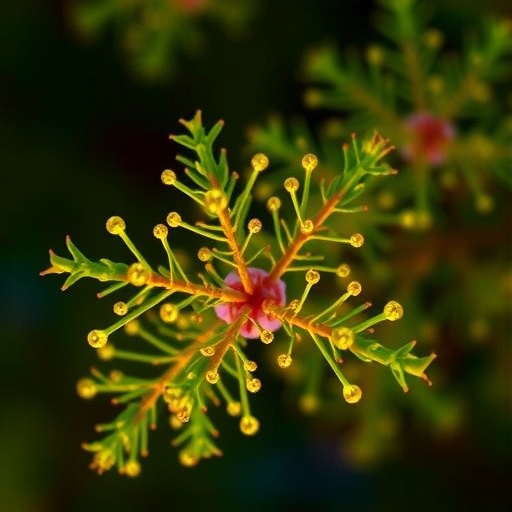
A groundbreaking study has revealed an unprecedented connection between bacteria residing in the needles of Norway spruce trees and the formation of gold nanoparticles. This discovery is set to revolutionize mineral exploration techniques, introducing more environmentally responsible methodologies. Researchers suggest that examining similar interactions within mosses could further aid in the remediation of metal-contaminated waters resulting from mining activities.
The research team, led by Kaisa Lehosmaa, a Postdoctoral Researcher from the University of Oulu in Finland, has found compelling evidence that endophytic bacteria—microorganisms that inhabit plant tissues—play a significant role in the accumulation of gold within these trees. This revelation is critical, as it enhances our understanding of the intricate biogeochemical processes involved in mineral exploration. Lehosmaa stated that the findings might not only facilitate more effective gold exploration strategies but also contribute to the search for safe, sustainable methods to recover metals from the environment.
For decades, scientists have understood that mineral deposits release ions through oxidation and bacterial metabolic activity. These ions migrate into the soil, where they can be absorbed by plants, and eventually, these metals may accumulate within plant tissues. These biogeochemical techniques, already utilized in mineral exploration, benefit from this new insight, which elucidates the mechanisms behind these processes.
Research Professor Maarit Middleton from the Geological Survey of Finland emphasized the significance of this study, explaining that it provides a clearer understanding of how metals interact with plant life. Plants, particularly those such as Norway spruce, host a plethora of microbial species in their tissues, which can affect the biomineralization processes within these organisms. Anna Maria Pirttilä, another researcher from the University of Oulu, elaborated on biomineralization as a phenomenon where inorganic materials like gold solidify and accumulate within plant tissues as a defense mechanism.
Despite these processes being recognized, they remain poorly understood, with a myriad of factors influencing their occurrence. The recent study shines light on the complexities of biomineralization, revealing that specific bacterial populations are associated with the presence of gold nanoparticles. Understanding the specific mechanisms that drive these processes is pivotal for future biogeochemical research and for developing plant-based applications in soil remediation.
According to Dr. Lehosmaa, the findings highlight how the transference of gold into plant tissues begins with its presence in a soluble liquid form in the soil. As water carries this soluble gold into the spruce needles, the microbes within these trees can effectively precipitate this gold, transforming it back into solid nanoparticles. The study found that these nanoparticles, which cannot be seen without specialized instruments, are approximately one millionth of a millimeter in diameter. Thus, despite their potential significance, they remain impractically small for collection and commercial use.
In their meticulous research, the team collected 138 needle samples from 23 Norway spruce trees located on a satellite mineral deposit associated with the Kittilä gold mine in Finland. Interestingly, gold nanoparticles were observed inside the needles of four trees, each surrounded by biofilms of bacteria. DNA sequencing conducted on these biofilms revealed a positive correlation between specific bacterial groups—such as P3OB-42, Cutibacterium, and Corynebacterium—and the needles that contained gold. This observation implies that these bacterial strains might play a crucial role in converting soluble gold into solid particles within the needles of the trees.
The implications of this research stretch beyond just gold exploration; they provide a foundation for environmentally friendly mineral extraction methods. The plant- and microbe-based techniques could also be studied to examine their potentials in the extraction of other valuable minerals, while exploring how different species of plants, such as moss, may also harbor similar capabilities. The study suggests that metals can precipitate within the tissues of mosses, and further research could reveal how microbes living within aquatic mosses might aid in detoxifying contaminated waters by removing harmful metals.
As the scientific community delves deeper into this intriguing arena of research, the potential applications seem vast. The promise of integrating microbial processes with environmental cleanup and mineral exploration creates a compelling narrative. It positions the relationship between plants and microbes at the forefront of biogeochemistry, setting new paradigms for how we view and utilize natural resources.
In conclusion, this emerging field of study illustrates a renewable approach to mineral exploration and environmental management, harnessing the power of nature’s own biological processes. As researchers continue to unearth the complex interplay between plants and the microorganisms that inhabit them, we may soon find ourselves on the cusp of innovative methods to address both resource extraction and environmental remediation challenges.
Subject of Research: The role of bacteria in the accumulation of gold nanoparticles in Norway spruce needles and its implications for mineral exploration and environmental remediation.
Article Title: Biomineralized gold nanoparticles along with endophytic bacterial taxa in needles of Norway spruce (Picea abies)
News Publication Date: August 28, 2025
Web References: Environmental Microbiome Journal
References: On file; see journal publication for detailed references.
Image Credits: University of Oulu
Keywords
Bacteria, Gold Nanoparticles, Norway Spruce, Biomineralization, Environmental Remediation, Mineral Exploration, Microbial Processes, Eco-Friendly Techniques, Biogeochemistry.
Tags: bacterial interactions in plant needlesbiogeochemical processes in mineral explorationecological impacts of miningendophytic bacteria in plant tissuesenvironmentally responsible mining techniquesgold nanoparticles in spruce treesinnovative mineral exploration strategiesKaisa Lehosmaa research findingsmetal accumulation in plantsNorway spruce tree researchremediation of metal-contaminated waterssustainable metal recovery methods