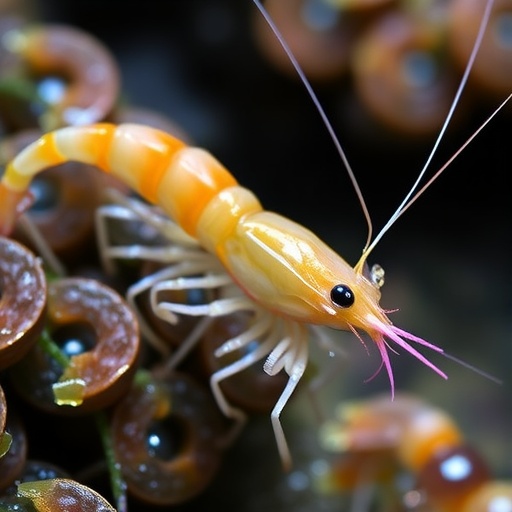
In the realm of marine biodiversity, the discovery of new species not only enhances our understanding of ecological relationships but also provides profound insights into the evolutionary pathways that shape life beneath the waves. Recently, researchers have identified a novel species within the genus Leucothoe, a group of amphipod crustaceans known for their intricate associations with marine bivalves. This new species, named Leucothoe limidicola, was discovered in the coastal waters surrounding Sugashima Island, Japan, marking a significant addition to the taxonomic and ecological knowledge of this genus.
Leucothoe amphipods are small, shrimp-like creatures characterized by their laterally compressed bodies and specialized appendages. They are often elusive due to their symbiotic relationships with other marine invertebrates, such as bivalve mollusks. The newly described species specifically associates with limid bivalves, a group known for their delicate, fan-shaped shells and ecological role in sediment stabilization and water filtration within marine environments.
The identification of Leucothoe limidicola was achieved through meticulous observational research combining classical taxonomic methods with modern imaging techniques. Researchers collected specimens from the limid bivalve hosts found on reefs and rocky substrates around Sugashima Island. The specimens exhibited distinctive morphological traits that diverged from previously known Leucothoe species, leading to the hypothesis of a novel species designation.
Morphological analysis revealed unique features in the limb segmentation, setation patterns, and body proportions of Leucothoe limidicola that are critical for species identification within the Leucothoidae family. The amphipod’s gnathopods—specialized appendages used for feeding and attachment—displayed a unique articulation and spine arrangement, facilitating its symbiotic lifestyle within the protective confines of the limid bivalve. These adaptations highlight the evolutionary pressures driving niche specialization in marine amphipods.
The ecology of Leucothoe limidicola emphasizes the intricate interdependence between marine crustaceans and bivalves. The amphipod likely benefits from the bivalve’s filtration activity, which provides a steady flow of particulate organic matter and oxygenated water, while possibly affording the host some degree of parasite removal or biofouling mitigation. Understanding this mutualistic or commensal relationship enriches our comprehension of marine symbioses and their contributions to ecosystem function.
This discovery underscores the vast unexplored biodiversity within marine invertebrates, particularly in regions such as the Indo-Pacific, where biogeographical isolation and complex habitats foster speciation. Sugashima Island, with its diverse benthic communities, serves as a natural laboratory for studying such evolutionary phenomena. The documentation of Leucothoe limidicola thus represents a broader effort to catalog and conserve marine species in the face of accelerating environmental change.
Taxonomic clarification provided by this research contributes essential data for comparative studies in phylogenetics and biogeography. By integrating morphological descriptors with ecological context, scientists can better delineate phylogenetic relationships within Amphipoda, improving the resolution of crustacean evolutionary trees and informing conservation priorities. The role of amphipods as bioindicators further enhances the ecological relevance of these findings.
The methodology underpinning this discovery involved precise dissection and microscopy, enabling detailed examination of microstructures such as mouthparts, sensilla, and cuticular modifications. These features are imperative for accurate taxonomic resolution, particularly in amphipods, where cryptic speciation is common. The use of non-invasive observational study techniques allowed researchers to document behavior and host interactions in situ, preserving intact ecological dynamics.
From a broader scientific perspective, the unveiling of Leucothoe limidicola contributes to the emerging narrative of how symbiotic relationships drive evolutionary innovation in marine ecosystems. It invites further investigation into the co-evolutionary mechanisms operating between crustaceans and their invertebrate hosts. This knowledge is vital for predicting how environmental perturbations might disrupt or reshape these delicate associations.
The discovery also holds implications for marine ecology and biodiversity conservation. As coastal development and oceanic changes threaten marine habitats, documenting and understanding species like Leucothoe limidicola provide benchmarks for assessing ecosystem health and resilience. These amphipods exemplify the complex biological networks that sustain marine life, highlighting the necessity of preserving diverse habitats for future scientific inquiry and environmental stability.
In summary, the identification of Leucothoe limidicola enriches our taxonomic frameworks and deepens ecological understanding of symbiotic amphipods in marine environments. This species embodies the intricate biological connections that underpin ecosystem complexity and evolution in coastal waters. Continued research and conservation efforts are crucial to uncovering the full spectrum of marine biodiversity and safeguarding these unique biological relationships against global environmental challenges.
Subject of Research: Animals
Article Title: A new species of the genus Leucothoe Leach, 1814 (Crustacea: Amphipoda: Leucothoidae) associated with a limid bivalve from Sugashima Island, Japan
News Publication Date: 26-Sep-2025
Web References: 10.11646/zootaxa.5696.4.6
Image Credits: Hiroki Nakajima
Keywords: Crustaceans, Amphipods, Animals, Discovery research, Marine biology, Ecology
Tags: advanced imaging techniques in taxonomyamphipod crustaceans taxonomycoastal ecosystems in Japanecological relationships in marine environmentsLeucothoe limidicolamarine biodiversity researchmarine invertebrate associationsmorphological traits of Leucothoe speciesnew shrimp species discoverysediment stabilization by bivalvesSugashima Island marine lifesymbiotic relationships with bivalves