• HOME
  • NEWS
  • EXPLORE
    • CAREER
      • Companies
      • Jobs
    • EVENTS
    • iGEM
      • News
      • Team
    • PHOTOS
    • VIDEO
    • WIKI
  • BLOG
  • COMMUNITY
    • FACEBOOK
    • INSTAGRAM
    • TWITTER
Saturday, February 7, 2026
BIOENGINEER.ORG
No Result
View All Result
  • Login
  • HOME
  • NEWS
  • EXPLORE
    • CAREER
      • Companies
      • Jobs
        • Lecturer
        • PhD Studentship
        • Postdoc
        • Research Assistant
    • EVENTS
    • iGEM
      • News
      • Team
    • PHOTOS
    • VIDEO
    • WIKI
  • BLOG
  • COMMUNITY
    • FACEBOOK
    • INSTAGRAM
    • TWITTER
  • HOME
  • NEWS
  • EXPLORE
    • CAREER
      • Companies
      • Jobs
        • Lecturer
        • PhD Studentship
        • Postdoc
        • Research Assistant
    • EVENTS
    • iGEM
      • News
      • Team
    • PHOTOS
    • VIDEO
    • WIKI
  • BLOG
  • COMMUNITY
    • FACEBOOK
    • INSTAGRAM
    • TWITTER
No Result
View All Result
Bioengineer.org
No Result
View All Result
Home NEWS Science News

An epigenetic lesion could be responsible for acute T-cell leukemia

Bioengineer by Bioengineer
March 30, 2017
in Science News
Reading Time: 2 mins read
0
Share on FacebookShare on TwitterShare on LinkedinShare on RedditShare on Telegram
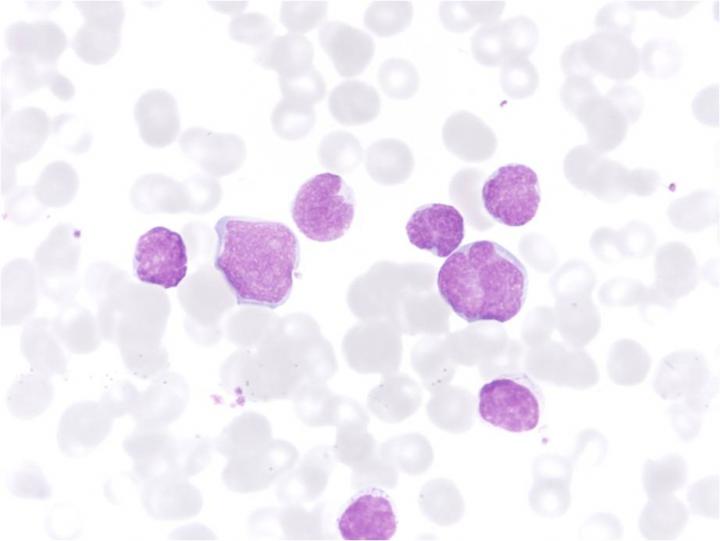
IMAGE

Credit: IDIBELL

Researchers from the Epigenetics and Cancer Biology Program (PEBC) led by Dr. Manel Esteller at the Bellvitge Biomedical Research Institute (IDIBELL) have discovered how an epigenetic lesion can lead to T-cell acute lymphoblastic leukemia. The article, published in the journal Leukemia, leader in the field of hematology, correlates the lesion with the activation of a powerful oncogen capable of malignizing this type of cells of the immune system.

Every two minutes, a person is diagnosed with a blood cell cancer – a leukemia, a lymphoma or a myeloma-, constituting 11% of all the tumors detected every year. T-cell acute lymphoblastic leukemia (T-ALL) creates alterations in the normal development of T lymphocytes, which are the cells responsible for defense against infections. This type of leukemia, which may appear in both children and adults, is characterized by its aggressive behavior. There are certain genetic alterations responsible for up to a third of the cases, but the molecular changes involved in the rest are still unknown.

"We have found that in 60% of acute type T leukemias, T lymphocytes present a loss of activity in a gene called NUDT16, whose normal function is to degrade other potentially dangerous genes. The lack of NUDT16 monitoring in these T lymphocytes allows a widely recognized cancer-causing gene, called C-MYC, to act freely and transforms these healthy cells into cancer cells", explains Dr. Esteller, ICREA Researcher and Professor of Genetics at the University of Barcelona.

"It is interesting to take into account the NUDT16 gene is not genetically damaged, so it could be reactivated with epigenetic drugs already used in other types of leukemia and lymphoma. It would also be worthwhile to test whether these leukemias, being so dependent on the C-MYC oncogene, would also be more sensitive to drugs targeting this protein", adds the IDIBELL researcher.

The research was carried out with the clinical collaboration of the Hematology Services of the Santa Creu and Sant Pau Hospital in Barcelona and the Germans Trias i Pujol Hospital in Badalona, as well as the Josep Carreras Leukemia Research Institute.

###

Media Contact

Gemma Fornons
[email protected]
0034-638-685-074
@idibell_en

Inicio

############

Story Source: Materials provided by Scienmag
Share12Tweet8Share2ShareShareShare2

Related Posts

Phage-Antibiotic Combo Beats Resistant Peritoneal Infection

February 7, 2026

Boosting Remote Healthcare: Stepped-Wedge Trial Insights

February 7, 2026

Barriers and Boosters of Seniors’ Physical Activity in Karachi

February 7, 2026

Evaluating Pediatric Emergency Care Quality in Ethiopia

February 7, 2026
Please login to join discussion

POPULAR NEWS

  • Robotic Ureteral Reconstruction: A Novel Approach

    Robotic Ureteral Reconstruction: A Novel Approach

    82 shares
    Share 33 Tweet 21
  • Digital Privacy: Health Data Control in Incarceration

    63 shares
    Share 25 Tweet 16
  • Study Reveals Lipid Accumulation in ME/CFS Cells

    57 shares
    Share 23 Tweet 14
  • Breakthrough in RNA Research Accelerates Medical Innovations Timeline

    53 shares
    Share 21 Tweet 13

About

We bring you the latest biotechnology news from best research centers and universities around the world. Check our website.

Follow us

Recent News

Phage-Antibiotic Combo Beats Resistant Peritoneal Infection

Boosting Remote Healthcare: Stepped-Wedge Trial Insights

Barriers and Boosters of Seniors’ Physical Activity in Karachi

Subscribe to Blog via Email

Enter your email address to subscribe to this blog and receive notifications of new posts by email.

Join 73 other subscribers
  • Contact Us

Bioengineer.org © Copyright 2023 All Rights Reserved.

Welcome Back!

Login to your account below

Forgotten Password?

Retrieve your password

Please enter your username or email address to reset your password.

Log In
No Result
View All Result
  • Homepages
    • Home Page 1
    • Home Page 2
  • News
  • National
  • Business
  • Health
  • Lifestyle
  • Science

Bioengineer.org © Copyright 2023 All Rights Reserved.