

• HOME
  • NEWS
  • EXPLORE
    • CAREER
      • Companies
      • Jobs
    • EVENTS
    • iGEM
      • News
      • Team
    • PHOTOS
    • VIDEO
    • WIKI
  • BLOG
  • COMMUNITY
    • FACEBOOK
    • INSTAGRAM
    • TWITTER
Saturday, February 7, 2026
BIOENGINEER.ORG
No Result
View All Result
  • Login
  • HOME
  • NEWS
  • EXPLORE
    • CAREER
      • Companies
      • Jobs
        • Lecturer
        • PhD Studentship
        • Postdoc
        • Research Assistant
    • EVENTS
    • iGEM
      • News
      • Team
    • PHOTOS
    • VIDEO
    • WIKI
  • BLOG
  • COMMUNITY
    • FACEBOOK
    • INSTAGRAM
    • TWITTER
  • HOME
  • NEWS
  • EXPLORE
    • CAREER
      • Companies
      • Jobs
        • Lecturer
        • PhD Studentship
        • Postdoc
        • Research Assistant
    • EVENTS
    • iGEM
      • News
      • Team
    • PHOTOS
    • VIDEO
    • WIKI
  • BLOG
  • COMMUNITY
    • FACEBOOK
    • INSTAGRAM
    • TWITTER
No Result
View All Result
Bioengineer.org
No Result
View All Result
Home NEWS Science News Biology

NYU Abu Dhabi Researchers Identify Unique Survival Strategies Adopted by Fish in the World’s Warmest Waters

Bioengineer by Bioengineer
September 6, 2025
in Biology
Reading Time: 2 mins read
0
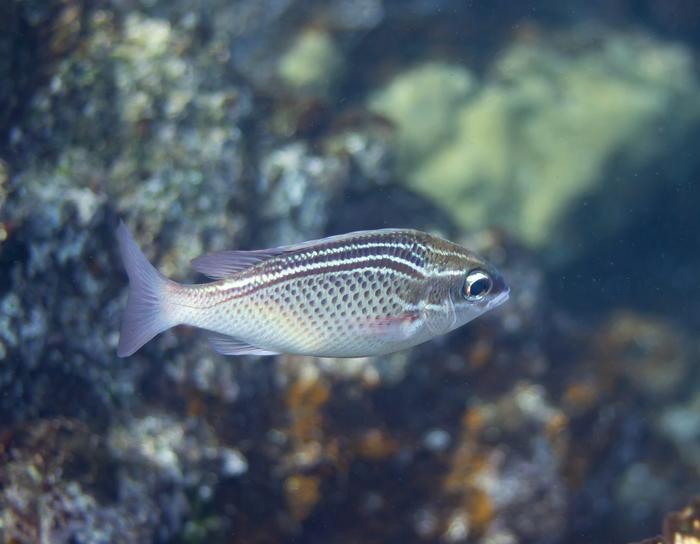
Scolopsis ghanam captured by Rebekka Pentti for NYU Abu Dhabi Credit Rebekka Pentti for NYU Abu Dhabi

Scolopsis ghanam captured by Rebekka Pentti for NYU Abu Dhabi Credit Rebekka Pentti for NYU Abu Dhabi

Share on FacebookShare on TwitterShare on LinkedinShare on RedditShare on Telegram
Scolopsis ghanam captured by Rebekka Pentti for NYU Abu Dhabi
Credit
Rebekka Pentti for NYU Abu Dhabi

A team of researchers have identified unexpected ways coral reef fish living in the warmest waters on earth, in the Arabian Gulf, have adapted to survive extreme temperatures.

Led by Co-Principal Investigator at The Mubadala Arabian Center for Climate and Environmental Sciences (ACCESS) at NYU Abu Dhabi John Burt and Associate Research Professor, Hawaii Institute of Marine Biology Jacob Johansen, the team discovered adaptations in both metabolism and swimming abilities that help fish survive the conditions of the Arabian Gulf. Surprisingly, these fish did not follow leading theoretical predictions, which expected that the maximum size of fishes should be reduced due to limitations in metabolic oxygen-supply. Instead, these fishes demonstrated a capacity to maintain efficient oxygen supply to fuel performance even at elevated temperatures.

The warming of our oceans is anticipated to drastically affect marine life and the fishing industry, potentially upsetting entire ecosystems and economic structures reliant on these habitats. Current scientific models predict that by 2050, coral reef fishes could shrink by 14-39 percent in size due to increasing temperatures under climate change. The study’s findings challenge the prevailing view that oxygen supply limitations in larger fishes are the main reason for smaller fish in warmer waters – the so-called “shrinking of fishes phenomenon.” The species observed did not follow this pattern, suggesting that other factors are also at play. The study proposes a new theory that the decrease in fish sizes and their survival in increasingly warm oceans might be more closely related to an imbalance between how much energy fish species can obtain and how much they need to sustain themselves.

In the paper titled “Impacts of ocean warming on fish size reductions on the world’s hottest coral reefs” published in the journal Nature Communications, the researchers compared two species of fishes, Lutjanus ehrenbergii and Scolopsis ghanam, surviving under the elevated temperatures within the Arabian Gulf to those of similar age living in the cooler, more benign conditions in the nearby Gulf of Oman. Specifically, the researchers set out to determine what qualities reef fishes in the Arabian Gulf have that enable them to survive there, where typical summer water temperatures are comparable to worst-case ocean warming projections for many tropical coral reefs globally by 2100.


Share22Tweet14Share4ShareShareShare3

Related Posts

Florida Cane Toad: Complex Spread and Selective Evolution

Florida Cane Toad: Complex Spread and Selective Evolution

February 7, 2026
New Study Uncovers Mechanism Behind Burn Pit Particulate Matter–Induced Lung Inflammation

New Study Uncovers Mechanism Behind Burn Pit Particulate Matter–Induced Lung Inflammation

February 6, 2026

DeepBlastoid: Advancing Automated and Efficient Evaluation of Human Blastoids with Deep Learning

February 6, 2026

Navigating the Gut: The Role of Formic Acid in the Microbiome

February 6, 2026

POPULAR NEWS

  • Robotic Ureteral Reconstruction: A Novel Approach

    Robotic Ureteral Reconstruction: A Novel Approach

    82 shares
    Share 33 Tweet 21
  • Digital Privacy: Health Data Control in Incarceration

    63 shares
    Share 25 Tweet 16
  • Study Reveals Lipid Accumulation in ME/CFS Cells

    57 shares
    Share 23 Tweet 14
  • Breakthrough in RNA Research Accelerates Medical Innovations Timeline

    53 shares
    Share 21 Tweet 13

About

We bring you the latest biotechnology news from best research centers and universities around the world. Check our website.

Follow us

Recent News

Phage-Antibiotic Combo Beats Resistant Peritoneal Infection

Boosting Remote Healthcare: Stepped-Wedge Trial Insights

Barriers and Boosters of Seniors’ Physical Activity in Karachi

Subscribe to Blog via Email

Enter your email address to subscribe to this blog and receive notifications of new posts by email.

Join 73 other subscribers
  • Contact Us

Bioengineer.org © Copyright 2023 All Rights Reserved.

Welcome Back!

Login to your account below

Forgotten Password?

Retrieve your password

Please enter your username or email address to reset your password.

Log In
No Result
View All Result
  • Homepages
    • Home Page 1
    • Home Page 2
  • News
  • National
  • Business
  • Health
  • Lifestyle
  • Science

Bioengineer.org © Copyright 2023 All Rights Reserved.
