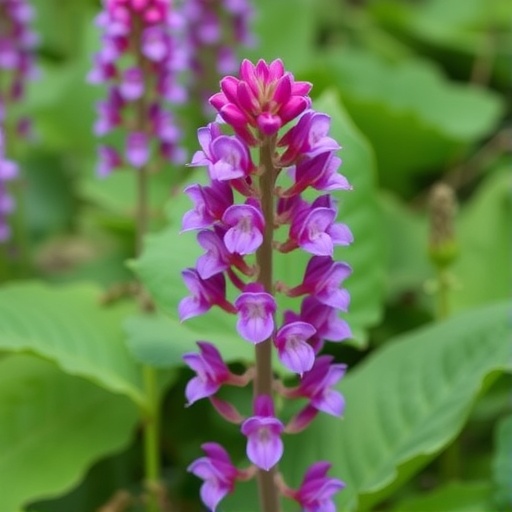
The study carried out by Chen et al. emphasizes that plant-associated microbes are not merely passengers; rather, they actively shape the biochemical landscape of their host. By examining the shifts in microbial communities in different growing conditions, the study highlights how these microorganisms can influence the quantity and quality of the bioactive compounds synthesized by the plant. This research emphasizes the complex interplay between plant metabolism and microbial ecology, shedding light on a previously underexplored aspect of botanical sciences.
.adsslot_3FISHzYGhg{ width:728px !important; height:90px !important; }
@media (max-width:1199px) { .adsslot_3FISHzYGhg{ width:468px !important; height:60px !important; } }
@media (max-width:767px) { .adsslot_3FISHzYGhg{ width:320px !important; height:50px !important; } }
ADVERTISEMENT
Moreover, the implications of these findings extend beyond mere plant enhancement. They suggest a paradigm shift in how researchers and cultivators perceive the management of medicinal plants. While growing conditions such as soil type, light, and water are essential, the authors assert that integrating microbial health into cultivation practices could yield unprecedented advancements in plant secondary metabolite production. By fostering beneficial microbes in the soil, cultivators might maximize the therapeutic potential of their crops, thus catering to the growing market for potent natural remedies.
The authors also point out that the variations within microbial communities can be experimentally manipulated. Techniques such as microbial inoculation or the application of specific fertilizers that promote advantageous microbial populations could become standard practices in sustainable agriculture. The study proposes further investigation into the potential for specific microbial strains to enhance the biosynthesis of target compounds, marking a new frontier in the field of ethnobotany.
As science continues to unveil the complexity of life on Earth, understanding the role of microbial communities in plant health becomes increasingly critical. The detailed insights gathered from this study could forge pathways for innovative agricultural practices while simultaneously enhancing our comprehension of biodiversity. Such advancements could significantly impact health care, particularly as the world increasingly turns to herbal medicine and natural products for holistic care solutions.
As further research unfolds in this area, we may soon see practical applications of these findings making a tangible difference in the lives of those dependent on herbal medicine. The intersection of microbiology and herbal sciences is likely to yield exciting developments in the near future, with applications that can lead to healthier, sustainable, and more effective natural health solutions.
In a world striving for sustainable agricultural practices, this research might serve as a guiding light, encouraging future studies that prioritize the significance of invisible partners in our ecosystems. The quest to unlock the full potential of medicinal plants has never been more crucial, and the microbial communities living alongside these plants could very well hold the key to their success.
Subject of Research: Microbial community variation in Salvia miltiorrhiza
Article Title: Microbial community variation enhances active compound composition in Salvia miltiorrhiza
Article References: Chen, Z.l., Du, H.z., Wang, J.k. et al. Microbial community variation enhances active compound composition in Salvia miltiorrhiza. Int Microbiol (2025). https://doi.org/10.1007/s10123-025-00700-4
Image Credits: AI Generated
DOI: https://doi.org/10.1007/s10123-025-00700-4
Keywords: Salvia miltiorrhiza, microbial communities, active compounds, medicinal plants, botany, pharmacology, sustainability, herbal medicine.
Tags: biotic factors in plant growthcardiovascular disease treatment with herbsecological roles of microbial flora in agricultureenhancing bioactive compound yieldmicrobial communities and plant healthmicrobial diversity in medicinal plantsoptimizing natural medicines through microbiologypharmacological effects of tanshinonesplant-microbe interactions in herbal medicineSalvia miltiorrhiza active compoundstherapeutic properties of Danshentraditional Chinese medicine practices