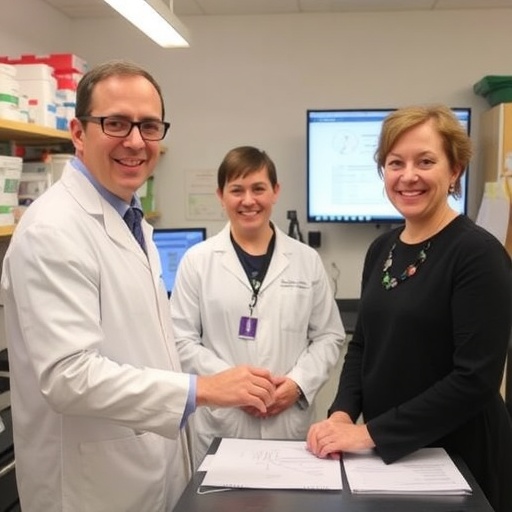
Liver cancer remains one of the most formidable challenges in oncology, especially for millions affected by fatty liver disease globally. Recent breakthroughs at McMaster University, in partnership with Espervita Therapeutics, illuminate a novel therapeutic pathway that leverages the body’s immune system in battling liver tumors fueled by fat metabolism. The study, published in the prestigious journal Nature on July 30, 2025, heralds a paradigm shift in our understanding of tumor immunology and cancer metabolism, representing a beacon of hope in the desperate fight against hepatocellular carcinoma (HCC).
This ground-breaking research centers on the metabolic enzyme ATP citrate lyase (ACLY), a key catalyst in the biochemical conversion of glucose to lipid molecules within liver cells. Tumor cells notoriously hijack this metabolic pathway, exploiting fat synthesis to fuel their unchecked growth and survival. The team at McMaster engineered a pharmacological agent — EVT0185 — designed to selectively inhibit ACLY activity within hepatic tissues. This targeted approach interrupts the tumor’s metabolic lifeline, substantially stunting its progression while sparing other organs from systemic side effects.
Strikingly, the treatment did more than halt tumor growth; it revitalized the immune environment within the liver. Conventional cancer immunotherapy paradigms emphasize the pivotal role of cytotoxic T lymphocytes (CTLs) in recognizing and eradicating cancer cells. However, the McMaster study revealed a surprising actor in the anti-tumoral immune orchestra: B cells. These antibody-producing lymphocytes, long overshadowed by T cells in cancer research, emerged as critical mediators of tumor clearance following ACLY inhibition.
.adsslot_IRmayT7H1O{ width:728px !important; height:90px !important; }
@media (max-width:1199px) { .adsslot_IRmayT7H1O{ width:468px !important; height:60px !important; } }
@media (max-width:767px) { .adsslot_IRmayT7H1O{ width:320px !important; height:50px !important; } }
ADVERTISEMENT
The enhanced immunogenicity of liver tumors post-treatment was unexpected and profound. B cells infiltrated the tumor microenvironment in greater numbers, orchestrating complex immune responses that synergized with other immune components. This novel insight challenges the prevailing dogma that T cells are the sole immune warriors in solid tumors and suggests that modulating cancer metabolism can selectively amplify anti-tumor B cell activity.
At a mechanistic level, ACLY inhibition curtails the intracellular synthesis of acetyl-CoA derived from citrate, disrupting lipid biogenesis critical for membrane formation and energy storage in tumor cells. This lipid deprivation likely induces metabolic stress, exposing tumor-associated antigens and rendering cancer cells more visible to immune surveillance. Additionally, altering tumor metabolism may reshape cytokine profiles in the microenvironment, thereby recruiting and activating B cells more effectively.
Fatty liver disease, medically termed metabolic dysfunction–associated steatotic liver disease (MASLD), affects nearly eight million individuals in Canada alone, with a significant subset progressing to a more severe inflammatory state known as metabolic dysfunction-associated steatohepatitis (MASH). These patients bear a disproportionately high risk of developing aggressive liver cancers such as HCC, which historically has seen dismal survival rates—less than 20% of patients survive beyond five years. The introduction of EVT0185 and its ACLY-targeted mechanism offers a promising avenue to alter this grim prognosis.
In preclinical trials, murine models simulating human MASH coupled with HCC were treated with EVT0185, resulting in a marked reduction in both tumor burden and growth rate. Importantly, treated tumors exhibited heightened susceptibility to immune-mediated destruction, primarily through B cell engagement rather than the anticipated cytotoxic T cell pathways. This discovery opens new investigative directions into B cell biology within cancer and may inspire innovative immunotherapies designed to harness these cells’ full potential.
While promising, the research team acknowledges the complexity inherent in translating these findings to clinical practice. Future studies must unravel the precise immunological cascades initiated by ACLY inhibition, determine the safety and efficacy of EVT0185 in human subjects, and explore whether similar strategies can be effective across diverse malignancies with metabolic dependencies. Moreover, understanding how B cells communicate with other immune subsets in the tumor microenvironment will be crucial in designing comprehensive treatment protocols.
This investigation exemplifies the power of targeting cancer metabolism not merely as a metabolic reprogramming stance but as a strategic lever to remodel immune responses. By switching off a vital metabolic enzyme, researchers have demonstrated a capacity to “unmask” tumors and enlist underappreciated immune players in the eradication effort, thereby expanding the therapeutic landscape beyond conventional cytotoxic and checkpoint inhibitor approaches.
The study was made possible through funding from the Canadian Institutes of Health Research Foundation Grant and collaborative investment from Espervita Therapeutics, underscoring the increasing importance of academia-industry partnerships in advancing translational medicine. Notably, several authors maintain shareholder positions within Espervita, highlighting a close integration of research innovation and biotechnological development.
As this research paves the way for next-generation liver cancer therapies, it also sparks a broader imperative to revisit the metabolic underpinnings across other cancers. Metabolic enzymes like ACLY may constitute a new class of druggable targets capable of simultaneously disabling tumor nutrition and invigorating immune defenses. Such dual-action therapeutics could revolutionize oncological treatment paradigms, addressing resistance mechanisms and poor immunogenicity that have long hampered success.
Subject of Research: Liver cancer metabolism and immune system interaction focusing on ACLY enzyme inhibition and B cell-mediated tumor immunity
Article Title: Inhibiting ACLY enhances tumour immunogenicity and resolves MASH-HCC
News Publication Date: 30-Jul-2025
Web References: 10.1038/s41586-025-09297-0
Keywords: Cancer, Liver cancer, Metabolism, Immunotherapy, B cells, ATP citrate lyase, Fatty liver disease, MASLD, MASH, Tumor microenvironment, Hepatocellular carcinoma, Immune metabolism
Tags: ATP citrate lyase inhibitionEVT0185 drug developmentfatty liver diseasehepatocellular carcinoma therapyimmune system and cancerliver cancer treatmentMcMaster University researchmetabolic pathways in cancernovel immunotherapy approachesoncological breakthroughstargeted cancer therapiestumor immunology advancements