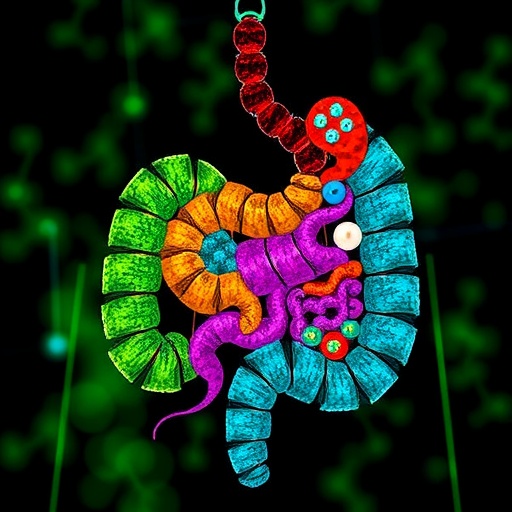

In a groundbreaking study published in Nature Communications, researchers from The Ohio State University have unveiled a comprehensive molecular atlas detailing how common pesticides interact with specific species of human gut bacteria, driving complex metabolic changes that may have profound implications for human health. This pioneering work not only maps the biochemical alterations induced by pesticides at a microbial level but also provides the first evidence of certain gut bacteria mitigating pesticide-induced toxicity, suggesting revolutionary pathways for probiotic therapies aimed at reducing the harmful effects of environmental pollutants.
Pesticides are ubiquitous in agricultural practices worldwide, yet their intricate effects on the human gut microbiome remain ill-defined despite mounting evidence suggesting that these chemicals disrupt microbial communities essential for maintaining health. This study, led by associate professor Jiangjiang Zhu and senior research associate Li Chen, bridges this critical knowledge gap by integrating laboratory experiments with in vivo animal models, deciphering the interactions between 18 globally prevalent pesticide compounds and 17 representative bacterial species that constitute major domains of the human gut microbiota.
What sets this research apart is its unprecedented resolution in identifying how individual pesticides modulate the growth patterns of specific gut bacteria rather than just altering the overall microbial composition. By exposing bacterial cultures to environmentally relevant concentrations of pesticides like DDT, atrazine, permethrin, and chlorpyrifos, the researchers observed distinct effects on bacterial proliferation and, critically, on how these microbes metabolize nutrients and sequester pesticide residues, a factor that may prolong chemical exposure within the host.
.adsslot_SaP0WbRvcZ{width:728px !important;height:90px !important;}
@media(max-width:1199px){ .adsslot_SaP0WbRvcZ{width:468px !important;height:60px !important;}
}
@media(max-width:767px){ .adsslot_SaP0WbRvcZ{width:320px !important;height:50px !important;}
}
ADVERTISEMENT
To decode this complex interplay, the team constructed an intricate pesticide-bacteria interaction network that pinpoints which pesticides enhance or inhibit bacterial growth and which bacterial strains actively absorb and accumulate pesticide molecules. Such accumulation mechanisms could facilitate sustained pesticide presence in the gastrointestinal tract, potentially exacerbating toxicological effects. This nuanced understanding refines prior environmental health observations by tying specific bacterial responses to individual pesticide agents.
At the core of these microbial responses lie metabolic perturbations that ripple through biochemical pathways vital for both microbial and host physiology. The researchers identified significant metabolic shifts across 306 pesticide-gut microbe pairs, underscoring how these xenobiotics reprogram bacterial metabolism. Central to these changes were variations in metabolite profiles—the molecular end products of metabolism that govern nutrient assimilation, energy production, and intercellular signaling, including immune modulation.
Extending beyond metabolites, the team also probed lipidomic alterations induced by pesticide exposure. Lipids, encompassing fatty acids and complex waxy compounds, play essential roles in maintaining cellular structure, signaling cascades, and inflammatory responses. By profiling lipid variations within pesticide-exposed bacteria, the study highlights an additional biochemical axis through which pesticides disrupt gut microbial homeostasis.
Crucially, these in vitro findings were corroborated in an in vivo mouse model, where healthy mice pre-treated with antibiotics to deplete their native gut microbiota were colonized with Bacteroides ovatus, a prevalent human gut bacterium. Following a four-week pesticide exposure, these mice exhibited heightened inflammation across multiple organs, validating the pro-inflammatory potential of pesticides. Intriguingly, the presence of B. ovatus modulated this inflammatory response by altering metabolic pathways and lipid classes, specifically increasing lipids that suppress oxidative stress-related protein signaling pathways.
This discovery signals a potential protective role for select gut bacteria, which may buffer the host against pesticide-induced inflammation, opening avenues for microbiome-targeted interventions. As inflammation is a key driver of numerous chronic diseases, understanding how gut microbes mediate such responses could reshape therapeutic strategies against environmental toxicity.
Lead investigator Jiangjiang Zhu emphasized the broader significance of mapping these molecular interactions, noting that their publicly available atlas enables other research groups to explore downstream consequences of pesticide-microbiome dynamics. The database serves as a blueprint for identifying biomarkers of exposure, disease risks, and therapeutic targets, facilitating an integrated approach to tackling pesticide-linked health challenges.
Looking forward, Zhu’s laboratory aims to deepen insights into how pesticide-induced metabolic disruptions within gut microbiomes intersect with various health and disease states in humans. Such mechanistic elucidation holds promise for precision medicine, tailoring interventions that restore microbial balance and attenuate pesticide toxicity.
This study emerges at a pivotal moment as the global community grapples with balancing agricultural productivity and environmental safety. Despite regulatory restrictions, legacy pesticides like DDT persist in ecosystems, and contemporary pesticides continue their widespread application. By illuminating how these chemicals remodel gut microbial ecosystems, this research underscores the hidden biological costs of pesticide exposure and the untapped potential of microbiome-centered solutions.
Funded by the National Institute of General Medical Sciences and supported by the Provost’s Scarlet and Gray Associate Professor Program at Ohio State, the research represents a collaborative effort spanning multiple institutions, including Yale University, Zhejiang Academy in China, and Johns Hopkins University. This multidisciplinary approach underscores the complexity and urgency of understanding environmental toxicants within the context of human microbiota.
In sum, this landmark investigation reveals that the dialogue between pesticides and gut bacteria is far from passive—pesticide exposure remodels gut microbial metabolism in specific, measurable ways that can trigger inflammation or confer protection. With an eye on the future, these insights may pave the way for novel probiotics or metabolic interventions that shield humans from chemical insults encountered daily through food and water, heralding a new era of microbiome-informed environmental health.
Subject of Research: Interaction between pesticides and human gut microbiota; metabolic alterations and toxicological implications.
Article Title: Mapping pesticide-induced metabolic alterations in human gut bacteria
News Publication Date: 10-May-2025
Web References:
Article DOI
Nature Communications
References: The study as published in Nature Communications and prior scientific works on pesticides and gut microbiota interactions.
Image Credits: Not provided.
Keywords
Pesticides, Gut Microbiota, Metabolic Alterations, Inflammation, Probiotics, Xenobiotics, Lipidomics, Microbial Metabolism, Environmental Toxicology, Human Health, Microbiome Interactions, Biochemical Pathways
Tags: agricultural chemicals and microbial communitiesbiochemical alterations in gut bacteriacomplex interactions of pesticides and gut bacteriaenvironmental pollutants and gut healthhuman gut bacteria and pesticidesimpact of pesticides on human healthmetabolic changes from pesticidesmolecular atlas of gut microbiomeOhio State University microbiome studypesticide exposure and gut microbiomeprobiotic therapies for pesticide toxicityresearch on pesticides and health