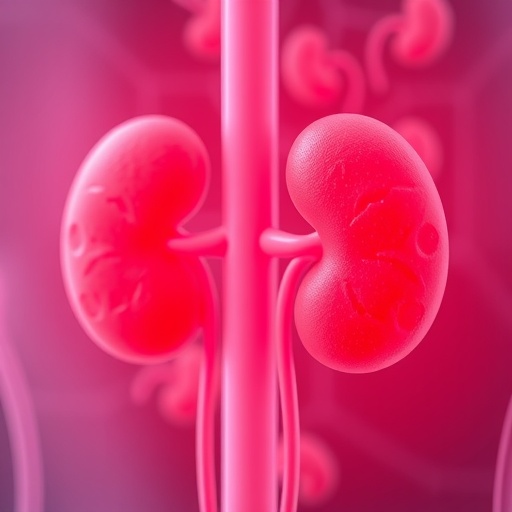

In a groundbreaking meta-analysis published in BMC Cancer, researchers have delved deeply into the complex relationship between antihypertensive medication use and kidney cancer risk, separating the effects of these drugs from the confounding factor of hypertension itself. This comprehensive study brings new urgency to the ongoing evaluation of antihypertensive treatments and their potential long-term consequences on renal health, potentially reshaping clinical approaches in managing patients with high blood pressure.
Hypertension is a well-known contributor to multiple organ pathologies, including kidney dysfunction and cancer. However, the independent role of antihypertensive medications (AHTN) has remained controversial and poorly defined. The meta-analysis meticulously analyzed data from 39 observational studies, encompassing a broad spectrum of antihypertensive agents to uncover nuanced risks specifically tied to pharmacological intervention rather than the hypertensive condition alone.
Antihypertensive medications are critical pillars in cardiovascular care, utilized by millions globally to prevent stroke, myocardial infarction, and chronic kidney disease progression. Yet, as the pharmacodynamics and systemic impacts of these medications extend beyond blood pressure control, concerns have emerged regarding their carcinogenic potential, particularly in relation to kidney cancer. This meta-analysis represents the first robust attempt to disentangle these intertwined risk factors using advanced stratified methodologies.
.adsslot_Hpi6nNRt1q{width:728px !important;height:90px !important;}
@media(max-width:1199px){ .adsslot_Hpi6nNRt1q{width:468px !important;height:60px !important;}
}
@media(max-width:767px){ .adsslot_Hpi6nNRt1q{width:320px !important;height:50px !important;}
}
ADVERTISEMENT
The researchers employed a sophisticated approach that included stratified analyses accounting for hypertension through matching, statistical adjustment, or restriction. This methodological rigor allowed them to extract more reliable relative risk (RR) estimates, devoid of confounding biases introduced by the presence of hypertension, thereby spotlighting the intrinsic risks associated purely with medication exposure.
Findings revealed that several classes of antihypertensive drugs are associated with an increased risk of kidney cancer, even after adequately controlling for hypertension. Notably, calcium channel blockers (CCBs) emerged as the class with the highest relative risk, exhibiting a 40% increased risk of kidney cancer compared to non-users. This observation raises critical questions about the long-term safety of CCBs, widely prescribed for their efficacy and perceived tolerability.
Diuretics, commonly used to manage fluid overload and hypertension, also demonstrated a significant association with kidney cancer risk, showing a 36% increased risk. This finding challenges the current notion that diuretics are a relatively neutral option regarding cancer risk and underscores the importance of ongoing pharmacovigilance in routine practice.
Beta-blockers, another foundational class of antihypertensives, showed a modest yet statistically significant 9% increase in risk, while angiotensin receptor blockers (ARBs) were associated with a 15% increase. Angiotensin-converting enzyme inhibitors (ACEIs), in contrast, demonstrated a relative risk increase of 19%, but with a confidence interval crossing unity, suggesting uncertainty and the need for further focused research.
Duration-response analyses further bolstered these associations, revealing that longer exposure to certain classes of antihypertensive medications correlates with progressively elevated kidney cancer risk. This temporal dimension strengthens the causal inference and highlights the potential cumulative adverse effects that may accrue from chronic treatment.
Kidney cancer, although less common than other malignancies, carries significant morbidity and mortality. The elucidation of modifiable risk factors such as medication use is critical in improving prevention strategies, early detection, and patient counseling. The findings from this meta-analysis urge clinicians to carefully weigh the benefits and potential oncogenic risks when selecting antihypertensive regimens, particularly in patients with additional risk factors for kidney malignancy.
While the results are compelling, authors caution against abrupt discontinuation of antihypertensive medications, emphasizing the indispensable benefits of blood pressure control for cardiovascular health. Instead, they advocate for integrated risk assessment models that balance cancer risk with cardiovascular protection, potentially guiding personalized medicine approaches.
The study also calls for further mechanistic investigations to unravel the biological pathways through which these medications might promote carcinogenesis in renal tissue. Hypotheses include drug-induced alterations in renal hemodynamics, direct genotoxic effects, or modulation of cellular pathways involved in tumorigenesis.
Moreover, the meta-analysis highlights the critical importance of future large-scale prospective studies and randomized controlled trials designed to prospectively evaluate cancer risk among hypertensive patients on different drug regimens. Until such data are available, clinical vigilance and informed patient discussions remain paramount.
This research represents a major advance in cardiovascular oncology intersection studies and opens new dialogues regarding drug safety profiles in long-term chronic disease management. The nuanced understanding provided by this meta-analysis promises to reshape guidelines and inform both clinicians and patients about the latent risks embedded within common therapeutic choices.
In conclusion, while antihypertensive medications remain a cornerstone of cardiovascular disease prevention, this study underscores an emergent need to scrutinize their broader systemic effects. Kidney cancer risk associated with different antihypertensive classes, especially calcium channel blockers and diuretics, demands heightened awareness. Personalized care strategies must evolve, incorporating ongoing evidence to optimize both cardiovascular outcomes and cancer prevention.
Subject of Research: Association between antihypertensive medication use and kidney cancer risk independent of hypertension.
Article Title: Association between antihypertensive medication use and kidney cancer risk: a meta-analysis accounting for hypertension.
Article References:
Jung, M., Li, M., Shin, J. et al. Association between antihypertensive medication use and kidney cancer risk: a meta-analysis accounting for hypertension.
BMC Cancer 25, 1013 (2025). https://doi.org/10.1186/s12885-025-14406-3
Image Credits: Scienmag.com
DOI: https://doi.org/10.1186/s12885-025-14406-3
Tags: antihypertensive medication and kidney cancer riskcancer risks associated with antihypertensivescardiovascular care and kidney diseasecomprehensive study on blood pressure treatmentsevaluating antihypertensive treatmentshypertension and renal healthimpacts of hypertension on organ healthlong-term effects of blood pressure medicationsmeta-analysis of antihypertensivesobservational studies on antihypertensive drugspharmacological interventions and cancerrenal health and antihypertensive drugs