
In a groundbreaking advance poised to reshape the landscape of cancer immunotherapy, researchers have uncovered compelling evidence that specific antioxidants can significantly influence the expansion and cytotoxic functionality of gamma delta (γδ) T-cells—immune warriors with a unique capacity to target cancer cells. The findings, recently published in BMC Cancer, delve into how modulating reactive oxygen species (ROS) through antioxidant supplementation during the activation phase of naïve T-cells may enhance their effectiveness against urothelial carcinoma, a deadly form of bladder cancer.
T-cells, crucial components of the adaptive immune system, rely on finely tuned intracellular signaling cascades for activation and proliferation. Previous studies have illuminated that cross-linking the T-cell receptor triggers a burst of reactive oxygen species within mitochondria, a phenomenon indispensable for antigen-specific T-cell proliferation. Paradoxically, this oxidative burst carries the risk of causing cellular damage, tempering the overall efficacy and viability of expanding T-cell populations—a delicate balance the new study sought to manipulate.
The international research team focused on γδ T-cells, a subset of T-cells characterized by their distinct γδ T-cell receptor, known for their rapid response to infection and tumors without the need for antigen presentation via major histocompatibility complex (MHC) molecules. This attribute makes γδ T-cells promising candidates for adoptive T-cell therapies, especially for treating cancers that evade conventional immune detection. However, the optimization of their expansion ex vivo without compromising function remains a clinical challenge.
.adsslot_w90cArDkef{width:728px !important;height:90px !important;}
@media(max-width:1199px){ .adsslot_w90cArDkef{width:468px !important;height:60px !important;}
}
@media(max-width:767px){ .adsslot_w90cArDkef{width:320px !important;height:50px !important;}
}
ADVERTISEMENT
To address this, peripheral blood mononuclear cells (PBMCs)—the cellular foundation for generating T-cell populations—were cultured in the presence or absence of key antioxidants commonly known for their ROS-scavenging properties: N-acetyl cysteine (NAC), vitamin C, and vitamin E. These antioxidants were carefully administered during the induction and expansion stages to evaluate their impacts on the proliferation, phenotype, and cytolytic abilities of γδ T-cells against bladder cancer cells.
Intriguingly, NAC exhibited a dose-dependent inhibitory effect on overall T-cell expansion, a finding underscoring the complexity of redox balance in T-cell biology. High concentrations of NAC partially suppressed the proliferation of CD3⁺/Vγ9⁺ cells, a principal subset of γδ T-cells, suggesting that excessive ROS inhibition may impair the critical signaling processes needed for optimal T-cell growth. This nuanced role of NAC prompts reconsideration of blanket antioxidant use during immune cell cultivation.
Vitamin E treatment presented a distinct immunomodulatory profile. While it moderately reduced the levels of CD3⁺/CD56⁺ natural killer (NK)-like T-cells and decreased the expression of the activating receptor CD314 (NKG2D), it did not hinder overall expansion as markedly as NAC. Given that NKG2D plays a pivotal role in recognizing and destroying stressed or transformed cells, this reduction hints at a subtle trade-off between antioxidant-mediated protection and effector receptor expression, motivating further investigation into dosing strategies.
Perhaps most compellingly, the study demonstrated that co-incubating γδ T-cells expanded with antioxidants alongside bladder cancer cells resulted in significantly enhanced tumor cell cytolysis. This observation suggests that antioxidants can improve the functional quality of these immune cells, potentially by mitigating oxidative damage during expansion and preserving cytotoxic mechanisms. The ability to augment T-cell mediated killing of urothelial carcinoma cells heralds promising implications for developing more effective adoptive cell therapies.
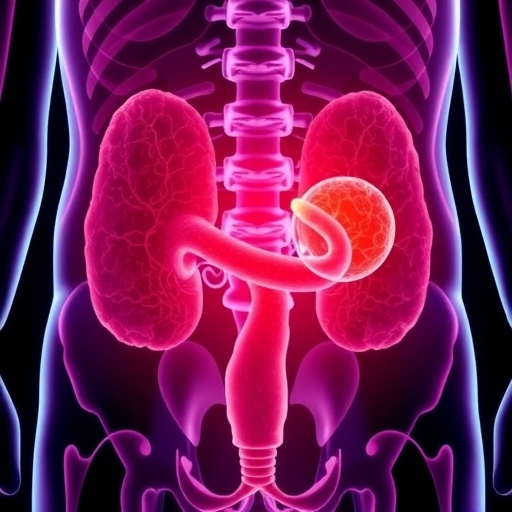
Urothelial carcinoma, a malignancy with high mortality particularly among men globally, desperately requires innovative treatment approaches. Immunotherapy using autologous or allogeneic T-cell populations offers a beacon of hope but is hindered by challenges in producing sufficient numbers of highly functional cells. The novel insights from this antioxidant-focused study pave the way to refine expansion protocols that balance proliferation, survival, and antitumor activity.
Mitochondrial health, often compromised by oxidative stress during ex vivo T-cell culture, appears to be a decisive factor influencing the success of adoptive therapies. Antioxidants, by modulating ROS metabolism, may protect mitochondria from injury without completely abolishing the ROS signaling necessary for T-cell activation. This delicate interplay underscores the critical need for precision medicine approaches in cellular immunotherapy manufacturing.
The distinction between how various antioxidants impact different T-cell subsets and receptors also opens new avenues for customized immune cell engineering. For instance, selective use of vitamin E might be strategized to fine-tune NK-like γδ T-cell populations, while careful dosing of NAC could prevent over-suppression of essential proliferative signals, optimizing therapeutic outcomes.
Beyond bladder cancer, the implications of this research extend to other malignancies where γδ T-cells may serve as key players in immune surveillance. The findings encourage broader exploration of redox modulation as a universal enhancer of T-cell based immunotherapies, potentially revolutionizing treatment in hematologic and solid tumors alike.
As the immuno-oncology field races to adopt cell-based approaches, integrating functional antioxidants during ex vivo expansion protocols could become a standard practice, improving the shelf-life, safety, and potency of engineered T-cell products. This advancement holds promise not only for augmenting clinical response rates but also for reducing manufacturing costs by boosting yield and functionality simultaneously.
Future studies are anticipated to dissect the molecular pathways by which antioxidants influence T-cell metabolism, receptor expression, and cytolytic machinery. Such mechanistic insights will enable the design of next-generation culture media and supplements, tailored to nurturing the most effective cellular soldiers against cancer.
Equally important will be translating these in vitro findings into clinical trials to assess safety, efficacy, and optimal dosing in patients. The transition from bench to bedside will require collaboration across immunologists, oncologists, and biotechnologists to harness the full therapeutic potential of antioxidant-augmented γδ T-cell therapies.
In summation, this pioneering research sheds light on a hitherto underappreciated axis within T-cell immunobiology—the controlled modulation of oxidative stress to enhance cellular therapy success. The strategic co-administration of antioxidants emerges as a promising lever to steer the balance towards more robust, resilient, and effective γδ T-cell populations in the fight against bladder and potentially other cancers.
Subject of Research: Effects of functional antioxidants on γδ T-cell proliferation and cytotoxicity against urothelial carcinoma cells.
Article Title: Effects of functional antioxidants on the expansion of gamma delta T-cells and their cellular cytotoxicity against bladder cancer cells.
Article References:
Pan, Y., Shih, HJ., Chuang, SH. et al. Effects of functional antioxidants on the expansion of gamma delta T-cells and their cellular cytotoxicity against bladder cancer cells. BMC Cancer 25, 980 (2025). https://doi.org/10.1186/s12885-025-14383-7
Image Credits: Scienmag.com
DOI: https://doi.org/10.1186/s12885-025-14383-7
Tags: adoptive cell transfer therapyantioxidant supplementation in cancer therapycancer immunotherapy advancementscytotoxic functionality of T-cellsenhancing T-cell effectivenessfunctional antioxidantsgamma delta T-cellsimmune system signaling pathwaysnovel cancer treatment strategiesreactive oxygen species modulationT-cell activation and proliferationurothelial carcinoma treatment