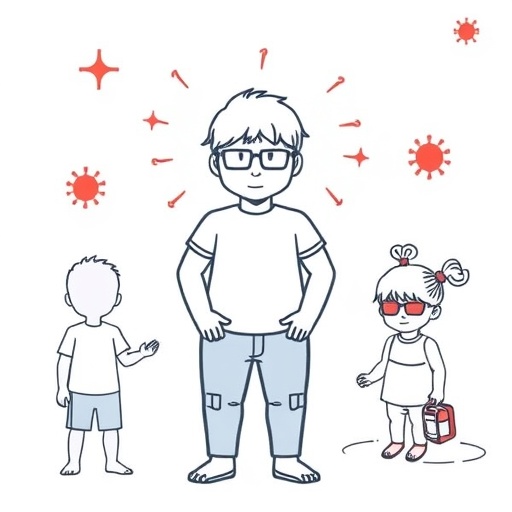
In the wake of the global COVID-19 pandemic, researchers have increasingly turned their attention to the multifaceted impacts the crisis has had on children’s health, particularly focusing on the pervasive environmental and psychological stressors that emerged during periods of lockdown and social disruption. A groundbreaking study published in the International Journal of Obesity in 2025 sheds new light on the intricate biological mechanisms connecting family stress to childhood obesity, unveiling a complex interplay mediated by the hormone cortisol, which serves as a biomarker for chronic stress. This research delves deeply into how household dynamics during the pandemic may have sculpted children’s body mass index z-scores (BMIz), providing compelling evidence that extends beyond mere correlation to explore potential causative pathways.
It has long been observed that chronic stress contributes to a host of metabolic dysregulations, yet the exact physiological conduits translating psychological strain into measurable somatic outcomes in children remain elusive. The study spearheaded by Douglas, Laila, Tremblay, and colleagues methodically investigates hair cortisol concentration (HCC) as a stable, integrative marker of long-term hypothalamic-pituitary-adrenal (HPA) axis activity. Unlike traditional measurements of cortisol that capture transient fluctuations, HCC captures accumulated exposure over extended periods, making it particularly suited for evaluating the biological imprint of prolonged environmental stressors such as those experienced during the pandemic.
One of the principal revelations from the research is the robust association between heightened family stress and elevated BMIz scores in children during the pandemic. Such findings are consistent with earlier epidemiological analyses that indicated stress-related behavioral and physiological changes could predispose youth to excessive weight gain. However, the novelty lies in the elucidation of the cortisol mediation effect, highlighting how chronic activation of the HPA axis may function as a linchpin bridging the psychosocial environment and metabolic outcomes. The study’s findings thus offer a more nuanced understanding of the biopsychosocial pathways influencing childhood obesity trajectories during monumental societal disruptions.
Delving into the biological plausibility of these associations, cortisol, colloquially termed the “stress hormone,” plays pivotal roles in modulating energy metabolism, glucose regulation, and adipose tissue distribution. Persistent elevations in cortisol have been implicated in promoting central adiposity and insulin resistance, which are key drivers of obesity. The study’s use of hair cortisol measurement captures this prolonged hormone secretion, offering a revolutionary methodological advantage over saliva or blood samples that reflect instantaneous cortisol levels prone to diurnal variability. Through this lasting biomarker, the researchers effectively quantify the chronicity of stress exposure experienced by children in their home environments.
Importantly, this research underscores the critical need to address family and environmental stress as integral components of pediatric obesity prevention strategies. Traditional obesity interventions focusing on diet and physical activity may be insufficient if the underlying stress biology remains unaddressed. Targeted psychological support, family counseling, and public health policies aimed at reducing household stress exposure could represent promising avenues to interrupt the cortisol-mediated pathways fueling childhood weight gain. These insights have profound implications not only during pandemics but also in broader contexts involving environmental adversity.
In terms of research methodology, the study leverages a multidimensional approach combining psychometric instruments for stress quantification, rigorous anthropometric assessments, and sophisticated hormonal analyses. This triangulation of data sources strengthens causal inference and enhances confidence in the observed mediational effects. Additionally, the focus on a sensitive biomarker like hair cortisol reflects an evolving paradigm in stress research prioritizing biomarkers that capture chronic exposure over transient states, thereby refining our understanding of stress physiology in pediatric populations.
Nevertheless, the authors acknowledge certain inherent limitations, including the challenges of disentangling the bidirectional influences between stress and weight-related behaviors. For instance, elevated BMI may itself contribute to psychosocial stress, creating a feedback loop. Moreover, while hair cortisol offers numerous analytical advantages, factors such as hair treatment and growth rates require meticulous standardization. Future investigations may also seek to incorporate longitudinal designs extending beyond the pandemic period to observe the persistence and potential reversibility of stress-induced metabolic alterations.
The broader societal implications of these findings speak to the hidden costs of chronic stress imposed on families during crises. Socioeconomically disadvantaged populations, already burdened with higher baseline stress levels, might be disproportionately impacted, aggravating health disparities in childhood obesity prevalence. Recognizing cortisol’s mediating role provides a quantifiable target for interventions and surveillance, enabling healthcare providers and policymakers to implement more tailored and timely therapeutic measures.
Equally intriguing is the potential interplay between genetic predispositions, epigenetic modifications, and chronic stress in shaping obesity phenotypes. While this study primarily focuses on environmental stressors and cortisol, emerging literature suggests that stress may induce epigenetic changes influencing the expression of genes related to metabolism and adipogenesis. Integrating these molecular insights with endocrine findings opens fertile ground for future multidisciplinary studies.
From a clinical perspective, measuring hair cortisol could evolve into a practical tool for identifying children at heightened risk for stress-driven weight gain, facilitating early intervention. Pediatricians might integrate such biomarker assessments alongside traditional growth monitoring to holistically evaluate a child’s health status. This precision medicine approach aligns with contemporary efforts to personalize healthcare by considering psychological and biological determinants collectively.
Moreover, the COVID-19 pandemic has underscored the necessity of resilient family support systems and mental health resources to buffer children from the adverse effects of environmental stressors on metabolic health. Schools, community organizations, and health services form a critical network capable of identifying vulnerable children and delivering interventions that encompass stress reduction alongside nutritional guidance.
The study’s profound insight into the biological embedding of stress also resonates with broader fields investigating allostatic load and its consequences across the lifespan. Chronic activation of physiological stress systems, as evidenced through cortisol accumulation, not only predisposes children to obesity but may also impair other domains such as cognition, immunity, and cardiovascular health. Hence, mitigating family stress during early developmental windows emerges as a cornerstone for fostering holistic child well-being.
The implications of such work extend beyond academic curiosity, calling upon public health officials, clinicians, and communities to recognize and address the invisible biological scars chronic stress imprints on children. By illuminating cortisol’s mediating role, this study charts a course for future research and practice emphasizing the importance of nurturing family environments and mitigating stress to combat the burgeoning childhood obesity epidemic. Ultimately, the intersecting challenges of mental health and metabolic disease in children demand a holistic, biologically informed, and compassionate response—one that this research powerfully inspires.
Subject of Research: The study investigates the relationship between family and household stress during the COVID-19 pandemic and children’s BMIz, focusing on the mediating role of hair cortisol concentration (HCC).
Article Title: Family stress and child BMIz during the COVID-19 pandemic: exploring the mediating effects of cortisol.
Article References:
Douglas, S., Laila, A., Tremblay, P.F. et al. Family stress and child BMIz during the COVID-19 pandemic: exploring the mediating effects of cortisol.
Int J Obes (2025). https://doi.org/10.1038/s41366-025-01802-9
Image Credits: AI Generated
DOI: https://doi.org/10.1038/s41366-025-01802-9
Tags: biomarkers of chronic stress in childrenchildhood health during crisischronic stress and child developmentcortisol and childhood obesityCOVID-19 pandemic impactsenvironmental stressors and health outcomesfamily stress and child healthhair cortisol concentration in childrenhousehold dynamics during lockdownHPA axis activity and obesitymetabolic dysregulation in childrenpsychological stress and BMI