
In a significant stride toward unraveling the complexities of pediatric neurodevelopment, Boston Children’s Hospital, in partnership with Feihe—a leading infant formula conglomerate headquartered in Beijing—has launched the Feihe Pediatric Brain Development Research Initiative. This groundbreaking effort is designed to delve deeply into the intricate biological and environmental mechanisms guiding brain maturation during both prenatal and postnatal life stages. By fostering pioneering research at the interface of genetics, nutrition, and environmental science, this initiative promises to illuminate pathways that could broadly enhance cognitive and neurological health outcomes for children worldwide.
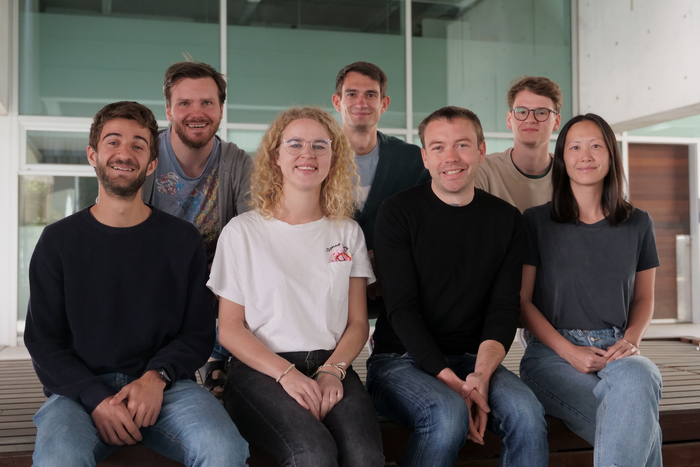
The hospital convened its first annual Feihe Pediatric Brain Development Symposium on April 4, 2025, bringing together esteemed faculty members and research leaders to showcase and reflect on the year’s funded research projects. This collective gathering underscores a shared commitment to translational science that bridges laboratory discoveries with clinical application, thereby bridging bench knowledge with bedside care.
In the intricate terrain of genetic susceptibility and neurodevelopment, Dr. Jonathan Lipton, alongside collaborators Siddharth Srivastava, MD, and Joe Kossowsky, PhD, has embarked on elucidating circadian rhythm vulnerabilities within Kleefstra Syndrome. This research leverages molecular chronobiology to discern how disruptions in circadian timing may precipitate neurodevelopmental regression, thereby offering a novel conceptual framework for disease mechanism and intervention timing.
Examining early-life environmental interaction, Dr. Brian Kalish’s work on the maternal microbiome explores the maternal-fetal interface, postulating that the microbial milieu within the maternal body exerts profound influence on intrauterine brain programming. His research aims to define mechanistic underpinnings that link maternal microbial populations with neurodevelopmental trajectories, a domain ripe for novel preventive strategies.
Advancing neurobiological inquiry into synaptic physiology, Dr. Hisashi Umemori investigates how activity-dependent synaptic modifications in dopaminergic neurons are sculpted by environmental factors. Dopaminergic pathways being central to cognition, reward, and motor control, understanding their synaptic plasticity in developmental stages could shed light on neuropsychiatric disorders marked by dopaminergic dysfunction.
In a connected vein of work, Dr. Zhigang He, with collaborators Dr. Umemori and Dr. Chinfei Chen, interrogates the role of postnatal spikes in triiodothyronine (T3) hormone levels—a thyroid hormone critical for brain development. This team’s research utilizes a combination of biochemical assays and neuroanatomical analyses to uncover how transient hormonal surges influence neuronal maturation and regenerative capacity, with potential implications for neurodevelopmental therapeutics that leverage thyroid hormone modulation.
Tackling the impactful domain of early adversity, Dr. Takao Hensch applies whole-brain imaging strategies combined with behavioral phenotyping to elucidate mechanisms by which early-life stress impairs male social behavior. His approach integrates cutting-edge neuroimaging modalities and computational neuroscience techniques to parse the neural circuitry affected by adverse exposures, informing interventions that may mitigate these early detrimental effects.
Dr. Maria Lehtinen’s investigation into cerebrospinal fluid (CSF) repair mechanisms offers a paradigm shift in understanding how CSF dynamics contribute to neurodevelopmental disorder prevention. By exploring molecular pathways that maintain CSF homeostasis and its reparative processes, her work could pave the way for innovative treatments aimed at enhancing intrinsic brain repair mechanisms, thereby preventing long-term cognitive deficits.
Furthermore, Dr. Caitlin Rollins introduces vital normative metrics related to fetal brain MRI, derived from a nationally representative cohort. Her work is a critical advancement in prenatal neuroimaging, providing standardized benchmarks that enable clinicians and researchers to better detect and interpret deviations in fetal brain maturation, thus optimizing early diagnosis and intervention strategies for developmental anomalies.
The collective efforts supported by the Feihe initiative represent a convergence of diverse scientific disciplines—including molecular genetics, neuroendocrinology, microbiology, and neuroimaging—each advancing the overarching goal of fostering healthy brain development. This multi-dimensional research approach acknowledges the complex interplay of intrinsic and extrinsic factors shaping the neural architecture that underpins cognitive and behavioral function.
Boston Children’s Hospital expresses profound gratitude to Feihe for their generous financial partnership, highlighting the essential role of targeted philanthropy in propelling cutting-edge biomedical research. Feihe’s commitment underlines a shared global vision to nurture infant health and development, reflecting the company’s stature as the premier infant milk formula manufacturer in China.
The symposium not only spotlighted experimental progress but also fostered vibrant dialogues between hospital leadership and investigators, fostering an environment of collaborative innovation. Such scientific gatherings are pivotal for synthesizing insights, refining research directions, and accelerating the translation of foundational discoveries into therapeutic realities.
For those interested in engaging with the awardees or seeking further insights into the initiative, Boston Children’s Hospital warmly invites contact via [email protected]. Visual and video documentation from the symposium is also accessible online, underscoring the initiative’s transparency and commitment to public engagement.
As the Feihe Pediatric Brain Development Research Initiative advances, it sets a benchmark for integrative pediatric neuroscience research, promising transformative impacts on our understanding and enhancement of early brain development. The initiative exemplifies how strategic funding and interdisciplinary collaboration can coalesce to unravel the complexities of the developing brain, ultimately fostering healthier futures for children globally.
Subject of Research: Pediatric brain development focusing on genetic, nutritional, and environmental influences during prenatal and postnatal periods
Article Title: Unraveling Early Brain Development: Insights from the 2025 Feihe Pediatric Brain Development Research Initiative
News Publication Date: April 4, 2025
Web References:
Boston Children’s Hospital Researcher Profiles:
Jonathan Lipton: https://www.childrenshospital.org/directory/jonathan-lipton
Brian Kalish: https://www.childrenshospital.org/directory/brian-kalish
Hisashi Umemori: https://research.childrenshospital.org/researchers/hisashi-umemori
Zhigang He: https://research.childrenshospital.org/researchers/zhigang-he
Takao Hensch: https://research.childrenshospital.org/researchers/takao-hensch
Maria Lehtinen: https://research.childrenshospital.org/researchers/maria-k-lehtinen
Caitlin Rollins: https://research.childrenshospital.org/researchers/caitlin-rollins
Feihe Company Profile (Frost & Sullivan Report)
Symposium Media: https://we.tl/t-zqyV2Pkpqj
Keywords: Brain development, Pediatric neuroscience, Neurodevelopmental disorders, Circadian rhythms, Maternal microbiome, Dopaminergic synapses, Thyroid hormone, Early adversity, Cerebrospinal fluid repair, Fetal brain MRI, Pediatric research funding, Neuroimaging
Tags: Boston Children’s Hospital fundingcircadian rhythm and neurodevelopmentcognitive health outcomes for childrenenvironmental mechanisms in brain developmentFeihe Pediatric Brain Development Initiativegenetics and nutrition in childhoodKleefstra Syndrome researchmolecular chronobiology in pediatricspediatric brain development researchpediatric neurodevelopment complexitiesprenatal and postnatal brain maturationtranslational science in child health