Credit: University of Maryland Center for Environmental Science
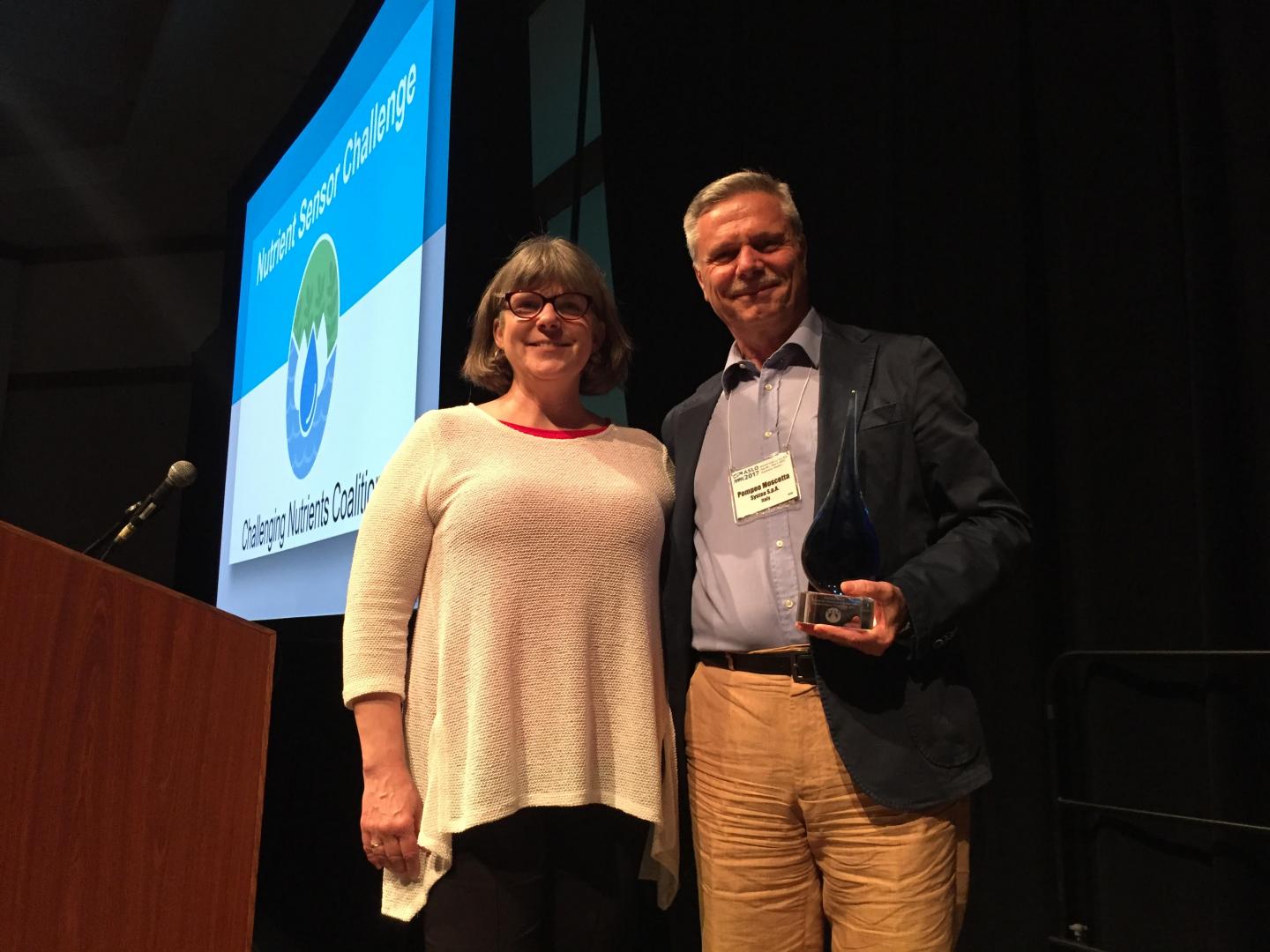
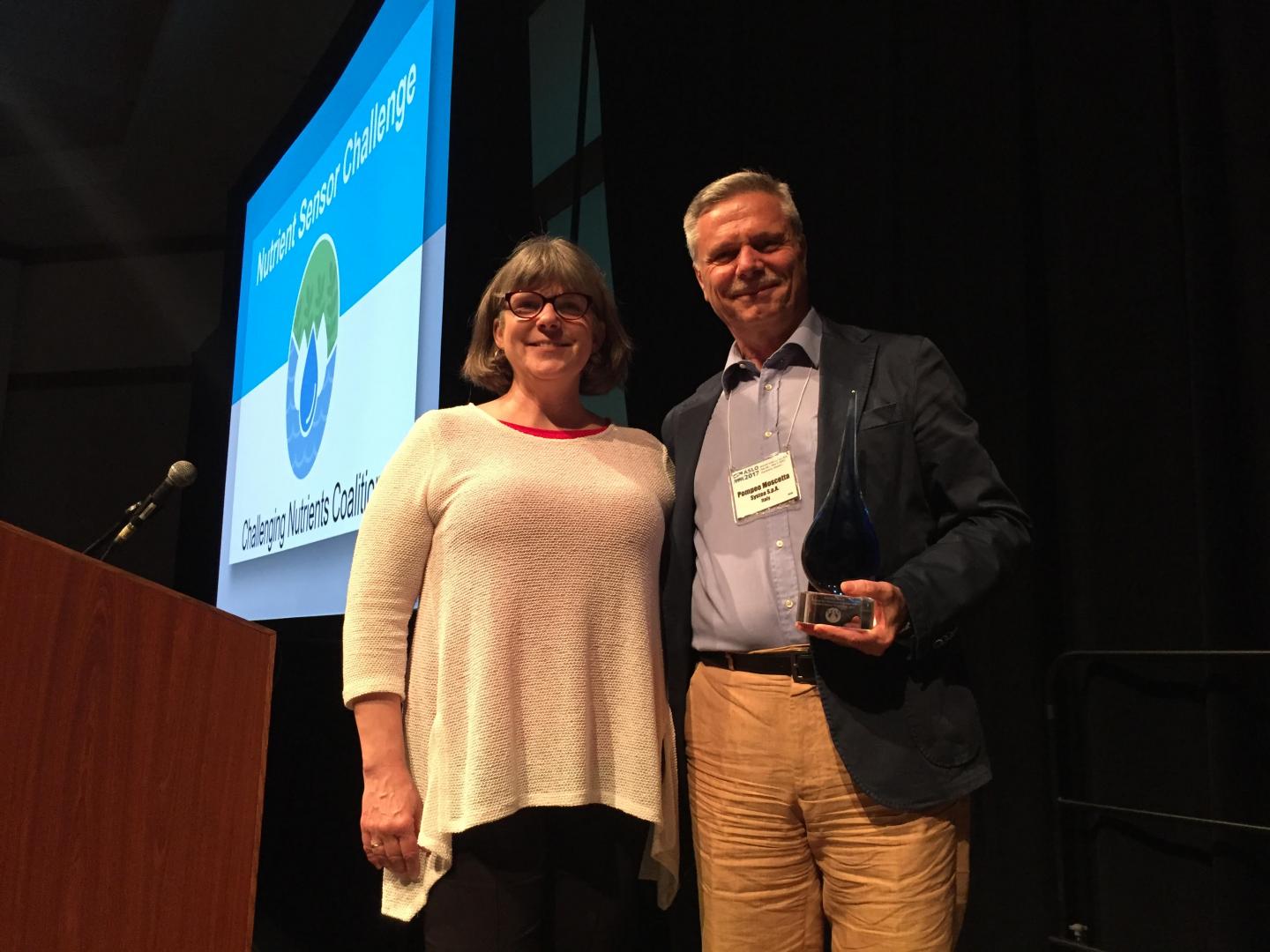
HONOLULU, HI (March 3, 2017)–The winners of the Nutrient Sensor Challenge were announced at a special awards session at the Association for the Sciences of Limnology & Oceanography Aquatic Sciences (ASLO) meeting in Honolulu, Hawaii, on Thursday, March 2.
Launched in December 2014, the Nutrient Sensor Challenge aimed to accelerate the development, production, and use of affordable, reliable, and accurate nutrient sensors. These sensors will enable automated and high-resolution nutrient monitoring in aquatic environments ranging from freshwater lakes and streams to the coastal ocean. Nutrient pollution is one of the nation's most difficult environmental challenges. While nutrients are essential compounds for functioning ecosystems and the production of food, fiber, and livestock feed, excessive nutrient levels can dramatically alter aquatic environments and threaten economic and human health.
An independent judging panel selected Systea S.p.A. as the winner for both Nitrate and Phosphate sensors. The Systea instruments represents a cost-effective, commercially available solution for measuring both nitrate and phosphate in an integrated package. It uses a wet chemistry approach to measure both nitrogen and phosphorus, and performed well in lab testing and across the three field deployments, including 72 days in Chesapeake Bay.
The judging panel awarded an Honorable Mention for Innovation and Potential to the National Oceanography Centre (NOC) team. The NOC sensor represents a fundamentally new approach to the wet chemical in situ analyzer method, using chip-based microfluidics technology. Though some engineering challenges need to be addressed for continuous, full-scale field deployment, the sensor performed well in the lab and maintained accuracy and precision across a wide range. The sensor is also forecast to be near the Challenge goal for purchase price.
For the past two years, the Challenging Nutrients Coalition has been working to facilitate the development of nutrient sensors that will provide the data needed to inform decisions to reduce nutrient loads on land, in the air, and in waterways and to track progress. The Coalition is an extensive collaboration between government agencies (including Environmental Protection Agency, National Oceanic and Atmospheric Administration, United States Geological Survey, and National Institute of Standards Technology), NGOs, and academia that deploys open innovation and incentive prize approaches to advance nutrient pollution management and reduction.
To stimulate these new innovations, the Coalition launched the Nutrient Sensor Challenge in collaboration with the Alliance for Coastal Technologies (ACT). The challenge goal was for new, more accurate, precise and reliable technologies to be commercially available by 2017 for a purchase price of less than $5,000 and with other significant savings in cost-of-ownership. After two years of development, and rigorous field and laboratory testing by ACT, the winners were selected by an independent panel of expert judges.
"Many thanks go to the many technology innovators, our technical advisory committee, and independent judging panel," said Mario Tamburri, Executive Director of the Alliance for Coastal Technologies. "The next step is to get these next-generation sensors into the hands of users to help stop the nutrient pollution problem." All instrument performance testing results will be available to the public in a series of individual verification reports published on the ACT website in April 2017.
###
More information on the nutrient pollution issue, the Nutrient Sensor Challenge, and the winners can be found at http://www.nutrients-challenge.org.
UNIVERSITY OF MARYLAND CENTER FOR ENVIRONMENTAL SCIENCE
The University of Maryland Center for Environmental Science leads the way toward better management of Maryland's natural resources and the protection and restoration of the Chesapeake Bay. From a network of laboratories located across the state, UMCES scientists provide sound advice to help state and national leaders manage the environment, and prepare future scientists to meet the global challenges of the 21st century. http://www.umces.edu
Media Contact
Amy Pelsinsky
[email protected]
410-330-1389
@umces
http://www.umces.edu
############
Story Source: Materials provided by Scienmag