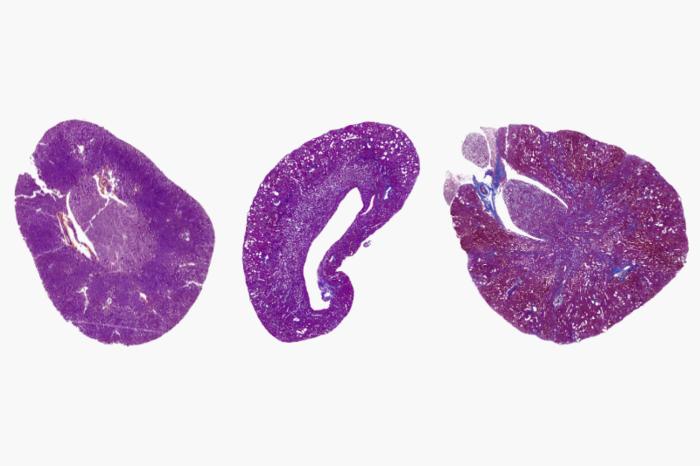
Research conducted at UCLA has revealed significant insights into the mechanisms surrounding kidney fibrosis, paving the way for potential advancements in precision medicine tailored to prevent chronic kidney disease. This innovative study, leveraging both mouse models and extensive human genetic data, has pinpointed type 5 collagen as a critical determinant in the scarring process following kidney injury. Such findings may revolutionize the treatment paradigms for millions suffering from chronic kidney disease, a condition that afflicts both the U.S. population and individuals worldwide.
Chronic kidney disease is a progressive ailment often rooted in factors such as diabetes, hypertension, and kidney stones. Its ramifications extend far beyond mere inconveniences, significantly compromising the kidneys’ ability to filter toxins and manage fluid levels, which ultimately could necessitate dialysis or a transplant. Alarmingly, conventional methods have not comprehensively addressed the deleterious impact of fibrosis—the excessive accumulation of scar tissue that typifies this condition—highlighting an urgent need for a shift in therapeutic strategies.
Historically, the mystery surrounding the variances in scarring among patients remained largely unsolved. However, Dr. Arjun Deb, senior author of the study and a researcher at the Eli and Edythe Broad Center of Regenerative Medicine and Stem Cell Research at UCLA, emphasizes that type 5 collagen’s differing expressions may elucidate why some individuals exhibit heightened scarring severity. These revelations could herald a new diagnostic avenue, as the appropriate assessment of type 5 collagen levels may reveal individuals at greater risk for progressive kidney disease.
The researchers utilized a robust dataset from the UK Biobank, comprising more than 1.5 million participants, to draw correlations between the Col5a1 gene—coding for type 5 collagen—and the incidence of chronic kidney disease. Their investigative journey mirrored an earlier study focusing on cardiac injuries, which had found a significant link between the lack of type 5 collagen and exacerbated scarring after heart attacks. Thus, the exploration of these mechanisms in a renal context became pivotal.
Experiments conducted on mouse models further confirmed these findings. Notably, mice exhibiting low levels of Col5a1 demonstrated heightened fibrosis levels and a more rapid progression to kidney failure following injuries. The integrity of collagen fibers is essential for maintaining the structure and functionality of scar tissue, serving as the decisive threads that hold the tissue together. Without robust presence and organization of type 5 collagen, the resultant scar tissue is inherently weak and disorganized.
This pathological chain facilitates a detrimental feedback loop: weakened scar tissue activates αvβ3 integrins, receptors in fibroblast cells that respond to tissue damage by producing additional scar tissue. The consequence of this spiral is progressive kidney dysfunction that may culminate in complete kidney failure, a prospect deeply concerning for an already vulnerable population.
In seeking to address the drivers of excessive fibrosis, the research team identified integrin αvβ3 as a targetable pathway, culminating in the discovery of Cilengitide. Originally orchestrated for oncology, this drug disrupts integrin signaling and has transitioned into a promising candidate for renal fibrosis treatment. Remarkably, experiments demonstrated that this intervention significantly reduced kidney fibrosis in mice with diminished type 5 collagen levels, without adverse effects in mice with typical Col5a1 expression. Such targeted treatment strategies illuminate the path towards personalized medicine for high-risk patients.
The research pivoting towards a clinical application aims to establish a blood test for gauging Col5a1 levels, which could fundamentally alter how chronic kidney disease is approached in a health care setting. If validated, this biomarker measurement could emerge as a crucial tool in identifying patients who would benefit most from targeted therapies. The potential for a blood test to inform clinical decisions embodies the essence of precision medicine, allowing for tailored interventions driven by individual patient profiles.
While the implications of this study predominantly revolve around chronic kidney disease, the inquiry does not stop there. The underlying mechanisms of type 5 collagen and its role in fibrosis may hold significance in other organ systems as well. Current investigations are branching into areas concerning liver and vascular fibrosis—both critical contributors to widespread health issues and necessitating further research into how these similar pathways influence multiple pathological states.
For a condition that currently lacks direct therapies addressing the root cause of fibrosis, the advent of Cilengitide and newfound understanding of collagen dynamics marks a hopeful prospect. Though approval for human trials on Cilengitide in the context of acute scarring remains uncharted waters, the groundwork laid by this research could catalyze pivotal shifts in therapeutic regimens.
Consequently, the nexus of bioengineering, molecular biology, and clinical applications exemplifies the vibrant future of medical science. As research progresses, the promise of integrating findings with clinical practice may very well reshape the landscape of kidney disease management, particularly among those deemed most vulnerable.
The need for innovative approaches to combat chronic kidney disease is urgent. As insights into type 5 collagen unfold further, there is optimism that, with dedicated research and commitment to advancing understanding, the trajectory of how we view scar formation and its consequences can shift dramatically.
Consumers of health care can only hope that within the next few years, a substantial transformation will emerge, not only improving lives but also fundamentally altering the way chronic kidney disease is diagnosed, treated, and managed. As researchers continue unveiling the intricacies of renal scarring, the confluence of scientific inquiry and patient care promises a brighter future for those currently grappling with this formidable illness.
Subject of Research:
Understanding the role of type 5 collagen in kidney fibrosis following injury and its implications for precision medicine.
Article Title:
Collagen V regulates renal function after kidney injury and can be pharmacologically targeted to enhance kidney repair in mice.
News Publication Date:
9-Apr-2025
Web References:
Link to Study in Science Translational Medicine
References:
National Institutes of Health, California Institute for Regenerative Medicine, U.S. Department of Defense.
Image Credits:
Keywords:
Kidney, Scars, Collagen, Animal research, Translational medicine, Fibrosis, Renal failure, Drug development, Clinical research, Discovery research, Blood, Risk factors.
Tags: advancements in kidney treatmentchronic kidney disease prevention strategiesgenetic factors in kidney diseasehypertension and kidney disease relationshipimpact of diabetes on kidney functioninnovative therapies for chronic kidney diseasekidney health and fibrosismechanisms of kidney scarringprecision medicine for kidney diseaseregenerative medicine in kidney researchtype 5 collagen in kidney injuryUCLA kidney fibrosis research