
A revolutionary new approach in the field of cancer surgery is emerging from Australian research, aiming to drastically alter the detection and treatment of gastrointestinal cancers. Researchers at the University of South Australia are developing an innovative laparoscopic probe that utilizes quantum technology to improve surgical precision. This groundbreaking initiative, supported by the Federal Government’s Economic Accelerator (AEA) Ignite Grant, is expected to enhance cancer patient outcomes by allowing surgeons to more effectively map the spread of tumors.
Cancer remains a leading cause of mortality worldwide, particularly gastrointestinal cancers, which are known for their aggressive nature and propensity to metastasize through the lymphatic system. The conventional methods of treating these cancers often require extensive tissue removal, resulting in significant complications for patients. The emerging technology promises a less invasive option, utilizing quantum sensors to provide real-time feedback during surgical procedures. The precision offered through this method could mean less traumatic experiences for patients and reduce their recovery time significantly.
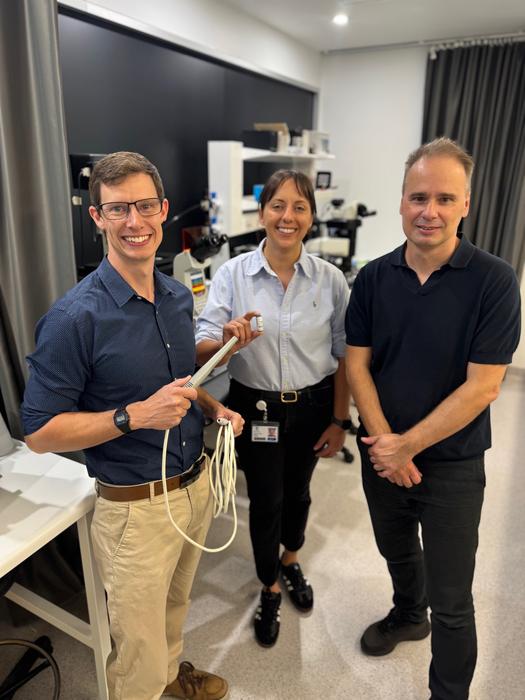
Led by Dr. Nicole Dmochowska at UniSA’s Future Industries Institute, this project represents a collaborative effort with Ferronova, a company specializing in precision cancer surgery. Their joint venture is centered on a unique combination of the laparoscopic probe with Ferronova’s iron-oxide nanoparticle formulation, proprietary to their technology. Together, these innovations have the potential to help surgeons accurately identify cancerous lymph nodes during operations, which is a crucial step in ensuring that all cancerous tissues are removed while preserving healthy, surrounding tissue.
This partnership between academia and industry is crucial, especially considering the ambitious scale of the project valued at $405,050. The probe is engineered to work compatibly with FerroTrace, enhancing its ability to visualize cancerous nodes. Traditional lymphatic mapping often poses risks associated with radioactivity; in contrast, this quantum approach is anticipated to be safer and more effective. It signifies a shift from reliance on hazardous materials towards advanced, non-invasive technological solutions.
As technologies evolve, the possibility of improving cancer survival rates becomes more palpable. Researchers have spent over eight years refining the magnetometer probes, and the AEA Ignite Grant represents a critical milestone in their mission. The current phase focuses on developing a preclinically validated prototype that will undergo trials in large animal models. This step is vital before transitioning to human clinical trials, which could revolutionize cancer surgery forever.
The essence of this technological advancement lies in integrating quantum sensors, known for their heightened sensitivity and precision. This integration facilitates a more targeted approach, allowing surgeons to distinguish between cancerous and healthy lymphatic tissues with unprecedented clarity. Dr. Dmochowska emphasizes that this new tool will not only enhance surgical outcomes but could also fundamentally change treatment trajectories for patients diagnosed with late-stage cancers.
Previous clinical trials have demonstrated the feasibility of these quantum sensor-based systems, showcasing their potential even in complex cases such as oral cancer. As Phase-1 trials have proved successful, the researchers are ready to expand their horizons with a focus on laparoscopic applications. The goal is to miniaturize the probe, enabling its use in keyhole surgeries, which are less invasive and feature quicker recovery times for patients.
Gastrointestinal cancers require especially sensitive tools, given their propensity to spread undetected until they reach advanced stages. Providing surgeons with the means to map cancerous tissue accurately allows for more informed decisions during surgery, potentially leading to improved survival rates. As patients increasingly seek options that improve not only their survival but their quality of life, innovations such as this are becoming increasingly crucial.
Australia is positioning itself as a leader in medical science and quantum technology, with projects like this aligning with national priority areas. Dr. Benjamin Thierry, another key researcher, points out that the anticipated global market for such technologies could exceed $2 billion annually. This economic potential underscores the importance of investing in and nurturing these scientific endeavors that promise to build a future where cancer treatment is more effective and less burdensome.
As researchers and developers continue this groundbreaking work, the next stages will involve extensive testing and validation before the technology can be introduced into clinical practice. With preclinical trials expected to kick off within the year, the team remains optimistic about the outcomes and implications for future cancer treatments. These advancements bring hope not only to the scientific community but also to patients and their families worldwide, who stand to benefit from improved cancer detection and treatment modalities.
In summary, the use of quantum technologies for surgical interventions represents a leap forward in oncology. This project by UniSA and Ferronova exemplifies how interdisciplinary collaboration can lead to significant advancements in medical technology, ultimately enhancing the standard of care for cancer patients. As the landscape of medicine continues to evolve, innovations like these will be essential in shaping future therapies aimed at combating one of the most persistent challenges in healthcare.
Subject of Research: Quantum technology in cancer surgery
Article Title: Revolutionary advancements in cancer surgery from Australian research
News Publication Date: October 2023
Web References: University of South Australia, Ferronova, AEA Ignite Grant
References: N/A
Image Credits: University of South Australia
Keywords: Cancer research, Surgical procedures, Gastrointestinal neoplasms, Cancer patients, Quantum technology.
Tags: cancer treatment innovationscollaborative cancer research initiativesFederal Government cancer grantsgastrointestinal cancer detectioniron-oxide nanoparticles in surgerylaparoscopic surgical technologyminimally invasive cancer procedurespatient outcomes in cancer treatmentprecision cancer surgery advancementsquantum technology in medicinetumor mapping techniquesUniversity of South Australia research