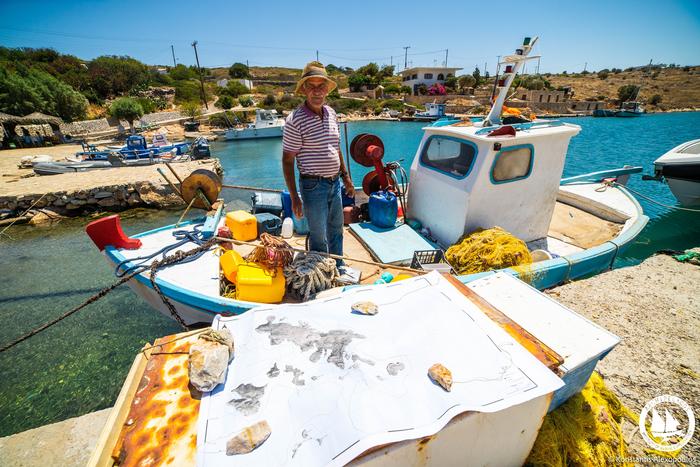

Artisanal fishers in the eastern Aegean Sea have been recognized for their invaluable local ecological knowledge (LEK) in a groundbreaking study that underscores the potential of traditional fishing practices to enhance scientific understanding of marine environments. The study, published in the esteemed journal Ocean and Coastal Management, showcases how these seasoned fishers can, in many instances, rival satellite data in accurately pinpointing significant marine features such as seagrass beds. This remarkable finding not only emphasizes the critical role that local expertise plays in environmental management but also indicates a shift in how scientific communities and policymakers might consider incorporating indigenous knowledge into broader ecological assessments.
Local ecological knowledge, defined as the understanding and insights that local people acquire through years of direct observation and experience, has been undervalued in scientific research contexts. However, this study illuminates the potential that such knowledge holds for creating high-quality habitat maps, particularly in regions where conventional data might be sparse or unreliable. The researchers gathered insights from ten local fishermen who have dedicated decades to navigating the waters off five Greek islands: Fourni, Arki, Patmos, Lipsi, and Leros. During the research, these fishers were asked to identify areas where they believed seagrass could be located along their coastal landscapes.
When the maps created by these fishermen were juxtaposed with satellite imagery covering the same areas, a striking correlation emerged. The fishers demonstrated an impressive average accuracy of 78%, with some maps reaching as high as 92% accuracy. This level of precision highlights the need for decision-makers to reconsider the roles of local communities in environmental monitoring and management. The findings also revealed that fishermen’s maps were approximately 11% more reliable than government-produced maps which, alarmingly, often underestimated the extent of seagrass distribution within the region.
The implications of these findings cannot be overstated. By demonstrating that local knowledge can supplement and enhance scientific data, the research underscores a paradigm shift in how environmental policies may be crafted. The traditional reliance on satellite and technical data alone often overlooks the rich insights gathered by individuals whose lives and livelihoods are intimately tied to the marine environment. This new perspective fosters an inclusive model for environmental management that engages local stakeholders, whose experiences provide a wealth of untapped data that can effectively inform policy-making.
Lead author Konstantis Alexopoulos, a graduate from the University of Plymouth now pursuing advanced research at the University of Cambridge, emphasized the significance of his findings. He noted the vast experience of the fishermen involves years of daily interactions with the same waters and ecosystems, which contributes substantially to their ecological insights. The study serves as a call to action for researchers and policymakers to recognize the value of integrating local wisdom into environmental research, particularly as younger generations increasingly drift away from traditional fishing practices.
This collaborative effort between researchers and local fishermen aligns with the ambitions set forth in the United Nations Sustainable Development Goals, which emphasize global partnerships for sustainability and environmental protection. The partnership model showcased in this study highlights the possibility of working together across various sectors—communities, scientists, and policymakers—to develop effective strategies aimed at preserving marine ecosystems.
While the research is centered around the eastern Aegean Sea, the findings resonate far beyond this geographic location. The methodologies employed in this study can extend to various marine contexts globally, allowing for a broader application of local ecological knowledge. This approach is particularly important when exploring deeper marine ecosystems, which conventional satellite imagery often fails to capture. Such areas are crucial for broader conservation efforts as they remain underserved in terms of mapping and management, creating a vital opportunity for local fishers to weigh in on their preservation.
Dr. Abigail McQuatters-Gollop, an associate professor at the University of Plymouth and the senior author of the study, added important context to these findings. She criticized the persistent tendency to dismiss local ecological knowledge despite an increasing global trend toward projects that capitalize on citizen science. The blending of personal experiences and scientific data presents opportunities for multifaceted approaches to marine resource management, ultimately leading to healthier ocean environments worldwide.
As global awareness grows, it is imperative to explore innovative frameworks and strategies for combining traditional ecological insights with modern scientific methodologies. The researchers posit that this study serves as a blueprint for future endeavors in marine conservation that harness the strengths of both scientific and indigenous perspectives. Engaging local fishers equips researchers with additional layers of data that can collectively enrich environmental decision-making processes.
Moving forward, it is critical that stakeholders—ranging from local communities to policymakers—recognize the potential of artisanal fishers as custodians of marine knowledge. The insights drawn from the experiences of these fishers can bolster marine protection efforts and inspire a renewed focus on sustainable fishing practices across the globe. This research ultimately illustrates that a successful marine conservation strategy relies not only on sophisticated technology but also on the wisdom of those closest to the water.
Through ongoing partnerships and research efforts, the marine conservation community can strive to redefine the role of fisheries and local ecologies within the broader environmental governance framework. The harmonious integration of scientific research and local ecological knowledge stands to foster more resilient marine ecosystems, tackle the challenges posed by climate change, and preserve
Tags: artisanal fishers ecological knowledgecollaboration between scientists and fisherseastern Aegean Sea fishing communitiesecological assessments local expertiseenvironmental data collection methodsimpact of traditional knowledge on conservationindigenous knowledge environmental managementlocal ecological knowledge seagrass mappingmarine habitat mapping techniquessatellite data accuracy marine environmentssustainable fishing practices Greecetraditional fishing practices scientific research