How UV Radiation Triggers a Cellular Rescue Mission
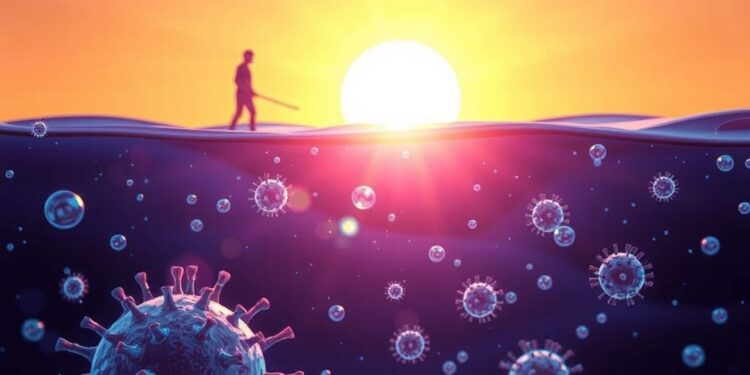
Ultraviolet (UV) radiation is infamous for its role as a significant factor in DNA damage, which can lead to severe health issues such as skin cancer. This form of radiation is a vital part of the natural environment, and while it can trigger detrimental biological effects, it also ignites sophisticated cellular responses designed to combat these risks. Recent research conducted by scientists at Sabanci University has shed light on an amazing phenomenon: when DNA sustains damage from UV light, cells launch a dynamic and highly organized “cellular rescue mission” to safeguard their genetic integrity.
In understanding how these rescue operations function, one must first appreciate DNA’s nature. Contrary to a simple linear string of genetic information, DNA is intricately organized and packed within the cell. This structural formatting is not arbitrary; instead, it is fine-tuned to permit efficient access to specific regions when necessary. Indeed, when cells undergo stress such as UV exposure, they must quickly mobilize resources to tackle the damage, further highlighting the significance of DNA architecture in these repair processes.
UV radiation induces specific lesions in the DNA—these lesions are critical injuries that can interfere with essential cellular functions. However, the nature of these damages propels a reorganization of the entire structure of the cell’s DNA, enhancing the efficiency of specialized repair mechanisms. Researchers have likened this phenomenon to revisiting a library: when certain books contain damage, the library rearranges its shelves to facilitate easier access to those resources and expedite the repair process, ensuring that the most crucial areas receive immediate attention.
Building on this analogy, when UV damage occurs, the cell’s DNA actively shifts to allow repair teams better access to compromised regions. This reorganization enhances the speed and efficacy of DNA repair processes, reflecting the dynamic interactions occurring within the cell. As Ogün Adebali, principal investigator of the study, noted, DNA responds to damage swiftly, reaffirming that it’s a dynamic system that meticulously safeguards its coding structure.
This research not only unveiled how DNA is reorganized to prioritize repairs but also illustrated the challenges posed by environmental stressors like UV light. To excavate these intricate patterns of interaction between DNA regions, the researchers harnessed the strengths of advanced deep learning frameworks. These computational tools enabled them to analyze expansive datasets regarding genomic structures, revealing subtle yet pivotal changes prompted by UV-induced damage.
Interest lies in understanding that the genome’s higher-order structure plays a vital role in how cells prioritize repairs. Specifically, regions of DNA known for being actively transcribed and accessible were found to be expedited for repair. These active regions can be compared to popular sections in a library where books must be quickly restored to maintain operational fluency. This knowledge elucidates why repair under duress increases, providing an insight into how cells endure challenges and maintain functionality even during periods of cellular distress.
Beyond merely repairing DNA, the cellular response to UV exposure triggers a broader modification of gene activity. This study identified that certain genes, including those responsible for the cell’s defensive mechanisms, become activated following UV damage. The proteins synthesized from these genes support vital cellular functions, contributing to overall survival and recovery after an environmental onslaught. Notably, genes such as JUN and FOS are rapidly upregulated, forming part of a nuanced response to inflammation and cellular protection following the initial damage.
The timeline for this dynamic response is particularly remarkable. Observations indicated that changes in the cellular landscape occurred as swiftly as 12 minutes post-UV exposure, with early indicators of recovery visible within the first half-hour. This rapid genomic adjustment is akin to a reflex that preemptively fortifies the cellular infrastructure against subsequent assaults. Such comprehensive coordination illustrates the sophistication of cellular responses against DNA damage, reaffirming the resilience inherent in our biological systems.
The implications of this research extend far beyond understanding cellular repair mechanisms. Insights gleaned from this study provide a deeper comprehension of the factors contributing to individual susceptibility to UV-induced diseases. The rearrangement of DNA and its consequences during repair processes could pave the way for advances in treatment strategies for conditions like skin cancer, potentially leading to enhanced methods that amplify the body’s innate repair capabilities.
The researchers are keen to broaden their focus beyond just UV radiation, looking to explore how various environmental threats, including pollutants and carcinogens, influence DNA’s organization and repair processes. The quest for knowledge in deciphering the rules governing DNA behavior during these stressful encounters could significantly impact the fields of oncology, genetics, and broader health sciences.
The findings of this research contribute to a larger narrative regarding cellular resilience and the mechanisms by which life perpetuates. As the study opens a wider array of inquiries into the cellular defense strategies available to organisms, it also emphasizes the importance of continued investigation into how dynamic responses to environmental challenges can be harnessed for therapeutic gains.
In sum, this research delivers vital contributions to our understanding of DNA damage responses. By unearthing the structured chaos that unfolds post-UV exposure, scientists unveil a mechanical ballet of genomic rearrangements and gene activation processes. Only time will tell the impact these revelations will have on medical science and treatment modalities. Being part of such a crucial field, researchers are motivated by the need to deepen our insights into how cells adapt and thrive, providing a testament to the extraordinary complexity of life.
Subject of Research: Cells
Article Title: UV-induced reorganization of 3D genome mediates DNA damage response
News Publication Date: 5-Feb-2025
Web References: Nature Communications
References: Not provided
Image Credits: Not provided
Keywords: Genetics, Cellular Response, DNA Damage, UV Radiation, Repair Mechanisms, Resilience, Genomic Organization.
Tags: biological effects of ultraviolet radiationcellular rescue response to UV lightcellular stress response mechanismsDNA architecture and repair processesgenetic integrity maintenance in cellsmechanisms of DNA repairprotecting cells from UV-induced damageresearch on UV radiation effectsSabanci University UV studysignificance of DNA lesionsskin cancer and UV exposureUV radiation and DNA damage