
Recent advances in regenerative medicine have highlighted the potential of human pluripotent stem cells (hPSCs) to generate various cell lineages, including those needed for embryonic and extraembryonic structures. Specifically, primed pluripotent stem cells have emerged as crucial players in this field. These cells are capable of forming all embryonic lineages; however, their ability to develop into extraembryonic tissues, particularly the trophoblast lineage, is significantly less pronounced. This is a major limitation given the importance of trophoblast cells in pregnancy and their roles in related pathologies like preeclampsia and miscarriage.
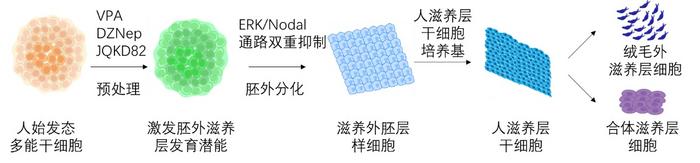
A research team from Peking University has made significant strides in addressing this limitation. In their latest study published in the journal Science China Life Sciences, the investigators have demonstrated that the trophoblastic developmental potential of human primed pluripotent stem cells can be enhanced through a specific chemical treatment. The team identified a cocktail of small molecules that act as epigenetic regulators, effectively reactivating the differentiation potential of these cells into trophoblast lineages.
The study utilized a methodology that involved a comprehensive chemical screening process to identify compounds capable of enhancing trophoblast differentiation. The researchers highlighted three key epigenetic regulators: sodium butyrate, DZNep, and JQKD82. These compounds target critical proteins involved in the epigenetic regulation of gene expression, specifically focusing on histone deacetylase 2 (HDAC2), enhancer of zeste homolog 2 (EZH2), and lysine demethylase 5 (KDM5). The transient treatment with this cocktail was sufficient to efficiently generate trophectoderm-like cells from the human primed pluripotent stem cell population.
Additionally, the resulting trophectoderm-like cells possess the capability to differentiate further into trophoblast stem cells. These stem cells are essential as they can differentiate into two critical types of trophoblasts: extravillous trophoblasts, which play a vital role in embedding the placenta into the uterine wall, and syncytiotrophoblasts, which are important for the development of the maternal-fetal barrier. Thus, the implications of this research are substantial, particularly for therapeutic applications revolving around reproductive health.
In their investigation, the authors also conducted comparative transcriptomic analyses to discern the distinct molecular signatures of the chemically induced trophoblast stem cells. They carefully compared these cells with previously reported trophoblast stem cells and amniotic-like cells derived from the same human primed pluripotent stem cells. Remarkably, their findings indicated that the induced trophoblast stem cells could be clearly differentiated from amniotic-like cells, aligning more closely with the profiles of classical trophoblast stem cells, both at the transcriptomic and functional levels.
The significance of epigenetic regulation in cellular differentiation was a recurring theme in the study. To further elucidate the molecular underpinnings of their approach, the researchers employed CUT&Tag analysis to investigate the epigenetic landscape of the cells throughout the treatment process. Their analysis revealed that the pre-treatment with small molecules led to a marked reduction in specific histone modifications associated with pluripotency, namely H3K27me3 and H3K4me3. These changes effectively highlight the disruption of the pluripotent state, paving the way for the cells to adopt a trophoblast fate.
Moreover, the authors demonstrated that the effects could be mimicked by directly knocking down the targets of the epigenetic regulators. This line of experimentation reinforced the notion that specific epigenetic modifications play a foundational role in facilitating the transition of hPSCs toward trophoblast identity. The results underscore the importance of understanding and manipulating epigenetic dynamics to unlock the developmental potential of human pluripotent cells.
In addition to their implications for reproductive biology and developmental science, the findings contribute significantly to the broader field of regenerative medicine. The ability to generate human trophoblast stem cells from readily available pluripotent sources could revolutionize existing methodologies that rely on the use of human embryos or placentas. This novel approach not only enhances ethical considerations in stem cell research but also opens new avenues for in vitro studies that may lead to breakthroughs in our understanding of placental development and associated disorders.
As the scientific community continues to explore the multifaceted biology of stem cells, the work of Chen et al. serves as a pivotal reference point. By providing mechanistic insight into how epigenetic modifications can govern the trajectory of cell lineage differentiation, this research sets the stage for future innovations aimed at harnessing the power of stem cells for therapeutic interventions. The potential applications of these findings are vast, including the development of in vitro human synthetic embryo models that could serve as valuable tools for studying the complexities of human development.
In summary, the study enriches our understanding of the mechanisms that underpin trophoblast lineage specification from human primed pluripotent stem cells. It presents not only a viable alternative for generating trophoblast stem cells but also underscores the profound impact that epigenetic regulation has on developmental biology. As research in this domain progresses, it holds the potential to transform our approach to human reproductive health and regenerative therapies.
Subject of Research: Trophoblast lineage development from human primed pluripotent stem cells
Article Title: Priming the Developmental Potential of the Extraembryonic Trophoblast Lineage in Human Primed Pluripotent Stem Cells through Pretreatment with a Combination of Small Molecules Targeting Epigenetic Regulation
News Publication Date: Not specified
Web References: Not specified
References: Not specified
Image Credits: ©Science China Press
Keywords: human pluripotent stem cells, trophoblasts, epigenetic regulation, chemical treatment, developmental biology, regenerative medicine, placental health, miscarriage, preeclampsia.
Tags: chemical strategies in stem cell researchepigenetic regulation in stem cellshuman pluripotent stem cellsmiscarriage and trophoblast cellsPeking University stem cell studypreeclampsia and stem cell researchprimed pluripotent stem cellsregenerative medicine advancementssmall molecule cocktail in cell differentiationtrophoblast lineage developmenttrophoblastic differentiation enhancementunlocking stem cell potential