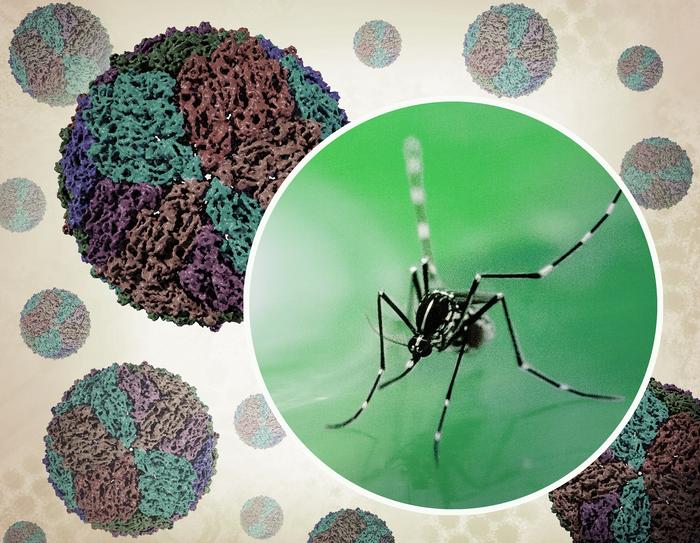

A recent clinical trial backed by the National Institutes of Health (NIH) is exploring an innovative treatment designed to alleviate the symptoms of dengue fever, a disease caused by the dengue virus and transmitted by infected Aedes mosquitoes. This groundbreaking study, spearheaded by the NIH’s National Institute of Allergy and Infectious Diseases (NIAID), aims to address a global health concern that affects hundreds of millions of people annually. The trial centers around a weakened strain of the dengue virus to assess the safety and efficacy of a novel investigational therapeutic.
Dengue fever, predominantly found in tropical and subtropical regions, infects an astounding 400 million individuals each year, according to the U.S. Centers for Disease Control and Prevention (CDC). The disease has witnessed an alarming surge in cases, particularly within the Americas, where local transmissions have surfaced across several states, including Arizona, California, Florida, Hawaii, and Texas. Puerto Rico, echoing these trends, reported nearly 1,500 cases last year, highlighting the urgency of addressing this public health crisis. Most dengue infections are asymptomatic; however, symptomatic cases can lead to severe headaches, body aches, fever, and potentially debilitating severe illness.
The dire need for effective treatment options is brought into focus by observations from healthcare professionals. “When caring for a patient who is critically ill with dengue, healthcare providers have few options other than providing supportive care,” states NIAID Director Jeanne Marrazzo, M.D., M.P.H. The ongoing trial aims to find therapeutics that can provide relief, which is desperately needed in the face of this preventable disease.
At the core of this clinical investigation is AV-1, an investigational human monoclonal antibody therapeutic developed by the biotechnology company AbViro, located in Bethesda, Maryland. The antibody’s primary objective is to mitigate clinical symptoms associated with the dengue virus, being administered both pre- and post-infection. Encouraging data from a prior Phase 1 trial suggested that AV-1 demonstrated a favorable safety profile in human participants, establishing the groundwork for the larger Phase 2 trial now underway.
The Phase 2 trial intends to recruit at least 84 healthy adult volunteers across two prominent research sites – the Johns Hopkins Bloomberg School of Public Health Center for Immunization Research in Baltimore, Maryland, and the University of Vermont Vaccine Testing Center in Burlington, Vermont. Participants will undergo extensive screening and physical examinations before being randomly assigned to two distinct groups. One faction receives AV-1 one day before exposure to the dengue virus, while the other group receives it four days following exposure. Each group will then be subdivided into three different dosage levels, ensuring a rigorous evaluation of the antibody’s effectiveness at varying concentrations.
In conjunction with the AV-1 dosing, each volunteer will receive an injection of an attenuated (weakened) strain of the dengue virus. Previous studies utilizing this challenge virus have indicated that many volunteers experienced mild symptoms, including rashes and mild muscle and joint pain. However, none of the participants progressed to severe dengue or developed fever, providing a foundational insight into the safety of the virus exposure component of this trial.
To meticulously monitor the outcomes associated with AV-1, volunteers will engage in a structured follow-up regimen spanning at least 155 days. During these follow-up visits, research teams will employ various methodologies including physical assessments, diary entries, and blood tests to gather pivotal data. This multifaceted approach will enable scientists to ascertain the volunteers’ immune responses to the dengue challenge, the persistence of the virus in their bloodstream, and any symptomatic manifestations that may emerge.
The anticipated findings from this clinical trial will not only elucidate AV-1’s impact on the recovery process but will also explore the various dosages’ efficacy. If results indicate a promising therapeutic outcome, researchers may pursue additional clinical trials to further assess AV-1’s potential to combat the dengue virus. In doing so, they could pave the way for an innovative treatment paradigm that transforms the landscape of dengue fever management, potentially reducing morbidity associated with this global health issue.
The urgency to unveil effective therapeutics against dengue is accentuated by the global rise in infection rates and the lack of FDA-approved treatment options available for the disease. The current reliance on supportive care for critically ill dengue patients highlights a gaping void in the treatment landscape that this trial aims to fill. The pursuit for a viable solution underscores the commitment of organizations like the NIAID to advance our understanding and capabilities in managing infectious diseases.
As researchers continue to unravel the complexities surrounding dengue and its treatment, the future holds a beacon of hope. Promising innovations like AV-1 could not only improve patient outcomes but also serve as a vital countermeasure against a disease that continues to challenge healthcare professionals and public health systems globally. With the insights yielded from this trial, health authorities may soon possess valuable tools to combat dengue, providing relief and saving lives in the process.
As we await the trial results, the global scientific community remains vigilant and optimistic, leveraging collective expertise to address the looming threat of dengue fever. The collaboration and passion evident in this clinical trial reflect a relentless pursuit of knowledge and an unwavering dedication to improving human health in the face of pervasive challenges.
Subject of Research: Investigational Therapeutic for Dengue Virus
Article Title: NIH Trials New Monoclonal Antibody Treatment for Dengue Fever
News Publication Date: October 2023
Web References: ClinicalTrials.gov
References: NIAID, CDC
Image Credits: NIAID
Keywords: Dengue, Monoclonal Antibodies, Clinical Trials, Infectious Diseases, Public Health.
Tags: Aedes mosquito transmissionasymptomatic dengue infectionsdengue fever symptom reliefdengue prevention strategiesdengue virus researchglobal health concerns dengueinnovative dengue fever therapyinvestigational dengue therapeuticNIAID funded studiesNIH dengue treatment clinical trialpublic health crisis denguetropical disease clinical trials