

• HOME
  • NEWS
  • EXPLORE
    • CAREER
      • Companies
      • Jobs
    • EVENTS
    • iGEM
      • News
      • Team
    • PHOTOS
    • VIDEO
    • WIKI
  • BLOG
  • COMMUNITY
    • FACEBOOK
    • INSTAGRAM
    • TWITTER
Tuesday, October 6, 2026
BIOENGINEER.ORG
No Result
View All Result
  • Login
  • HOME
  • NEWS
  • EXPLORE
    • CAREER
      • Companies
      • Jobs
        • Lecturer
        • PhD Studentship
        • Postdoc
        • Research Assistant
    • EVENTS
    • iGEM
      • News
      • Team
    • PHOTOS
    • VIDEO
    • WIKI
  • BLOG
  • COMMUNITY
    • FACEBOOK
    • INSTAGRAM
    • TWITTER
  • HOME
  • NEWS
  • EXPLORE
    • CAREER
      • Companies
      • Jobs
        • Lecturer
        • PhD Studentship
        • Postdoc
        • Research Assistant
    • EVENTS
    • iGEM
      • News
      • Team
    • PHOTOS
    • VIDEO
    • WIKI
  • BLOG
  • COMMUNITY
    • FACEBOOK
    • INSTAGRAM
    • TWITTER
No Result
View All Result
Bioengineer.org
No Result
View All Result
Home NEWS Science News Biology

A new, updated account of poroid fungi in North America

by
September 6, 2025
in Biology
Reading Time: 2 mins read
0
Poroid Fungi of North America
Share on FacebookShare on TwitterShare on LinkedinShare on RedditShare on Telegram

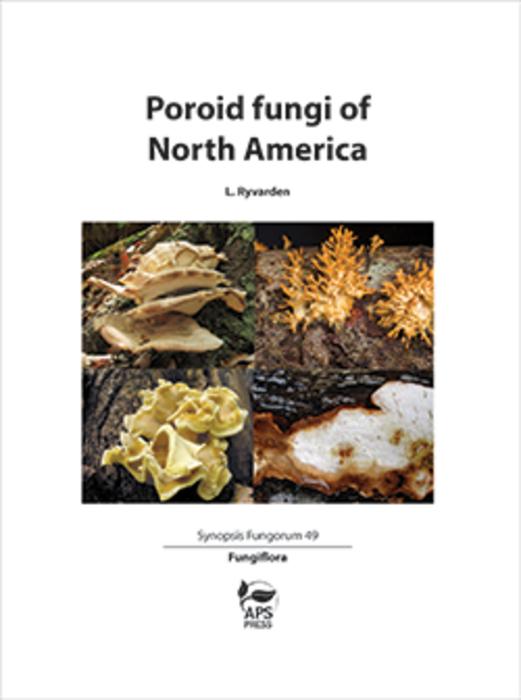
Poroid fungi, commonly known as “polypores,” are among the most frequently encountered fungi throughout the year because of their large size and longevity. Despite the common presence of poroid fungi in North America, most guides include only a limited selection of these fungi. Poroid Fungi of North America, by Leif Ryvarden, offers a necessary, updated account of these fungi, building on the foundational work of the original two-volume North American Polypores, by Ryvarden and R. L. Gilbertson, published in 1987. This comprehensive update incorporates more than three decades of new research, featuring detailed keys, descriptions, and vibrant color macrophotos, as well as illustrations of microscopic features.

Poroid fungi, commonly known as “polypores,” are among the most frequently encountered fungi throughout the year because of their large size and longevity. Despite the common presence of poroid fungi in North America, most guides include only a limited selection of these fungi. Poroid Fungi of North America, by Leif Ryvarden, offers a necessary, updated account of these fungi, building on the foundational work of the original two-volume North American Polypores, by Ryvarden and R. L. Gilbertson, published in 1987. This comprehensive update incorporates more than three decades of new research, featuring detailed keys, descriptions, and vibrant color macrophotos, as well as illustrations of microscopic features.

Ryvarden, a renowned Norwegian mycologist, is co-author of the previous volumes and a series of regional guides to poroid fungi published by Fungiflora. This new book, co-published by Fungiflora and APS PRESS, reflects his extensive expertise, contributions, and dedication to the study of polypores. In the foreword, mycologist Amy Y. Rossman (Oregon State University, Corvallis) attests to the importance of the updated volume: “This well-illustrated volume fills an important niche in books useful in the identification of poroid fungi, as these ubiquitous and important fungi are often seen in nature and serve a critical role in the ecology of forest ecosystems.”  This publication is not a taxonomic study of poroid fungi of North America but rather a manual for identifying specimens.

Poroid Fungi of North America is an invaluable resource for diverse audiences, including amateur naturalists, professional mycologists, foresters, serious students, and nonspecialists.

Book Specifications and Data/For News Media Only

If you are interested in reviewing this book for your publication and can forward a copy of the published review within six months of receiving the book, please send your request with details of your publication to Dawn Wuest, APS Review Coordinator, at [email protected]​.

NOTE: Digital artwork of the book’s cover is available by contacting Dawn Wuest using the contact information provided. Please specify if the artwork will be used for print or electronic media.

About APS PRESS

APS PRESS is the publishing imprint of The American Phytopathological Society, a nonprofit, international organization that adv​ances the science and practice of plant health management in agricultural, urban, and forest settings. The society was founded in 1908 and has grown from 130 charter members to more than 5,000 scientists and practitioners worldwide.



Share14Tweet9Share2ShareShareShare2

Related Posts

Bacterial Immune Arsenals and the Arms Race Reshaping Phage Therapy

Bacterial Immune Arsenals and the Arms Race Reshaping Phage Therapy

October 6, 2026
AI Feedback Boosts Writing Skills, Motivation and Self-Regulation in Saudi EFL Learners

AI Feedback Boosts Writing Skills, Motivation and Self-Regulation in Saudi EFL Learners

October 6, 2026

Expert Panel Issues Updated Guidelines on Feline Leishmaniosis as Feline Cases Rise

October 6, 2026

Gliding Mammals Evolved the Same Skill Through Different Genetic Routes

October 6, 2026

POPULAR NEWS

  • Alloys That Shrink Their Own Grains: New PIX Mechanism Refines Metals With Heat Alone

    Alloys That Shrink Their Own Grains: New PIX Mechanism Refines Metals With Heat Alone

    29 shares
    Share 12 Tweet 7
  • Endurance Exercise Reshapes the Liver in Males and Females Through Distinct Molecular Routes

    29 shares
    Share 12 Tweet 7
  • Single Transcription Factor PU.1 Rapidly Converts Fibroblasts into Macrophage-Lineage Cells

    29 shares
    Share 12 Tweet 7
  • New Scale Measures How Ready Nurse Educators Really Are for the AI Era

    29 shares
    Share 12 Tweet 7

About

We bring you the latest biotechnology news from best research centers and universities around the world. Check our website.

Follow us

Recent News

Alloys That Shrink Their Own Grains: New PIX Mechanism Refines Metals With Heat Alone

Endurance Exercise Reshapes the Liver in Males and Females Through Distinct Molecular Routes

Single Transcription Factor PU.1 Rapidly Converts Fibroblasts into Macrophage-Lineage Cells

Subscribe to Blog via Email

Success! An email was just sent to confirm your subscription. Please find the email now and click 'Confirm' to start subscribing.

Join 85 other subscribers
  • Contact Us

Bioengineer.org © Copyright 2023 All Rights Reserved.

Welcome Back!

Login to your account below

Forgotten Password?

Retrieve your password

Please enter your username or email address to reset your password.

Log In
No Result
View All Result
  • Homepages
    • Home Page 1
    • Home Page 2
  • News
  • National
  • Business
  • Health
  • Lifestyle
  • Science

Bioengineer.org © Copyright 2023 All Rights Reserved.