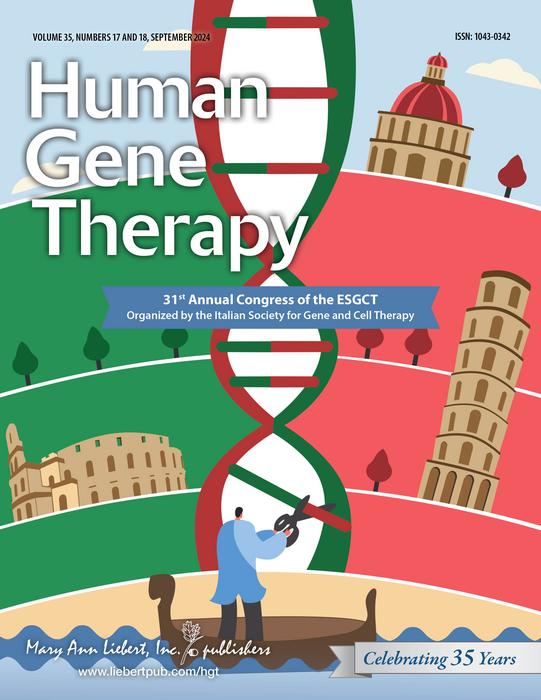
A new article in the peer-reviewed journal Human Gene Therapy describes the consensus reached by invited experts who participated in a meeting to evaluate the potential carcinogenicity of gene therapies. Click here to read the article now.
The participants discuss the definition of vector genotoxicity, sources of uncertainty, suitable toxicological endpoints for genotoxic assessment of gene therapies, and future research needs. The proposed recommendations will help guide the development of regulatory guidelines for the non-clinical toxicological assessment of gene therapy products.
Jan Klapwijk, from Cornelis Consulting, Alberto Del Rio Espinola, from GentiBio, Silvana Libertini, from Novartis Biomedical Research, and coauthors, proposed a series of scientific principles and experimental approaches for the assessment of risk factors relevant to potential carcinogenicity of gene therapies. The topics included: “In vivo and in vitro Assays”; “Integration Site Analysis”; “Approaches to Risk Assessment”; “Future Developments/Research Needs.”
“Data transparency will be essential and the authors specifically propose that data generated from viral integrations site studies in non-clinical species, and from clinical settings, are made publicly accessible (through, for example, databased and patient registries)”, stated the authors.
“The estimation of risk in human gene therapy relies heavily on molecular characterization of persistent vector genomes in transduced cells in preclinical models and patient samples,” says Editor in Chief Terence R. Flotte, MD, Celia and Isaac Haidak Professor of Medical Education and Dean, Provost, and Executive Deputy Chancellor, University of Massachusetts Medical School. “Combining such data with more traditional statistical analyses of clinical outcomes to create a risk assessment calls for the uniquely integrative approach, as described by Klapwijk and his colleagues.”
A new article in the peer-reviewed journal Human Gene Therapy describes the consensus reached by invited experts who participated in a meeting to evaluate the potential carcinogenicity of gene therapies. Click here to read the article now.
The participants discuss the definition of vector genotoxicity, sources of uncertainty, suitable toxicological endpoints for genotoxic assessment of gene therapies, and future research needs. The proposed recommendations will help guide the development of regulatory guidelines for the non-clinical toxicological assessment of gene therapy products.
Jan Klapwijk, from Cornelis Consulting, Alberto Del Rio Espinola, from GentiBio, Silvana Libertini, from Novartis Biomedical Research, and coauthors, proposed a series of scientific principles and experimental approaches for the assessment of risk factors relevant to potential carcinogenicity of gene therapies. The topics included: “In vivo and in vitro Assays”; “Integration Site Analysis”; “Approaches to Risk Assessment”; “Future Developments/Research Needs.”
“Data transparency will be essential and the authors specifically propose that data generated from viral integrations site studies in non-clinical species, and from clinical settings, are made publicly accessible (through, for example, databased and patient registries)”, stated the authors.
“The estimation of risk in human gene therapy relies heavily on molecular characterization of persistent vector genomes in transduced cells in preclinical models and patient samples,” says Editor in Chief Terence R. Flotte, MD, Celia and Isaac Haidak Professor of Medical Education and Dean, Provost, and Executive Deputy Chancellor, University of Massachusetts Medical School. “Combining such data with more traditional statistical analyses of clinical outcomes to create a risk assessment calls for the uniquely integrative approach, as described by Klapwijk and his colleagues.”
About the Journal
Human Gene Therapy, the Official Journal of the European Society of Gene and Cell Therapy and eight other international gene therapy societies, was the first peer-reviewed journal in the field and provides all-inclusive access to the critical pillars of human gene therapy: research, methods, and clinical applications. The Journal is led by Editor-in-Chief Terence R. Flotte, MD, Celia and Isaac Haidak Professor of Medical Education and Dean, Provost, and Executive Deputy Chancellor, University of Massachusetts Chan Medical School, and an esteemed international editorial board. Human Gene Therapy is available in print and online. Complete tables of contents and a sample issue are available on the Human Gene Therapy website.
About the Publisher
Mary Ann Liebert, Inc. is a global media company dedicated to creating, curating, and delivering impactful peer-reviewed research and authoritative content services to advance the fields of biotechnology and the life sciences, specialized clinical medicine, and public health and policy. For complete information, please visit the Mary Ann Liebert, Inc. website.
Journal
Human Gene Therapy
DOI
10.1089/hum.2024.025
Article Title
Genome Editing of Mammalian Cells Through RNA Transcript-Mediated Homologous Recombination Repair
Article Publication Date
16-Aug-2024