• HOME
  • NEWS
  • EXPLORE
    • CAREER
      • Companies
      • Jobs
    • EVENTS
    • iGEM
      • News
      • Team
    • PHOTOS
    • VIDEO
    • WIKI
  • BLOG
  • COMMUNITY
    • FACEBOOK
    • INSTAGRAM
    • TWITTER
Sunday, May 24, 2026
BIOENGINEER.ORG
No Result
View All Result
  • Login
  • HOME
  • NEWS
  • EXPLORE
    • CAREER
      • Companies
      • Jobs
        • Lecturer
        • PhD Studentship
        • Postdoc
        • Research Assistant
    • EVENTS
    • iGEM
      • News
      • Team
    • PHOTOS
    • VIDEO
    • WIKI
  • BLOG
  • COMMUNITY
    • FACEBOOK
    • INSTAGRAM
    • TWITTER
  • HOME
  • NEWS
  • EXPLORE
    • CAREER
      • Companies
      • Jobs
        • Lecturer
        • PhD Studentship
        • Postdoc
        • Research Assistant
    • EVENTS
    • iGEM
      • News
      • Team
    • PHOTOS
    • VIDEO
    • WIKI
  • BLOG
  • COMMUNITY
    • FACEBOOK
    • INSTAGRAM
    • TWITTER
No Result
View All Result
Bioengineer.org
No Result
View All Result
Home NEWS Science News Chemistry

New computational methodology to predict the complex formation of interesting nanostructures

by
September 6, 2025
in Chemistry
Reading Time: 3 mins read
0
POMs
Share on FacebookShare on TwitterShare on LinkedinShare on RedditShare on Telegram

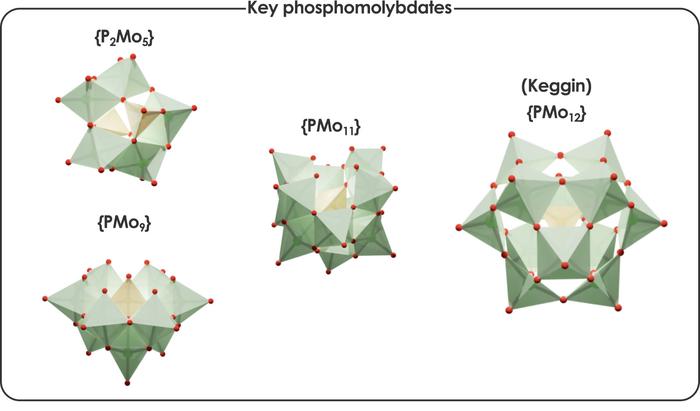
Researchers from the group of Prof. Carles Bo, at the Institute of Chemical Research of Catalonia (ICIQ-CERCA), have described a computational methodology that simulates complex processes involving different chemical species and diverse conditions. These processes lead to the formation of nanostructures called polyoxometalates (POMs), with important applications in catalysis, energy storage, biology and medicine.

Researchers from the group of Prof. Carles Bo, at the Institute of Chemical Research of Catalonia (ICIQ-CERCA), have described a computational methodology that simulates complex processes involving different chemical species and diverse conditions. These processes lead to the formation of nanostructures called polyoxometalates (POMs), with important applications in catalysis, energy storage, biology and medicine.

“Our group has recently developed unique methods to study the chemistry of polyoxometalates in solution, their speciation and formation mechanisms. This research has the potential to discover the experimental conditions needed to make new materials.” as explains Prof. Carles Bo.

The versatile POMs

Researchers can now predict the effect of these factors and the suitable conditions to produce one specific species of POM, employing statistical methods that facilitate the efficient and scalable processing of numerous speciation models and their corresponding systems of non-linear equations. This is important as the first key application of these nanostructures is related to catalysis, where POMs are known to accelerate several important reactions. For example, using these simulations it is possible to describe the suitable conditions that lead the production of a species of POM responsible to catalyse CO2 fixation.

POMSimulator

The group of Prof. Bo has presented an open–source software package named POMSimulator that helps in understanding the formation mechanisms of POMs. By releasing a public version of the code, the researchers aim to provide a tool for complementing the discovery of novel POMs. Moreover, having an accessible version of the code means that other researchers can modify the source code based on their needs.

The methodology now presented is a more robust version of this POMSimulator that provides new and valuable insights into the distribution of species under different chemical conditions, thereby enriching the knowledge of complex systems speciation.

“In the times of Big Data, Machine Learning and Artificial Intelligence, it is crucial to use every bit of information in our hands. Our work has taken POMSimulator to the next level of data usage.” said by Jordi Buils, first author of this work and PhD student at Prof. Carles Bo group.

This new approach has been published in Chemical Science, the Royal Society of Chemistry’s peer-reviewed flagship journal, and it has been selected as a Chem Sci Pick of the Week, a way to highlighting the cutting-edge work published in the journal.


Journal

Chemical Science

DOI

10.1039/D4SC03282A

Method of Research

Computational simulation/modeling

Subject of Research

Not applicable

Article Title

Computational Insights into Aqueous Speciation of Metal-Oxide NanoClusters: An In-Depth Study of the Keggin Phosphomolybdate

Article Publication Date

14-Aug-2024

Share12Tweet8Share2ShareShareShare2

Related Posts

Study Reveals How Valproate Affects Early Brain Development: Insights into the Antiepileptic Drug’s Impact — Chemistry

Study Reveals How Valproate Affects Early Brain Development: Insights into the Antiepileptic Drug’s Impact

May 22, 2026
Sustainable Chemistry: Iron Replaces Noble Metals in Catalytic Reactions — Chemistry

Sustainable Chemistry: Iron Replaces Noble Metals in Catalytic Reactions

May 22, 2026

Advancing Thin-Film Device Manufacturing with Imaging Ellipsometry for Enhanced Process Control

May 22, 2026

Simple Adjustment in 3D Printing Enhances Fit of Dental Crowns

May 22, 2026

POPULAR NEWS

  • ESMO 2025: mRNA COVID Vaccines Enhance Efficacy of Cancer Immunotherapy

    314 shares
    Share 126 Tweet 79
  • New Study Reveals Plants Can Detect the Sound of Rain

    734 shares
    Share 293 Tweet 183
  • Research Indicates Potential Connection Between Prenatal Medication Exposure and Elevated Autism Risk

    847 shares
    Share 339 Tweet 212
  • Common Food Preservatives Associated with Elevated Blood Pressure and Increased Heart Disease Risk

    56 shares
    Share 22 Tweet 14

About

We bring you the latest biotechnology news from best research centers and universities around the world. Check our website.

Follow us

Recent News

Comparing Robust Intelligent Controls for 3-DOF Robots

Predicting Flashover on Polluted Insulators with CNN-LSTM

Sepsis from C. difficile Infection Has Comparable Mortality

Subscribe to Blog via Email

Enter your email address to subscribe to this blog and receive notifications of new posts by email.

Join 83 other subscribers
  • Contact Us

Bioengineer.org © Copyright 2023 All Rights Reserved.

Welcome Back!

Login to your account below

Forgotten Password?

Retrieve your password

Please enter your username or email address to reset your password.

Log In
No Result
View All Result
  • Homepages
    • Home Page 1
    • Home Page 2
  • News
  • National
  • Business
  • Health
  • Lifestyle
  • Science

Bioengineer.org © Copyright 2023 All Rights Reserved.