• HOME
  • NEWS
  • EXPLORE
    • CAREER
      • Companies
      • Jobs
    • EVENTS
    • iGEM
      • News
      • Team
    • PHOTOS
    • VIDEO
    • WIKI
  • BLOG
  • COMMUNITY
    • FACEBOOK
    • INSTAGRAM
    • TWITTER
Thursday, June 25, 2026
BIOENGINEER.ORG
No Result
View All Result
  • Login
  • HOME
  • NEWS
  • EXPLORE
    • CAREER
      • Companies
      • Jobs
        • Lecturer
        • PhD Studentship
        • Postdoc
        • Research Assistant
    • EVENTS
    • iGEM
      • News
      • Team
    • PHOTOS
    • VIDEO
    • WIKI
  • BLOG
  • COMMUNITY
    • FACEBOOK
    • INSTAGRAM
    • TWITTER
  • HOME
  • NEWS
  • EXPLORE
    • CAREER
      • Companies
      • Jobs
        • Lecturer
        • PhD Studentship
        • Postdoc
        • Research Assistant
    • EVENTS
    • iGEM
      • News
      • Team
    • PHOTOS
    • VIDEO
    • WIKI
  • BLOG
  • COMMUNITY
    • FACEBOOK
    • INSTAGRAM
    • TWITTER
No Result
View All Result
Bioengineer.org
No Result
View All Result
Home NEWS Science News

Antimicrobial substances identified in Komodo dragon blood

Bioengineer by Bioengineer
February 22, 2017
in Science News
Reading Time: 2 mins read
0
Share on FacebookShare on TwitterShare on LinkedinShare on RedditShare on Telegram
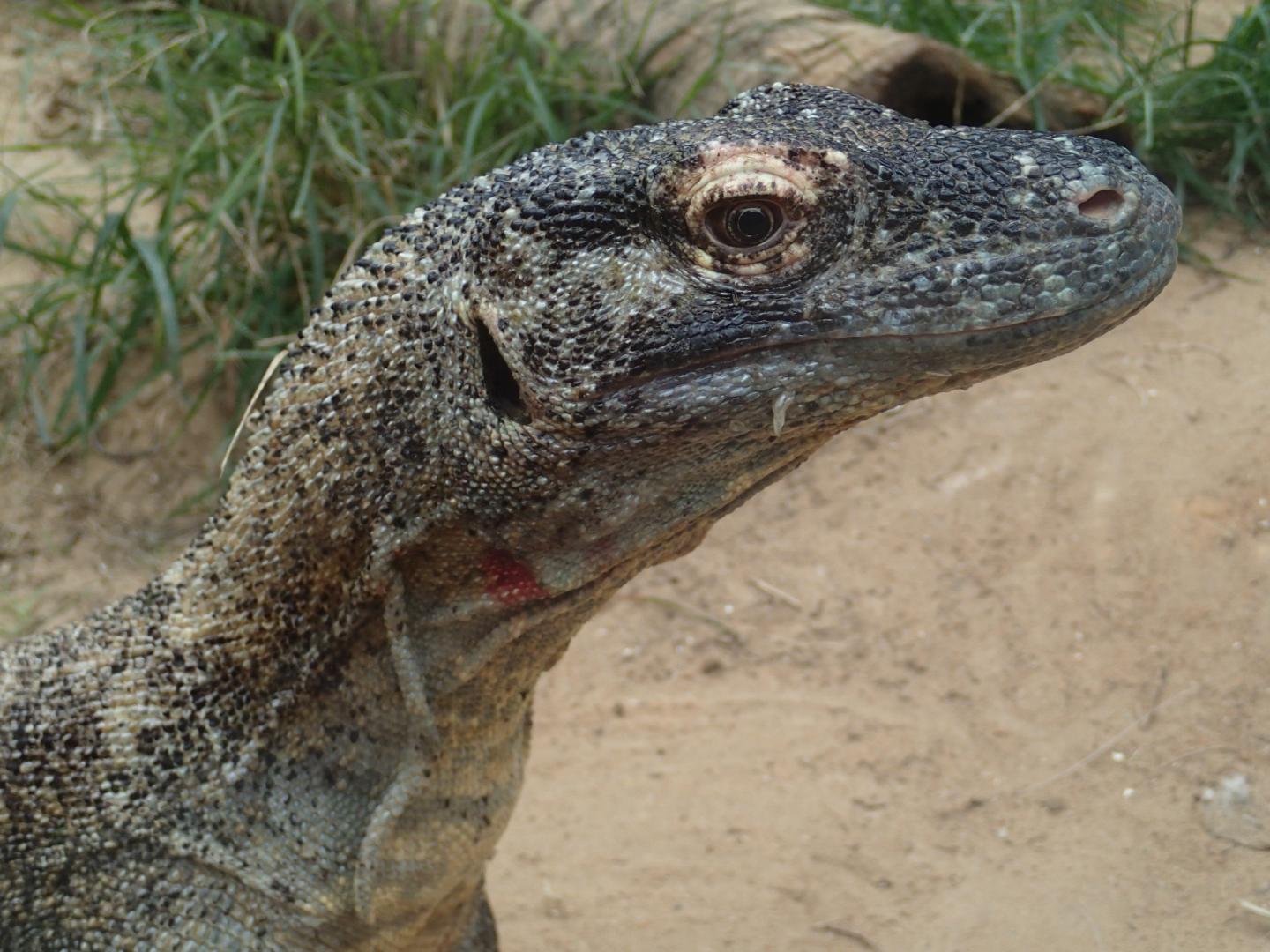
IMAGE

Credit: Kent Vliet

In a land where survival is precarious, Komodo dragons thrive despite being exposed to scads of bacteria that would kill less hardy creatures. Now in a study published in the Journal of Proteome Research, scientists report that they have detected antimicrobial protein fragments in the lizard's blood that appear to help them resist deadly infections. The discovery could lead to the development of new drugs capable of combating bacteria that have become resistant to antibiotics.

The world's largest lizard, Komodo dragons live on five small islands in Indonesia. The saliva of these creatures contains at least 57 species of bacteria, which are believed to contribute to the demise of their prey. Yet, the Komodo dragon appears resistant to these bacteria, and serum from these animals has been shown to have antibacterial activity. Substances known as cationic antimicrobial peptides (CAMPs) are produced by nearly all living creatures and are an essential part of the innate immune system. So, Barney Bishop, Monique van Hoek and colleagues at the College of Science at George Mason University wondered whether they could isolate CAMPs from Komodo dragon blood, as they previously had done with alligator blood to expand the library of known CAMPs for therapeutic studies.

The team used an approach known as bioprospecting. They incubated Komodo dragon blood with negatively charged hydrogel particles that they developed to capture the peptides, which are positively charged. With this method, they identified and sequenced 48 potential CAMPs with mass spectrometry. All but one of these was derived from histone proteins, which are known to have antimicrobial activities. Eight were synthesized and tested against Pseudomonas aeruginosa and Staphylococcus aureus. Seven of the peptides showed significant potency against both bacteria. The eighth was only effective against P. aeruginosa. The researchers conclude that Komodo dragon blood plasma contains a host of potentially viable antimicrobial peptides that could help lead to new therapeutics.

###

The authors acknowledge funding from the Defense Threat Reduction Agency (DTRA).

The abstract that accompanies this study is available here.

The American Chemical Society is a nonprofit organization chartered by the U.S. Congress. With nearly 157,000 members, ACS is the world's largest scientific society and a global leader in providing access to chemistry-related research through its multiple databases, peer-reviewed journals and scientific conferences. ACS does not conduct research, but publishes and publicizes peer-reviewed scientific studies. Its main offices are in Washington, D.C., and Columbus, Ohio.

To automatically receive news releases from the American Chemical Society, contact [email protected].

Follow us on Twitter | Facebook

Media Contact

Katie Cottingham
[email protected]
301-775-8455
@ACSpressroom

http://www.acs.org

############

Story Source: Materials provided by Scienmag

Share12Tweet8Share2ShareShareShare2

Related Posts

Tracking Lanthanide-Labeled Microplastics in Plants

June 25, 2026

POSTECH Researchers Slash Cost of Reconstituted Cell-Free Systems by 95%

June 25, 2026

AI and Physics Collaborate to Design Advanced Hydrogen Storage Materials

June 25, 2026

Natural Hallucinogens: Evolution’s Ecological Tools, Not Mere Chemical Byproducts

June 25, 2026
Please login to join discussion

POPULAR NEWS

  • Saying Goodbye to PGY-6: Pediatric Fellowship Realities

    103 shares
    Share 41 Tweet 26
  • Multi-Hospital Study Reveals Long Covid Burden Is Twice as High as Current Estimates

    92 shares
    Share 36 Tweet 23
  • Detection of EDCs in Breast Milk and Infant Urine Up to Six Months Highlights Early Exposure Risks

    77 shares
    Share 31 Tweet 19
  • New Drug Candidate Developed at McMaster Shows Potential for Treating Brain Cancer

    58 shares
    Share 23 Tweet 15

About

We bring you the latest biotechnology news from best research centers and universities around the world. Check our website.

Follow us

Recent News

Tracking Lanthanide-Labeled Microplastics in Plants

POSTECH Researchers Slash Cost of Reconstituted Cell-Free Systems by 95%

AI and Physics Collaborate to Design Advanced Hydrogen Storage Materials

Subscribe to Blog via Email

Success! An email was just sent to confirm your subscription. Please find the email now and click 'Confirm' to start subscribing.

Join 82 other subscribers
  • Contact Us

Bioengineer.org © Copyright 2023 All Rights Reserved.

Welcome Back!

Login to your account below

Forgotten Password?

Retrieve your password

Please enter your username or email address to reset your password.

Log In
No Result
View All Result
  • Homepages
    • Home Page 1
    • Home Page 2
  • News
  • National
  • Business
  • Health
  • Lifestyle
  • Science

Bioengineer.org © Copyright 2023 All Rights Reserved.