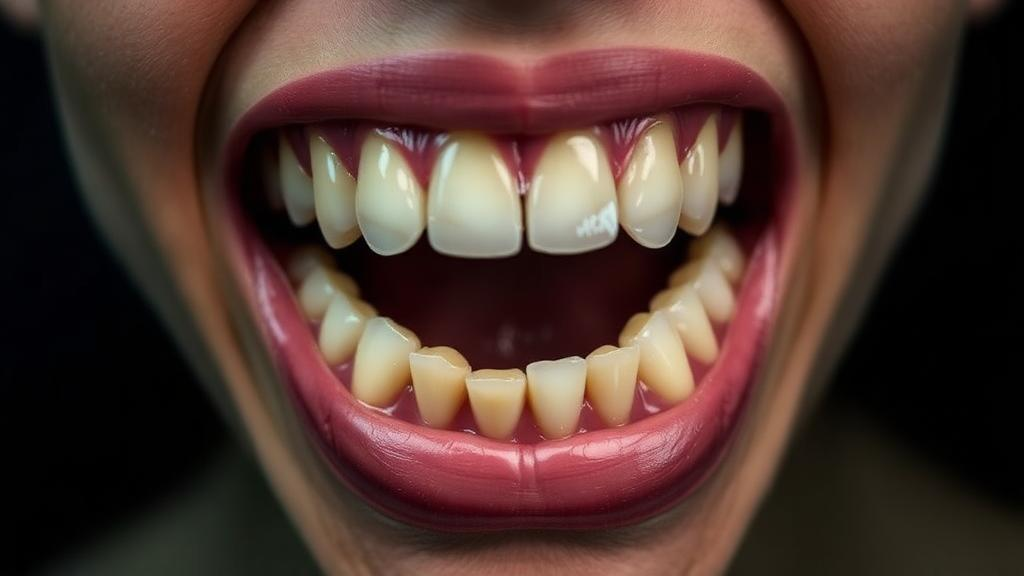
When forensic investigators recover human remains, one of the most fundamental questions they face is deceptively simple: how old was this person? For decades, the answer has come from skeletal and dental morphology, from the wear on tooth surfaces to the fusion of bone plates. But in many real-world scenarios, the available evidence is far from ideal. Teeth arrive fragmented, burned, or stripped of their soft inner pulp, the tissue that has traditionally supplied the richest source of DNA. A new study published in the International Journal of Legal Medicine suggests that even these compromised specimens can surrender a reliable molecular estimate of age, thanks to the epigenetic clock written into their chemistry.
The research, led by Siqi Chen and Lihua Hou of Central South University in Changsha, China, together with colleagues at the Institute of Forensic Science in Beijing and Hebei Medical University, focused on a specific and stubborn forensic problem: pulp-free teeth. When a tooth loses its pulp, whether through decay, treatment, or postmortem degradation, investigators lose the soft tissue that normally yields abundant, high-quality DNA. What remains are the hard mineralized tissues, dentin and cementum, which preserve DNA remarkably well over time but have been difficult to exploit for age prediction. The team set out to determine whether DNA methylation patterns in these hard tissues could still encode a person’s chronological age with usable precision.
DNA methylation is a chemical modification in which methyl groups attach to cytosine bases at specific positions in the genome, known as CpG sites. Across a person’s lifetime, the pattern of these modifications changes in a systematic, tissue-dependent way, a phenomenon that underlies the so-called epigenetic clock first described by Steve Horvath in 2013. Because methylation is chemically stable and can be measured even in degraded DNA, it has become one of the most promising molecular approaches to forensic age estimation. Previous studies have built methylation-based age predictors from blood, saliva, bone, and dental pulp, but pulp-free teeth remained a gap in the forensic toolkit.
To close that gap, the researchers prioritized ten previously reported age-associated CpG loci that had already been validated in skeletal and dental tissues. They then constructed their study around 128 sectioned, pulp-free teeth, treating the cut samples as simulated forensic specimens. Before building any predictive model, the team asked a critical methodological question: do the type of tooth or the sex of the individual distort the relationship between methylation and age? Using analysis of variance-based interaction testing, they found that neither factor significantly modified the methylation-age relationship, with P values of 0.340 for tooth type and 0.468 for sex. Adding interaction terms for either variable also failed to reduce prediction error meaningfully, with P values of 0.210 and 0.156 respectively.
That negative result carries real practical weight. If methylation patterns behaved differently in incisors than in molars, or in men than in women, forensic laboratories would need separate models for each category, multiplying complexity and fragmenting limited sample sizes. Instead, the findings support a unified model that can be applied to pulp-free teeth regardless of type or the sex of the donor, simplifying workflows in casework where every scrap of information matters.
With the marker set established, the team compared four statistical approaches for converting methylation values into age estimates: partial least squares regression, ridge regression, elastic net regression, and support vector regression with a radial basis function kernel. Each model’s hyperparameters were optimized through ten-fold cross-validation, a technique that repeatedly splits the data into training and testing subsets to prevent overfitting and to ensure that the model generalizes to samples it has never seen. Overfitting is a persistent danger in forensic model building, where datasets are modest and the temptation to squeeze out every last percentage of accuracy can produce models that collapse on real casework.
The verdict was clear. Ridge regression, a method that deliberately constrains model complexity by shrinking regression coefficients, provided the best balance between fitting the training data and generalizing to new samples. On the test set, it achieved an R-squared of 0.749, meaning it explained roughly three-quarters of the variance in chronological age, with a mean absolute error of 6.112 years. In forensic practice, an average error of about six years is considered useful, particularly for cases where no morphological indicators survive. It is not precise enough to identify an individual, but it can narrow an unidentified person’s age range substantially and corroborate or challenge other evidence.
The study also probed whether removing the pulp itself changes the methylation signal in the remaining hard tissues. In a paired analysis comparing pulp-retained and pulp-free teeth from the same individuals, the researchers found no significant difference in overall prediction error between the two specimen types. One marker, cg22507023, did differ significantly between the groups, a nuance that may merit attention in future marker selection. More broadly, a supplementary validation on paired teeth from different positions in the mouths of twelve randomly selected individuals confirmed that CpG methylation levels and predicted ages did not differ meaningfully within a single person. In other words, it should not matter much which tooth an investigator recovers; the epigenetic signal is consistent across the dentition.
The implications extend beyond routine casework. Teeth are famously durable, surviving fire, decomposition, and millennia of burial better than almost any other human tissue. They are often the only identifiable material recovered from disaster scenes, historical burials, and archaeological contexts. A method that extracts age information from pulp-free dental hard tissues could therefore assist not only forensic identification but also the study of ancient populations, provided the methylation signal survives in sufficiently old material. The technique also complements existing approaches such as Raman spectroscopy of teeth and amino acid racemization, giving investigators a growing menu of molecular options when morphology fails.
Challenges remain before the method becomes standard practice. The study was conducted on a specific population, and methylation-age relationships can vary across ancestries and environments, so independent validation in other cohorts will be essential. The mean absolute error of six years, while useful, still leaves wide uncertainty bands for very young or very old individuals, where age-related methylation changes can plateau. Laboratory costs and processing time must also fall before the approach can be deployed at scale. Nevertheless, the demonstration that sectioned, pulp-free teeth, specimens once considered nearly worthless for molecular age estimation, can yield predictions within about six years of the truth marks a genuine advance. The study was funded by the National Natural Science Foundation of China and regional science foundations, and was approved by the Ethics Committee of Basic Medical Sciences at Central South University. As epigenetic forensics matures, the humble tooth, even one emptied of everything soft and alive, is proving to be a stubborn witness that keeps telling time long after the body has fallen silent.
Subject of Research: DNA methylation-based forensic age estimation from pulp-free teeth
Article Title: Age estimation from DNA methylation in sectioned pulp-free teeth
Article References: Chen, S., Hou, L., Liu, L., Wen, D., Liang, X., Zhang, Y., Chen, B., Zhao, L., Liu, Y., & Zha, L. (2026). Age estimation from DNA methylation in sectioned pulp-free teeth. International Journal of Legal Medicine. https://doi.org/10.1007/s00414-026-04026-2
Image Credits: AI Generated
DOI: 10.1007/s00414-026-04026-2
Keywords: DNA methylation, forensic science, age estimation, teeth, epigenetic clock, CpG sites, ridge regression, forensic anthropology, dental tissue, machine learning, legal medicine, estimation
News Source: Ophelia Keating. (October 6, 2026). Teeth Without Pulp Can Still Reveal a Person’s Age Through DNA Methylation. Scienmag.