• HOME
  • NEWS
  • EXPLORE
    • CAREER
      • Companies
      • Jobs
    • EVENTS
    • iGEM
      • News
      • Team
    • PHOTOS
    • VIDEO
    • WIKI
  • BLOG
  • COMMUNITY
    • FACEBOOK
    • INSTAGRAM
    • TWITTER
Saturday, February 7, 2026
BIOENGINEER.ORG
No Result
View All Result
  • Login
  • HOME
  • NEWS
  • EXPLORE
    • CAREER
      • Companies
      • Jobs
        • Lecturer
        • PhD Studentship
        • Postdoc
        • Research Assistant
    • EVENTS
    • iGEM
      • News
      • Team
    • PHOTOS
    • VIDEO
    • WIKI
  • BLOG
  • COMMUNITY
    • FACEBOOK
    • INSTAGRAM
    • TWITTER
  • HOME
  • NEWS
  • EXPLORE
    • CAREER
      • Companies
      • Jobs
        • Lecturer
        • PhD Studentship
        • Postdoc
        • Research Assistant
    • EVENTS
    • iGEM
      • News
      • Team
    • PHOTOS
    • VIDEO
    • WIKI
  • BLOG
  • COMMUNITY
    • FACEBOOK
    • INSTAGRAM
    • TWITTER
No Result
View All Result
Bioengineer.org
No Result
View All Result
Home NEWS Science News Health

Ohio State develops searchable database for Alzheimer’s research

Bioengineer by Bioengineer
June 6, 2024
in Health
Reading Time: 2 mins read
0
Ohio State develops searchable database for Alzheimer’s research
Share on FacebookShare on TwitterShare on LinkedinShare on RedditShare on Telegram

COLUMBUS, Ohio – A searchable database is now ready to help study Alzheimer’s disease.

Hongjun"Harry" Fu

Credit: The Ohio State University Wexner Medical Center

COLUMBUS, Ohio – A searchable database is now ready to help study Alzheimer’s disease.

Neuroscience and biomedical informatics researchers at The Ohio State University Wexner Medical Center and College of Medicine created the comprehensive, user-friendly repository.

The free database – known as ssREAD – is outlined in a manuscript published online in Nature Communications.  

Alzheimer’s disease is the most common cause of dementia, accounting for up to 80% of cases. An estimated 6.7 million Americans who are age 65 and older are living with Alzheimer’s dementia today, according to the Alzheimer’s Association’s 2023 Alzheimer’s disease facts and figures report.

This database will help study the pathology of Alzheimer’s disease. Pathology examines the cause, development, structural/functional changes and natural history associated with diseases.

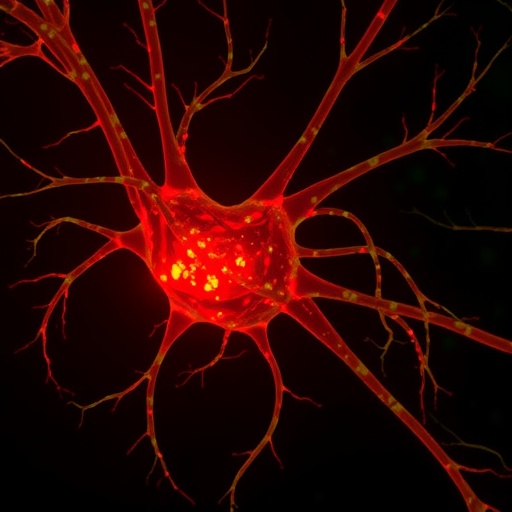
Molecular signatures underlying Alzheimer’s disease pathology have been increasingly explored through single-cell and single-nucleus RNA-sequencing (scRNA-seq & snRNA-seq) and spatial transcriptomics.

“These technologies have cast fresh light on the exploration of Alzheimer’s disease pathogenesis and sex difference at the cellular and molecular levels. Our ssREAD repository offers a broader spectrum of Alzheimer’s disease-related datasets, with an optimized analytical pipeline and improved usability,” said study co-corresponding author Hongjun “Harry” Fu, PhD, assistant professor of neuroscience at Ohio State.

Datasets
The database encompasses 277 integrated datasets from 67 Alzheimer’s disease-related scRNA-seq & snRNA-seq studies, totaling 7,332,202 cells. The repository also includes 381 spatial transcriptomics samples from 85 human and mouse studies.

  • Detailed annotations including cell types and spatial layers
  • Differential gene expressions and functional enrichment analysis
  • Spatially variable genes and deconvolution with single-cell datasets

Interactive visualizations
User-friendly web server to provide comprehensive analysis interpretations and filters support multiple selections

  • Scatter plots for clusters, cell types, and spatial layers
  • Feature plots and violin plots for gene expression profile
  • Real-time gene set enrichment analysis

“We are closing the gap for researchers by creating this specialized database. Integrating these diverse datasets and conditions will be invaluable for researchers studying the complex landscape of Alzheimer’s disease,” said Qin Ma, PhD, professor in Ohio State’s department of biomedical informatics.

###


Journal

Nature Communications

Method of Research

Data/statistical analysis

Subject of Research

People

Article Title

ssREAD: A Single-1 cell and Spatial RNA-seq Database for Alzheimer’s Disease

Article Publication Date

6-Jun-2024

COI Statement

The authors declare no competing interests.
Share12Tweet8Share2ShareShareShare2

Related Posts

Evaluating Pediatric Emergency Care Quality in Ethiopia

February 7, 2026

TPMT Expression Predictions Linked to Azathioprine Side Effects

February 7, 2026

Improving Dementia Care with Enhanced Activity Kits

February 7, 2026

Decoding Prostate Cancer Origins via snFLARE-seq, mxFRIZNGRND

February 7, 2026

POPULAR NEWS

  • Robotic Ureteral Reconstruction: A Novel Approach

    Robotic Ureteral Reconstruction: A Novel Approach

    82 shares
    Share 33 Tweet 21
  • Digital Privacy: Health Data Control in Incarceration

    63 shares
    Share 25 Tweet 16
  • Study Reveals Lipid Accumulation in ME/CFS Cells

    57 shares
    Share 23 Tweet 14
  • Breakthrough in RNA Research Accelerates Medical Innovations Timeline

    53 shares
    Share 21 Tweet 13

About

We bring you the latest biotechnology news from best research centers and universities around the world. Check our website.

Follow us

Recent News

Evaluating Pediatric Emergency Care Quality in Ethiopia

TPMT Expression Predictions Linked to Azathioprine Side Effects

Improving Dementia Care with Enhanced Activity Kits

Subscribe to Blog via Email

Enter your email address to subscribe to this blog and receive notifications of new posts by email.

Join 73 other subscribers
  • Contact Us

Bioengineer.org © Copyright 2023 All Rights Reserved.

Welcome Back!

Login to your account below

Forgotten Password?

Retrieve your password

Please enter your username or email address to reset your password.

Log In
No Result
View All Result
  • Homepages
    • Home Page 1
    • Home Page 2
  • News
  • National
  • Business
  • Health
  • Lifestyle
  • Science

Bioengineer.org © Copyright 2023 All Rights Reserved.