The ovary is an essential organ for female fertility, and its age-dependent decline in function is a major cause of infertility. However, the molecular mechanisms underlying ovarian aging are still not well understood, particularly in higher vertebrates like primates. In this study, researchers used spatiotemporal transcriptomics to analyze the gene expression patterns in young and aged primate ovaries.
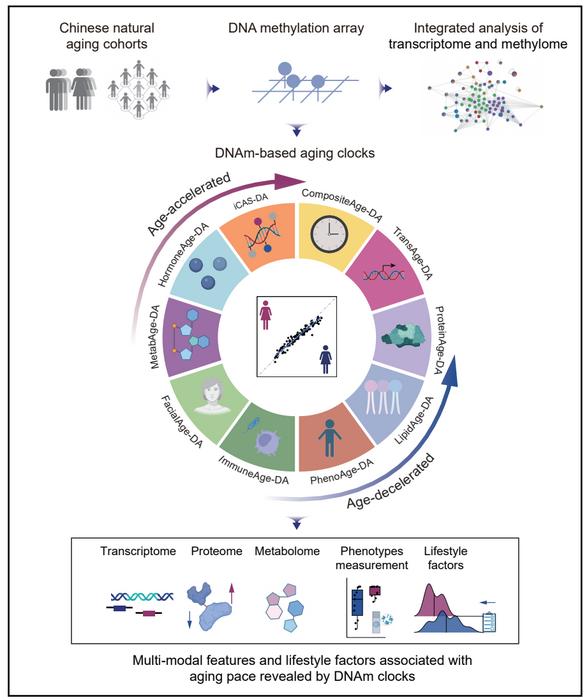
Credit: Zikai Zheng, Jiaming Li, Tianzi Liu, Yanling Fan, Qiao-Cheng Zhai, Muzhao Xiong, Qiao-Ran Wang, Xiaoyan Sun, Qi-Wen Zheng, Shanshan Che, Beier Jiang, Quan Zheng, Cui Wang, Lixiao Liu, Jiale Ping, Si Wang, Dan-Dan Gao, Jinlin Ye, Kuan Yang, Yuesheng Zuo, Shuai Ma, Yun-Gui Yang, Jing Qu, Feng Zhang, Peilin Jia, Guang-Hui Liu, Weiqi Zhang
The ovary is an essential organ for female fertility, and its age-dependent decline in function is a major cause of infertility. However, the molecular mechanisms underlying ovarian aging are still not well understood, particularly in higher vertebrates like primates. In this study, researchers used spatiotemporal transcriptomics to analyze the gene expression patterns in young and aged primate ovaries.
Key findings from the study include:
- The study identified significant changes in DNA methylation associated with aging. Principal component analysis revealed a reduction in global DNA methylation levels and an increase in methylation entropy with age. Specific differential methylation positions (DMPs) were identified, with distinct patterns of hypermethylation and hypomethylation linked to gene regulation during aging.
- The iCAS-DNAmAge clock was developed using 65 CpG sites, with 35 upregulated and 30 downregulated with age. This clock demonstrated high accuracy in predicting age in both the Quzhou and CAS cohorts, outperforming previous DNA methylation clocks in these populations.
- The researchers created multi-modal aging clocks (compositeAge, facialAge, transAge, etc.) based on diverse biological datasets. These clocks showed strong correlations with chronological age and health status, indicating their robustness as biological age predictors.
- The study validated the predictive power of the iCAS-DNAmAge clock and multi-modal clocks in different Chinese cohorts, emphasizing their potential for generalization. The clocks were highly correlated with health metrics and could predict age-related disease risks and lifestyle factors.
The study developed and validated a new DNA methylation clock (iCAS-DNAmAge) and multi-modal aging clocks specifically for Chinese cohorts. These clocks provide accurate estimates of chronological age and are associated with various health and aging-related factors. The iCAS-DNAmAge clock outperformed existing DNA methylation clocks, demonstrating high predictive accuracy and robustness. Multi-modal aging clocks, derived from a combination of biological datasets, offer comprehensive insights into the aging process. The findings enhance the understanding of DNA methylation’s role in aging and present valuable tools for assessing biological age and informing aging intervention strategies. This research paves the way for further exploration of DNA methylation clocks in different ethnic populations and their application in personalized medicine and aging research. The work entitled “ DNA methylation clocks for estimating biological age in Chinese cohorts ” was published on Protein & Cell (published on Mar. 14, 2024).
Journal
Protein & Cell
DOI
10.1093/procel/pwae011
Method of Research
Experimental study
Subject of Research
Human tissue samples
Article Title
DNA methylation clocks for estimating biological age in Chinese cohorts
Article Publication Date
14-Mar-2024