Research led by the University of Hawaiʻi at Mānoa Hawaiʻi Institute of Marine Biology (HIMB) has led to a new tool for forecasting coral disease that could help conservationists step in at the right times with key interventions. Ecological forecasts are critical tools for conserving and managing marine ecosystems, but few forecasting systems can account for the wide range of ecological complexities in near-real-time.
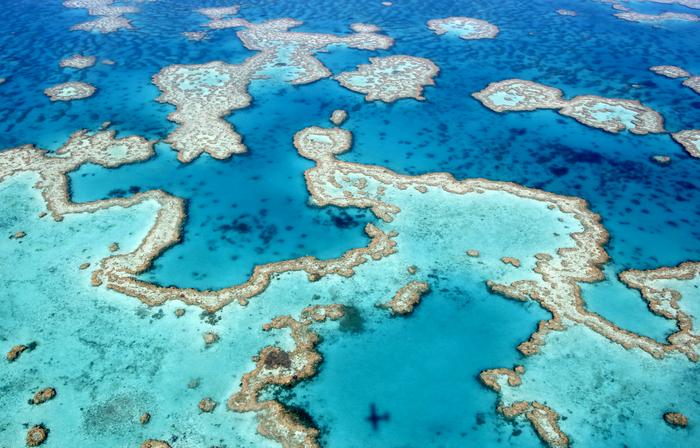
Credit: Ayanadak123, Wikimedia Commons.
Research led by the University of Hawaiʻi at Mānoa Hawaiʻi Institute of Marine Biology (HIMB) has led to a new tool for forecasting coral disease that could help conservationists step in at the right times with key interventions. Ecological forecasts are critical tools for conserving and managing marine ecosystems, but few forecasting systems can account for the wide range of ecological complexities in near-real-time.
Using ecological and marine environmental conditions, the Multi-Factor Coral Disease Risk product predicts the risk of two diseases across reefs in the central and western Pacific and along the east coast of Australia. An article introducing the new tool was published in Ecological Applications.
The tool can be accessed through the U.S. National Oceanic and Atmospheric Administration (NOAA) Coral Reef Watch program, and can help end users detect early changes in the environment and better protect coral reef ecosystems.
“Partnering with NOAA Coral Reef Watch, our team developed ecological forecasts to predict the times and conditions when coral disease outbreaks are most likely to occur,” said NASA-funded Principal Investigator and HIMB Interim Director Megan Donahue.
“We are really excited about this new tool,” said lead author, Jamie Caldwell, of High Meadows Environmental Institute at Princeton University. “Users can employ this tool to make decisions about how to manage coral health, similar to how we use weather forecasts to decide how to pack for an upcoming trip.”
More than half a billion people depend on Earth’s coral reefs, and ensuring their resilience in the face of many threats is an ongoing challenge for managers. Tools like this help ensure these vital ecosystems survive.
Understanding localized risks
Insights gleaned from the tool can help managers better understand localized risks of coral disease and develop timely strategies for intervention.
“A key project element was the consultation with and input from coral reef managers from across the Pacific, including here in Australia,” said Professor Scott Heron, a collaborator from James Cook University. “We’ve also provided several training sessions in the various aspects of how the tool is used so that stakeholders in the varying locations have the best opportunity to inform effective reef management.”
Coral reefs are the most biologically diverse, species-rich marine ecosystem on Earth. They are culturally significant to Indigenous people throughout the world, and they provide food, jobs, recreation, medicine and coastline protection from storms and erosion. While disease is a natural part of marine ecosystems, increased runoff, global climate change and a slough of human impacts stress corals and cause disease.
The Multi-Factor Coral Disease Risk Product was developed by HIMB, in close collaboration with NOAA Coral Reef Watch, James Cook University, University of Newcastle and University of New South Wales.
Journal
Ecological Applications
DOI
10.1002/eap.2961
Method of Research
Computational simulation/modeling
Article Title
Multi-Factor Coral Disease Risk: A new product for early warning and management
Article Publication Date
24-Mar-2024
COI Statement
The authors declare no conflicts of interest.