Urinary catheters are required for nearly every surgical procedure. However, a major challenge for the health care industry is predicting who may develop catheter-associated urinary tract infections (CAUTIs) and when these infections may lead to death.
Credit: Flores-Mireles Lab/University of Notre Dame
Urinary catheters are required for nearly every surgical procedure. However, a major challenge for the health care industry is predicting who may develop catheter-associated urinary tract infections (CAUTIs) and when these infections may lead to death.
Now, a study from the University of Notre Dame has identified a population that is more susceptible to developing a CAUTI.
Researchers showed that models with fibrinolytic deficiencies, or conditions that cause overactivation of the protein fibrin, had increased risk for developing severe and persistent CAUTIs. Additionally, they found these same models were more likely to develop sepsis.
Fibrin is vital in the formation of blood clots when the body attempts to repair injuries. When injured, the body calls on a process that uses fibrin to repair a wound, creating a fibrous structure to prevent bleeding during the healing process.
Ana Lidia Flores-Mireles, the Hawk Assistant Professor of Biological Sciences at Notre Dame, studied how this healing process could promote infection during urinary catheterization in animal models.
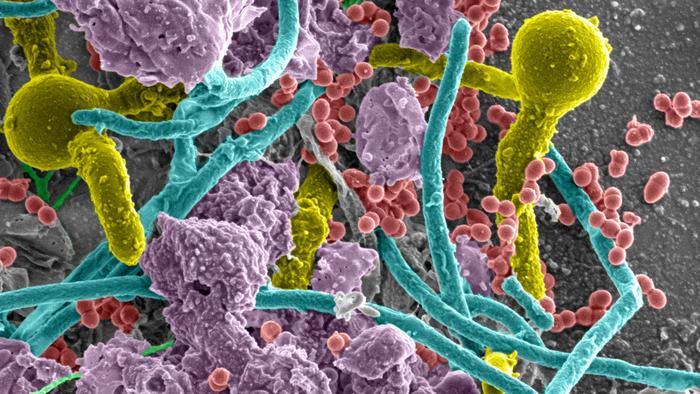
“A urinary catheter is constantly rubbing against bladder tissue, causing continuous inflammation and mechanical damage,” Flores-Mireles said. “The body will activate healing for the damaged bladder by recruiting the protein fibrinogen from the bloodstream. Fibrinogen will convert into fibrin, which creates net-like structures that accumulate where pathogens then colonize and promote persistent infection.”
The study published in Nature Communications found that the more fibrin “nets” the body creates, the more susceptible the model was to high pathogen colonization and the more fibrinogen was found in the circulatory system. As the amount of fibrinogen or fibrin increases in the bloodstream, the more likely a CAUTI is to spread to other organs and tissue.
However, when the researchers blocked fibrinogen recruitment or accumulation, it reduced CAUTIs because the pathogens needed the fibrin net-like structure to survive and persist.
The research suggests that catheterized patients given antifibrinolytic medications, or drugs that discourage bleeding, could be at a higher risk for developing a CAUTI. Antifibrinolytic medications are often used to treat postpartum hemorrhages, traumatic injuries and other surgical procedures — all of which could require catheters when treated.
Flores-Mireles believes that this study can be applied to better prevent and manage human CAUTI, especially due to the current lack of consensus on best practices for CAUTI treatment.
“We strongly believe these findings provide key data to inform urinary catheterization guidelines in health care facilities and intensive care units, which will provide a higher quality of life to patients and minimize risk for complications,” Flores-Mireles said.
To help prevent CAUTIs, Flores-Mireles and her lab are developing a novel catheter that minimizes the inflammation and mechanical damage caused by typical catheters, preventing fibrin structures from forming and pathogens from causing infection.
In addition to Flores-Mireles, the study, “Fibrinolytic-deficiencies predispose hosts to septicemia from a catheter-associated UTI,” was co-authored by Notre Dame’s Francis Castellino, Deborah Donahue, Victoria Ploplis, Jonathan Molina, Andrew Paik, Kurt Kohler, Christopher Gager, Marissa Andersen, Ellsa Wongso and Elizabeth Lucas; Washington University’s Wei Xu, Michael Caparon, Scott J. Hultgren, Karla Bergeron, Aleksandra Klim and Alana Desai; and the University of North Carolina’s Matthew Flick. Mireles, Castellino, Donahue and Ploplis are affiliated with Notre Dame’s W.M. Keck Center for Transgene Research.
Contact: Brandi Wampler, associate director of media relations, 574-631-2632, [email protected]
Journal
Nature Communications
Article Title
Fibrinolytic-deficiencies predispose hosts to septicemia from a catheter-associated UTI
Article Publication Date
27-Mar-2024