A new model, developed by Ifremer and Lausanne University researchers and published in the journal Nature Ecology and Evolution, reassesses the proportion of terrestrial and marine species threatened with extinction by climate change. While the forecasts of traditional models estimate that the diversity of terrestrial species in tropical areas could decrease by 54% between now and 2041-2060, this model is more moderate, predicting a decrease of 39%. Nevertheless, this proportion remains alarming and confirms the importance of taking urgent measures to mitigate climate change and its impact on biodiversity.
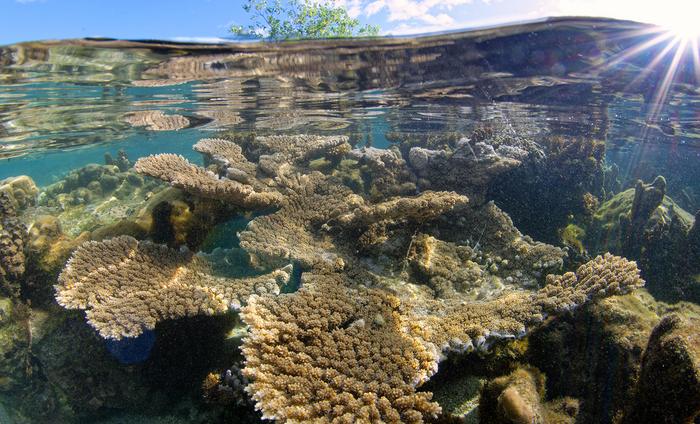
Credit: Olivier Dugornay © CC-BY Ifremer
A new model, developed by Ifremer and Lausanne University researchers and published in the journal Nature Ecology and Evolution, reassesses the proportion of terrestrial and marine species threatened with extinction by climate change. While the forecasts of traditional models estimate that the diversity of terrestrial species in tropical areas could decrease by 54% between now and 2041-2060, this model is more moderate, predicting a decrease of 39%. Nevertheless, this proportion remains alarming and confirms the importance of taking urgent measures to mitigate climate change and its impact on biodiversity.
Today, temperatures on Earth vary from around -70°C in Antarctica to +48°C at the equator. These “climatic limits” that currently exist on our planet have always evolved. For example, 130,000 years ago, during the last interglacial period, the climate was warmer and similar to what we could expect by the end of the century. The species that evolved during this period could therefore be “pre-adapted” to the changes to come. However, until now, statistical models predicting the response of species to climate change did not take this potential pre-adaptation into account, which could lead to inaccurate predictions.
Take the example of a tropical marine or terrestrial species: traditional statistical models predict that it will disappear in places where the temperature exceeds the current warm limit of 48°C. But this view could be too restrictive, as our knowledge is limited by the study of current climatic conditions. Could this species live with an air temperature of 50°C? Or in warmer or saltier water? Under the effect of climate change, such conditions could reappear and lead to an expansion of the climatic niche of certain species”, explains Mathieu Chevalier, marine ecology researcher at Ifremer.
When a species is ‘marked’ by climatic conditions, it retains a pre-adaptation to these conditions that can last for thousands or even millions of years. If its habitat evolves towards a climate that the species has already experienced in the past, this pre-adaptation will provide it with a tolerance to these new climatic conditions”, adds Antoine Guisan, professor of spatial ecology at the University of Lausanne.
The scientists from Ifremer and the University of Lausanne have applied their model to almost 25,000 terrestrial and marine species – including animals and plants – from around the world for which the International Union for Conservation of Nature (IUCN) provides geographical distribution maps. By cross-referencing this data in their model with scenarios of future climate change (IPCC/CMIP5), they found that 49% of these species currently live in climate niches that are contiguous (“stuck”) to the limits of current climate conditions, and that 86% of them could have a niche potentially extending beyond current climate limits. This figure rises to 92% for marine species.
The most striking result concerns tropical areas, for terrestrial and marine species. It is widely accepted that climate change will lead to a massive loss of biodiversity in these areas, up to 54% of tropical terrestrial species by 2041-2060 according to traditional models. Our model puts this prognosis into perspective and predicts a reduction of ‘only’ 39% in species diversity,” says Mathieu Chevalier, a marine ecology researcher at Ifremer.
Does that mean this is good news? Clearly not. Scientists are advising us to remain prudent: this estimate of threatened biodiversity remains alarming, and climate is not the only variable to take into account for a realistic prediction of species extinction risk. We also need to consider other anthropogenic pressures, such as habitat loss, pollution, overexploitation or biological invasions. It is clear, for example, that even if certain species are pre-adapted to future conditions, they will not be able to survive if their habitat disappears. Ideally, all these aspects should be taken into account, but here the scientists have concentrated on the climatic aspects, for which knowledge on past and future conditions is available.
Our study shows that it is important to constantly refine our models, and develop new hypotheses about the possible response of certain species. If it is likely that tropical species could better tolerate climate change than previously thought, the old estimates remain valid for species in cold, alpine and polar regions, and to a large extent for species in temperate zones, because the climate that currently prevails in these areas will no longer exist by 2041. These species are already living at the limit of their climatic niche and will not be able to tolerate significantly warmer temperatures. That is a sure thing! warns Olivier Broennimann, a researcher in spatial ecology at the University of Lausanne.
Read the article:
Chevalier M. (Ifremer), Broennimann O. and Guisan A. (Université de Lausanne), « Climate change may reveal currently unavailable parts of species ecological niches », May 2024, Nature Ecology & Evolution: https://doi.org/10.1038/s41559-024-02426-4 https://www.nature.com/articles/s41559-024-02426-4
Journal
Nature Ecology & Evolution
DOI
10.1038/s41559-024-02426-4
Article Title
Climate change may unleash parts of past species’ ecological niches
Article Publication Date
29-May-2024