

• HOME
  • NEWS
  • EXPLORE
    • CAREER
      • Companies
      • Jobs
    • EVENTS
    • iGEM
      • News
      • Team
    • PHOTOS
    • VIDEO
    • WIKI
  • BLOG
  • COMMUNITY
    • FACEBOOK
    • INSTAGRAM
    • TWITTER
Saturday, February 7, 2026
BIOENGINEER.ORG
No Result
View All Result
  • Login
  • HOME
  • NEWS
  • EXPLORE
    • CAREER
      • Companies
      • Jobs
        • Lecturer
        • PhD Studentship
        • Postdoc
        • Research Assistant
    • EVENTS
    • iGEM
      • News
      • Team
    • PHOTOS
    • VIDEO
    • WIKI
  • BLOG
  • COMMUNITY
    • FACEBOOK
    • INSTAGRAM
    • TWITTER
  • HOME
  • NEWS
  • EXPLORE
    • CAREER
      • Companies
      • Jobs
        • Lecturer
        • PhD Studentship
        • Postdoc
        • Research Assistant
    • EVENTS
    • iGEM
      • News
      • Team
    • PHOTOS
    • VIDEO
    • WIKI
  • BLOG
  • COMMUNITY
    • FACEBOOK
    • INSTAGRAM
    • TWITTER
No Result
View All Result
Bioengineer.org
No Result
View All Result
Home NEWS Science News Biology

Virginia Tech entomologist sheds light on 250-year-old mystery of the German cockroach

Bioengineer by Bioengineer
May 24, 2024
in Biology
Reading Time: 2 mins read
0
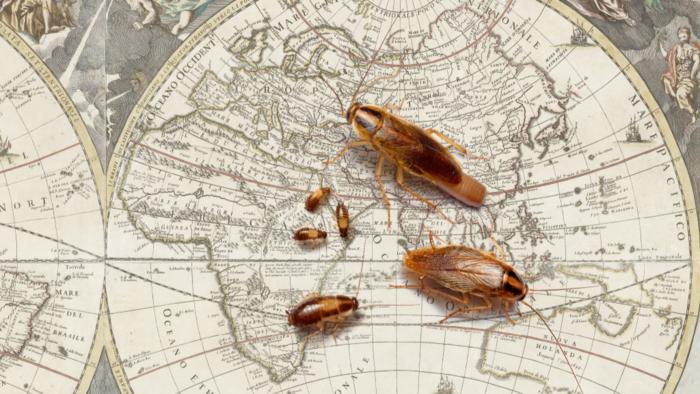
Virginia Tech entomologist sheds light on 250-year-old mystery of the German cockroach
Share on FacebookShare on TwitterShare on LinkedinShare on RedditShare on Telegram

May 24, 2024 —

Virginia Tech entomologist sheds light on 250-year-old mystery of the German cockroach

Credit: Photo courtesy of Matthew Bertone and Coby Schal.

May 24, 2024 —

A team of international scientists, including Virginia Tech entomologist Warren Booth, have solved the 250-year-old origin puzzle of the most prevalent indoor urban pest insect on the planet: the German cockroach.

The team’s research findings, representing the genomic analyses of over 280 specimens from 17 countries and six continents, show that this species evolved some 2,100 years ago from an outside species in Asia and were released this week in the Proceedings of the National Academy of Sciences journal. 

One may think by its name that its origins are in Germany. But it is not native to any wilderness in that country. In fact, it doesn’t seem to have any home in the wild anywhere in the world. To date, populations have never been found outside of structures.

Following its evolution, the German cockroach spread from Southeast Asia, hitchhiking around the world in association with humans. In addition to rapid spread, it evolved a resistance to a variety of insecticides, making it extremely difficult to control using over-the-counter products.

According to Booth, the German cockroach is a major public health issue due to its links to disease spread, the contamination of food, and its role in triggering asthma and allergies.

About Booth

Warren Booth is an associate professor of urban entomology in the Department of Entomology in the College of Agriculture and Life Sciences. He is also an affiliated faculty of the Fralin Life Sciences Institute at Virginia Tech. 

His research interests include: 

  • Population and evolutionary genomics of indoor urban pest insects
  • Insecticide resistance evolution
  • Influence of socioeconomic disparity on urban pest population dynamics
  • Mitochondrial heteroplasmy and recombination
  • Invasion biology and ecology
  • Urban pest management
  • Urban evolutionary biology/genomics


Journal

Proceedings of the National Academy of Sciences

Share13Tweet8Share2ShareShareShare2

Related Posts

Florida Cane Toad: Complex Spread and Selective Evolution

Florida Cane Toad: Complex Spread and Selective Evolution

February 7, 2026
New Study Uncovers Mechanism Behind Burn Pit Particulate Matter–Induced Lung Inflammation

New Study Uncovers Mechanism Behind Burn Pit Particulate Matter–Induced Lung Inflammation

February 6, 2026

DeepBlastoid: Advancing Automated and Efficient Evaluation of Human Blastoids with Deep Learning

February 6, 2026

Navigating the Gut: The Role of Formic Acid in the Microbiome

February 6, 2026

POPULAR NEWS

  • Robotic Ureteral Reconstruction: A Novel Approach

    Robotic Ureteral Reconstruction: A Novel Approach

    82 shares
    Share 33 Tweet 21
  • Digital Privacy: Health Data Control in Incarceration

    63 shares
    Share 25 Tweet 16
  • Study Reveals Lipid Accumulation in ME/CFS Cells

    57 shares
    Share 23 Tweet 14
  • Breakthrough in RNA Research Accelerates Medical Innovations Timeline

    53 shares
    Share 21 Tweet 13

About

We bring you the latest biotechnology news from best research centers and universities around the world. Check our website.

Follow us

Recent News

Personalized Guide to Understanding and Reducing Chemicals

Inflammasome Protein ASC Drives Pancreatic Cancer Metabolism

Phage-Antibiotic Combo Beats Resistant Peritoneal Infection

Subscribe to Blog via Email

Enter your email address to subscribe to this blog and receive notifications of new posts by email.

Join 73 other subscribers
  • Contact Us

Bioengineer.org © Copyright 2023 All Rights Reserved.

Welcome Back!

Login to your account below

Forgotten Password?

Retrieve your password

Please enter your username or email address to reset your password.

Log In
No Result
View All Result
  • Homepages
    • Home Page 1
    • Home Page 2
  • News
  • National
  • Business
  • Health
  • Lifestyle
  • Science

Bioengineer.org © Copyright 2023 All Rights Reserved.