• HOME
  • NEWS
  • EXPLORE
    • CAREER
      • Companies
      • Jobs
    • EVENTS
    • iGEM
      • News
      • Team
    • PHOTOS
    • VIDEO
    • WIKI
  • BLOG
  • COMMUNITY
    • FACEBOOK
    • INSTAGRAM
    • TWITTER
Wednesday, April 1, 2026
BIOENGINEER.ORG
No Result
View All Result
  • Login
  • HOME
  • NEWS
  • EXPLORE
    • CAREER
      • Companies
      • Jobs
        • Lecturer
        • PhD Studentship
        • Postdoc
        • Research Assistant
    • EVENTS
    • iGEM
      • News
      • Team
    • PHOTOS
    • VIDEO
    • WIKI
  • BLOG
  • COMMUNITY
    • FACEBOOK
    • INSTAGRAM
    • TWITTER
  • HOME
  • NEWS
  • EXPLORE
    • CAREER
      • Companies
      • Jobs
        • Lecturer
        • PhD Studentship
        • Postdoc
        • Research Assistant
    • EVENTS
    • iGEM
      • News
      • Team
    • PHOTOS
    • VIDEO
    • WIKI
  • BLOG
  • COMMUNITY
    • FACEBOOK
    • INSTAGRAM
    • TWITTER
No Result
View All Result
Bioengineer.org
No Result
View All Result
Home NEWS Science News Health

New compound from blessed thistle promotes functional nerve regeneration

Bioengineer by Bioengineer
April 19, 2024
in Health
Reading Time: 2 mins read
0
dried blessed thistle (Cnicus benedictus)
Share on FacebookShare on TwitterShare on LinkedinShare on RedditShare on Telegram

Blessed thistle (Cnicus benedictus) is a plant in the family Asteraceae and also grows in our climate. For centuries, it has been used as a medicinal herb as an extract or tea, e.g. to aid the digestive system. Researchers at the Center for Pharmacology of University Hospital Cologne and at the Faculty of Medicine of the University of Cologne have now found a completely novel use for Cnicin under the direction of Dr Philipp Gobrecht and Professor Dr Dietmar Fischer. Animal models as well as human cells have shown that Cnicin significantly accelerates axon (nerve fibres) growth. The study ‘Cnicin promotes functional nerve regeneration’ was published in Phytomedicine.
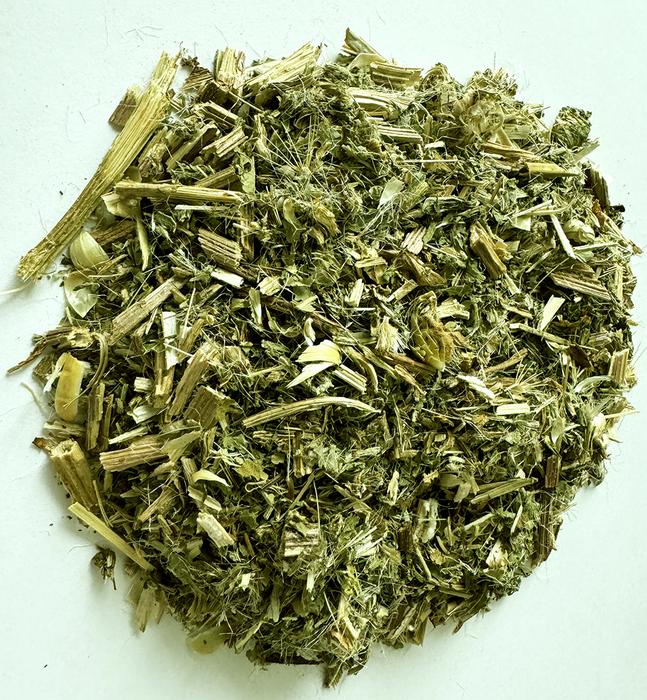
dried blessed thistle (Cnicus benedictus)

Credit: Dietmar Fischer

Blessed thistle (Cnicus benedictus) is a plant in the family Asteraceae and also grows in our climate. For centuries, it has been used as a medicinal herb as an extract or tea, e.g. to aid the digestive system. Researchers at the Center for Pharmacology of University Hospital Cologne and at the Faculty of Medicine of the University of Cologne have now found a completely novel use for Cnicin under the direction of Dr Philipp Gobrecht and Professor Dr Dietmar Fischer. Animal models as well as human cells have shown that Cnicin significantly accelerates axon (nerve fibres) growth. The study ‘Cnicin promotes functional nerve regeneration’ was published in Phytomedicine.

Rapid help for nerves

Regeneration pathways of injured nerves in humans and animals with long axons are accordingly long. This often makes the healing process lengthy and even frequently irreversible because the axons cannot reach their destination on time. An accelerated regeneration growth rate can, therefore, make a big difference here, ensuring that the fibres reach their original destination on time before irreparable functional deficits can occur. The researchers demonstrated axon regeneration in animal models and human cells taken from retinae donated by patients. Administering a daily dose of Cnicin to mice or rats helped improve paralysis and neuropathy much more quickly.

Compared to other compounds, Cnicin has one crucial advantage: it can be introduced into the bloodstream orally (by mouth). It does not have to be given by injection. “The correct dose is very important here, as Cnicin only works within a specific therapeutic window. Doses that are too low or too high are ineffective. This is why further clinical studies on humans are crucial,” said Fischer. The University of Cologne researchers are currently planning relevant studies. The Center for Pharmacology is researching and developing drugs to repair the damaged nervous system.

The current study received funding of around 1,200,000 euros from the Federal Ministry of Education and Research within the framework of the project PARREGERON.


Journal

Phytomedicine

DOI

10.1016/j.phymed.2024.155641

Method of Research

Experimental study

Subject of Research

Animals

Article Title

Cnicin promotes functional nerve regeneration

Article Publication Date

14-Apr-2024

Share12Tweet8Share2ShareShareShare2

Related Posts

Unraveling Sleep Genetics via Wearable Device Data

April 1, 2026

FOLR3 and Neutrophils Worsen Sepsis Inflammation

April 1, 2026

NIH Scientists Develop Pain-Relief Drug with Low Addiction Risk

April 1, 2026

Impact of AI-Powered Scribes on Clinician Time and Patient Visit Volume

April 1, 2026

POPULAR NEWS

  • blank

    Revolutionary AI Model Enhances Precision in Detecting Food Contamination

    96 shares
    Share 38 Tweet 24
  • Imagine a Social Media Feed That Challenges Your Views Instead of Reinforcing Them

    1006 shares
    Share 398 Tweet 249
  • Promising Outcomes from First Clinical Trials of Gene Regulation in Epilepsy

    51 shares
    Share 20 Tweet 13
  • Popular Anti-Aging Compound Linked to Damage in Corpus Callosum, Study Finds

    43 shares
    Share 17 Tweet 11

About

BIOENGINEER.ORG

We bring you the latest biotechnology news from best research centers and universities around the world. Check our website.

Follow us

Recent News

Unraveling Sleep Genetics via Wearable Device Data

Dopamine Drives Dynamic Social Specialization

FOLR3 and Neutrophils Worsen Sepsis Inflammation

Subscribe to Blog via Email

Success! An email was just sent to confirm your subscription. Please find the email now and click 'Confirm' to start subscribing.

Join 78 other subscribers
  • Contact Us

Bioengineer.org © Copyright 2023 All Rights Reserved.

Welcome Back!

Login to your account below

Forgotten Password?

Retrieve your password

Please enter your username or email address to reset your password.

Log In
No Result
View All Result
  • Homepages
    • Home Page 1
    • Home Page 2
  • News
  • National
  • Business
  • Health
  • Lifestyle
  • Science

Bioengineer.org © Copyright 2023 All Rights Reserved.