• HOME
  • NEWS
  • EXPLORE
    • CAREER
      • Companies
      • Jobs
    • EVENTS
    • iGEM
      • News
      • Team
    • PHOTOS
    • VIDEO
    • WIKI
  • BLOG
  • COMMUNITY
    • FACEBOOK
    • INSTAGRAM
    • TWITTER
Friday, June 5, 2026
BIOENGINEER.ORG
No Result
View All Result
  • Login
  • HOME
  • NEWS
  • EXPLORE
    • CAREER
      • Companies
      • Jobs
        • Lecturer
        • PhD Studentship
        • Postdoc
        • Research Assistant
    • EVENTS
    • iGEM
      • News
      • Team
    • PHOTOS
    • VIDEO
    • WIKI
  • BLOG
  • COMMUNITY
    • FACEBOOK
    • INSTAGRAM
    • TWITTER
  • HOME
  • NEWS
  • EXPLORE
    • CAREER
      • Companies
      • Jobs
        • Lecturer
        • PhD Studentship
        • Postdoc
        • Research Assistant
    • EVENTS
    • iGEM
      • News
      • Team
    • PHOTOS
    • VIDEO
    • WIKI
  • BLOG
  • COMMUNITY
    • FACEBOOK
    • INSTAGRAM
    • TWITTER
No Result
View All Result
Bioengineer.org
No Result
View All Result
Home NEWS Science News Biology

Halloween toy among plastics swallowed by sea turtles

Bioengineer by Bioengineer
March 11, 2024
in Biology
Reading Time: 3 mins read
0
The rubber witch's finger found inside a dead sea turtle
Share on FacebookShare on TwitterShare on LinkedinShare on RedditShare on Telegram

A Halloween toy was among hundreds of plastic items found in the guts of dead sea turtles in the Mediterranean, a new study reveals.
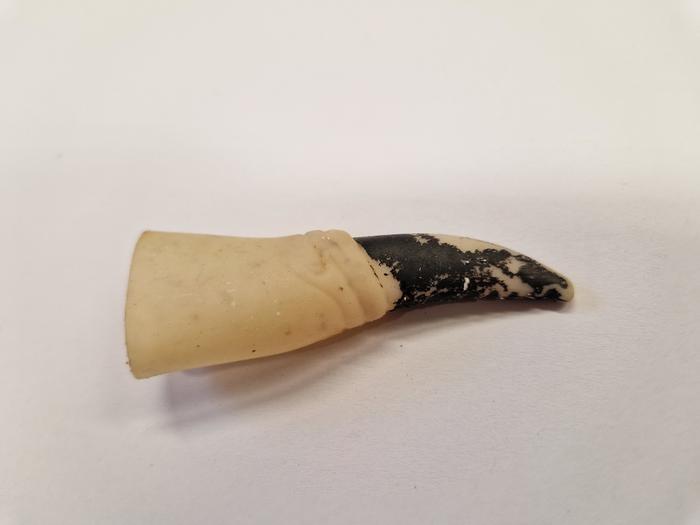
The rubber witch's finger found inside a dead sea turtle

Credit: University of Exeter

A Halloween toy was among hundreds of plastic items found in the guts of dead sea turtles in the Mediterranean, a new study reveals.

Researchers examined 135 loggerhead turtles either washed up or killed as “bycatch” (accidentally caught) in fishing nets off northern Cyprus.

More than 40% of the turtles contained “macroplastics” (pieces larger than 5mm), including bottle tops and the Halloween toy – a rubber witch’s finger.

The research team, led by the University of Exeter and the North Cyprus Society for the Protection of Turtles (SPOT), say loggerheads are a potential “bioindicator” species that could help them understand the scale and impact of plastic pollution.

“The journey of that Halloween toy – from a child’s costume to the inside of a sea turtle – is a fascinating glimpse into the life cycle of plastic,” said Dr Emily Duncan, from Centre for Ecology and Conservation on Exeter’s Penryn Campus in Cornwall.

“These turtles feed on gelatinous prey such as jellyfish and seabed prey such as crustaceans, and it’s easy to see how this item might have looked like a crab claw.”

The study found at total of 492 macroplastic pieces, including 67 inside one turtle. It’s not clear why the turtles living in the same region contained such differing levels of plastic. 

Turtles showed “strong selectivity” towards certain types, colours and shapes of plastic.

“The plastics we found were largely sheetlike (62%), clear (41%) or white (25%) and the most common polymers identified were polypropylene (37%) and polyethylene (35%),” said Dr Duncan.

“It’s likely that turtles ingest the plastics that mostly closely resemble their foods.

“We still don’t know the full impacts of macroplastic on turtles’ health, but negative effects could include causing blockages and limiting nutrition.”

The turtles in the study were found over a 10-year period (2012-22), and incidences of macroplastic ingestion did not increase over that period but remained stable. No difference was found between stranded and bycaught turtles.

While the study provides vital information about plastic pollution in the eastern Mediterranean, more research is now needed.

“Much larger sample sizes will be needed for loggerheads to be an effective ‘bioindicator’ species, and we recommend studies should also include green turtles – allowing a more holistic picture to be gathered,” said Professor Brendan Godley, who leads the Exeter Marine research group.

Six of the paper’s authors contributed during masters degrees in Conservation and Biodiversity and Marine Vertebrate Ecology and Conservation, as part of the University of Exeter’s Graduate School of Environment and Sustainability.

The research team included Eastern Mediterranean University and Near East University.

Funders included the Natural Environment Research Council (NERC), the European Commission, Roger de Freitas, the Sea Life Trust and MAVA Foundation.

The paper, published in the journal Marine Pollution Bulletin, is entitled: “Marine turtles as bio-indicators of plastic pollution in the eastern Mediterranean.”


Journal

Marine Pollution Bulletin

DOI

10.1016/j.marpolbul.2024.116141

Article Title

Marine turtles as bio-indicators of plastic pollution in the eastern Mediterranean

Article Publication Date

23-Feb-2024

Share12Tweet8Share2ShareShareShare2

Related Posts

Scientists Uncover New Insights into RNA-Guided Transposon Mechanisms — Biology

Scientists Uncover New Insights into RNA-Guided Transposon Mechanisms

June 5, 2026
New Brain Vessel Atlas Reveals Vascular Aging Patterns and Identifies Stroke Recovery Risks — Biology

New Brain Vessel Atlas Reveals Vascular Aging Patterns and Identifies Stroke Recovery Risks

June 5, 2026

Scientists Create Versatile “All-in-One” Platform for Stacking Multiple Traits in Crops

June 5, 2026

Gene Swapping Drives the Evolution of Earth’s Decomposers

June 5, 2026

POPULAR NEWS

  • ESMO 2025: mRNA COVID Vaccines Enhance Efficacy of Cancer Immunotherapy

    322 shares
    Share 129 Tweet 81
  • Multi-Hospital Study Reveals Long Covid Burden Is Twice as High as Current Estimates

    88 shares
    Share 35 Tweet 22
  • Saying Goodbye to PGY-6: Pediatric Fellowship Realities

    76 shares
    Share 30 Tweet 19
  • Common Food Preservatives Associated with Elevated Blood Pressure and Increased Heart Disease Risk

    57 shares
    Share 23 Tweet 14

About

We bring you the latest biotechnology news from best research centers and universities around the world. Check our website.

Follow us

Recent News

Triglyceride-Glucose Index Predicts Diabetes in Normal-Weight Chinese

New Certification Establishes Expertise in Stroke Program Management and Coordination

Cytoskeletal Prestress Homeostasis: A Fundamental Biological Principle of Living Cells Unveiled

Subscribe to Blog via Email

Enter your email address to subscribe to this blog and receive notifications of new posts by email.

Join 82 other subscribers
  • Contact Us

Bioengineer.org © Copyright 2023 All Rights Reserved.

Welcome Back!

Login to your account below

Forgotten Password?

Retrieve your password

Please enter your username or email address to reset your password.

Log In
No Result
View All Result
  • Homepages
    • Home Page 1
    • Home Page 2
  • News
  • National
  • Business
  • Health
  • Lifestyle
  • Science

Bioengineer.org © Copyright 2023 All Rights Reserved.